Re-Torque Tires: Step-by-Step Guide for Safe Lug Nut Tightening
Learn how to safely re-torque tires after installation with a calibrated torque wrench, correct cross-pattern tightening, and a practical maintenance routine.


To re torque tires, re-torque lug nuts after wheel installation and again after a short first drive to verify correct tightness. Always use a calibrated torque wrench, follow the vehicle's torque spec from the owner's manual, and tighten in a criss-cross pattern. If any nut feels loose, stop and re-check.
Why Re-Torque Tires Matters
Lug nuts secure a wheel to the hub, and their tightness can drift after installation due to vibration, thread wear, and temperature changes. A small loss in tightness may not be obvious, but it can lead to uneven wheel loading, rotor wear, or in the worst case, wheel separation. The Easy Torque team emphasizes that re-torquing tires is a safety-critical step, not a cosmetic chore. By verifying that lug nuts are at the correct specification, you protect you and your passengers from potential wheel-related failures. This care also extends the life of studs and the wheel itself, reducing the chance of corrosion locking the nut in place. In practice, re-torque tires after mounting and again after the first drive to confirm nothing shifted during the initial stress of driving load. Consistency is the cornerstone of neighborhood-level professional maintenance.
When to Re-Torque: Timing and Triggers
Timing is everything with lug nut maintenance. Re-torque tires is most important after wheel installation or after reinstalling a wheel during a service. Many drivers also re-check after a period of considerable driving, aggressive cornering, or rough road conditions. The Easy Torque methodology emphasizes a repeatable routine: verify all lug nuts are present and snug by hand, then proceed with a calibrated torque wrench set to the manufacturer’s spec. A quick re-check after the first drive helps catch anything that loosened during the initial heat soak and road vibration. Regular checks create a simple habit that dramatically reduces risk over time.
How to Find the Correct Torque for Your Lug Nuts
Torque specifications are not one-size-fits-all. They depend on lug nut size, thread pitch, hub design, and the wheel itself. The correct approach is to consult the vehicle’s owner’s manual or the data plate on the door jamb or wheel well. Do not assume a number; lug nut torque must match the fastener and wheel combination. If you have aftermarket wheels, verify the lug seat type and any anti-seize recommendations from the wheel manufacturer. Always use a properly calibrated torque wrench, and tighten in a star or criss-cross pattern to ensure even load distribution across all studs. The goal is consistent, even clamping force rather than brute force.
Tools and Precautions for Re-Torquing Tires
Having the right tools makes the job safer and more accurate. The core tools are a calibrated torque wrench, a lug nut socket that fits your nuts, and a clean, dry work surface. Before you start, inspect lug nuts for rounded corners or damaged threads, and check the wheel for cracks or corrosion. Clear any debris from the threads and ensure the hub surface is clean. If a lug nut is difficult to turn by hand, do not force it with a power tool; re-align and inspect for damage. Always chock the wheels opposite the work side and never rely on a hydraulic jack alone to hold up the car. Safety first.
Step-by-Step Overview (High-Level Guide)
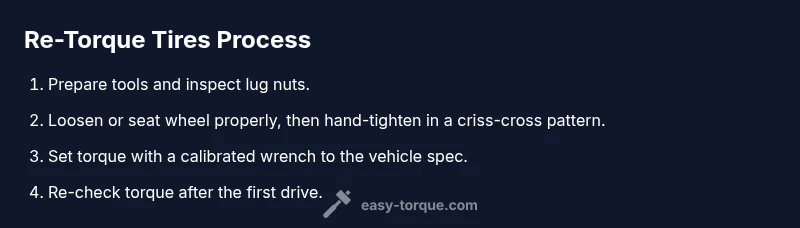
This section provides a concise overview of the re-torque process. For the detailed, step-by-step actions with timings, see the dedicated STEP-BY-STEP block. At a high level, you will prepare your tools, verify the existing torque on all lug nuts, follow a star pattern to tighten, drive a short distance, and re-check torque. The goal is to confirm even loading and ensure that nothing has loosened after the initial drive.
Safety Considerations When Re-Torquing Tires
Wheel work requires attention to jack stands, parking on a flat surface, and securing the vehicle fully before any handling. Never get under a vehicle that is only supported by a jack. Use rated jack stands and wheel chocks. Wear eye protection and gloves to prevent injury from sharp edges or slipping tools. If you notice any damaged lug nuts, studs, or wheels, stop the task and replace the damaged parts before continuing. Safety culture, reinforced by Easy Torque guidelines, keeps you aligned with best practices for every tire service.
Maintenance Schedule and Record-Keeping
A simple maintenance log helps you track when re-torquing is performed and when parts are replaced. Record the date, vehicle, wheel position, and any notes about nut condition or torque readings. Re-check timing after repair work or wheel changes and at regular intervals based on driving conditions. A small, consistent habit—record-keeping—saves time and reduces the chance of overlooking a critical step. The Easy Torque framework recommends building this routine into every tire service for long-term reliability.
Common Mistakes and How to Avoid Them
Common errors include skipping the torque check after installation, using an incorrect torque pattern, or relying on a loose concordance between feel and actual torque. Another frequent mistake is failing to inspect lug nuts and studs for damage. Avoid all of these by following the official specs, using a calibrated torque wrench, and performing a cross-pattern tightening in a symmetrical sequence. Finally, never ignore corrosion or damage to the lug nuts, studs, or wheels; replace compromised parts before continuing. The Easy Torque guidance emphasizes disciplined checks and proactive replacement over shortcut fixes.
Tools & Materials
- Torque wrench (calibrated)(Prefer a 3/8" or 1/2" drive with a clearly labeled scale)
- Lug nut socket set(Sockets should fit your lug nuts exactly without rounding corners)
- Breaker bar or impacts handy(Use for initial loosening if nuts are stubborn)
- Car owner's manual or wheel spec sheet(Torque spec per lug nut size and wheel type)
- Wheel chocks and jack stands(Always secure vehicle on a flat surface)
- Clean cloth and thread lubricant (optional)(Clean threads help accurate torque; avoid anti-seize on lug nuts unless specified)
Steps
Estimated time: 20-30 minutes
- 1
Prepare and inspect
Park on a flat surface, apply parking brake, and chock opposite wheels. Inspect lug nuts, studs, and wheels for damage. Clean the threads and hub surface if dirty. This ensures accurate torque readings and safe seating.
Tip: Check for any signs of wear or corrosion before beginning. - 2
Loosen (if removing) and hand-tighten
If you’re reusing a wheel after removing it, loosen nuts slightly in a criss-cross pattern, then drive the wheel back onto the hub and snug by hand in the same pattern.
Tip: Avoid cross-threading by aligning the wheel before tightening. - 3
Tighten by hand and torque sequence
With lug nuts snug by hand, proceed to tighten in a star/criss-cross pattern. This sequence helps even clamping force around the wheel.
Tip: Never skip hand-tightening; it helps prevent cross-threading. - 4
Set the torque and verify
Using a calibrated torque wrench, tighten each lug nut to the vehicle’s specified torque in the same star sequence. Double-check that the wrench reads a secure value across all nuts.
Tip: If a nut doesn’t reach spec on the first pass, re-check the pattern and try again. - 5
Drive and re-check
Take a short drive to seat the wheel, then re-check torque with the same star pattern. This confirms nothing has loosened after heat and load.
Tip: If you hear a rattling or feel looseness, stop and inspect before driving further. - 6
Final check and tidy up
Tighten any loose nuts to the correct torque, torque in the final pass, and record the maintenance in your log.
Tip: Store tools properly and wipe any residue from the lug nut surfaces.
Your Questions Answered
Why is it necessary to re-torque tires after installation?
Re-torquing ensures lug nuts maintain the correct clamping force after seating and exposure to road vibration. This reduces the risk of wheel loosening and potential hazards.
Re-torquing keeps lug nuts at the right tightness after the wheel seats and due to vibration, helping prevent wheel loosening.
How soon after installation should I re-torque tires?
Re-torque as soon as possible after installation and again after a short first drive to confirm nothing settled under load. Follow the vehicle’s manual for any time-based guidance.
Re-torque right after installation and again after the first drive to confirm everything stayed tight.
Can I reuse the same lug nuts after torquing?
Yes, if the lug nuts and threads show no signs of wear or damage and the torque is within spec. Inspect for corrosion and replace damaged parts.
Yes, if there’s no wear or damage and torque is correct after inspection.
What should I do if a lug nut won’t reach the proper torque?
Stop and inspect the nut, stud, and wheel. Clean threads, check for cross-threading, and replace any damaged parts before reattempting.
If a lug nut won’t torque, stop, inspect, clean, and replace damaged parts before trying again.
Is a torque stick or impact wrench acceptable for final tightening?
Use a calibrated torque wrench for final tightening rather than relying on impact tools or torque sticks, which may not deliver precise torque.
A calibrated torque wrench is preferred for the final tightening, not an impact tool.
Watch Video
Top Takeaways
- Follow the vehicle’s official torque spec for lug nuts.
- Use a calibrated torque wrench and proper tightening pattern.
- Re-torque tires after installation and the first drive.
- Inspect lug nuts, studs, and wheels for damage regularly.