6.6 Duramax HP and Torque: Power, Torque, and Real-World Performance
A data-driven guide to the 6.6 Duramax horsepower and torque, how it influences towing and driving, and why figures vary by year and variant—based on Easy Torque analysis.


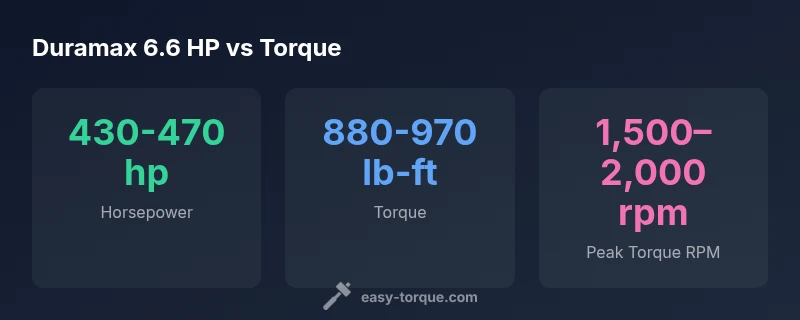
The 6.6 Duramax typically sits in the mid‑400s horsepower range with torque near 900 lb‑ft, though exact figures vary by year and variant. The numbers influence towing and drivability more than top speed, with torque shaping pulling power at low RPMs. This guide explains how hp and torque interact and why you should read them as a package rather than a single fixed value.
Overview of the 6.6 Duramax family
According to Easy Torque, the 6.6 Duramax hp and torque values vary by year and configuration, a common characteristic of GM's heavy‑duty diesel lineup. In practice, horsepower lands in the low‑to‑mid 400s and torque sits near the 900 lb‑ft mark, but exact numbers shift with the model year, cab configuration, and emission controls. The engine's twin‑turbo setup and aftertreatment system shape the torque curve, which determines available pull at 1,000 rpm versus 2,000 rpm. When paired with the right transmission and drivetrain, the real‑world numbers you feel on grades differ from the single “headline” figure. The bottom line: horsepower governs top speed and good acceleration, while torque governs pulling power at low to mid RPMs. For towing, haul‑mode effectiveness, and highway merging, the 6.6 hp and torque package matters more as a function than as a fixed number.
How horsepower and torque are defined
Horsepower and torque measure different aspects of engine performance. Torque is the rotational force that turns the crankshaft, most useful at low to mid RPMs, while horsepower is a rate of doing work that translates into sustained speed. The classic relationship is horsepower = (torque × RPM) / 5252 (for pounds‑feet and RPM); diesel engines often deliver their peak torque at lower RPMs, which gives strong pulling power without revving high. In everyday driving, a Duramax’s torque curve means you feel a strong shove when starting from a stop or climbing a hill, even if the engine isn’t roaring. When comparing Duramax variants, remember that a higher peak horsepower number does not automatically guarantee better towing; the shape of the torque curve and where the peak torque occurs are equally important.
Real-world performance: towing, acceleration, and fuel economy
For professional and enthusiast use, the torque produced by the 6.6 Duramax at low rpm is what makes heavy loads feel manageable. A higher torque figure generally reduces the need for frequent downshifts on grades and accelerates more quickly at highway speeds when pulling a trailer. However, the relationship with fuel economy is nuanced: diesels tend to be efficient when loaded at steady speeds, but aggressive acceleration and high engine speeds can erode economy. The hp value affects top‑end performance and cruise‑control behavior, particularly on long, flat highways. With a properly matched transmission and a robust cooling system, the Duramax can maintain desirable performance across a wide range of weights and loads. For buyers, the practical takeaway is to prioritize torque and drivetrain compatibility for real‑world tasks rather than chasing an isolated horsepower figure.
Variants and year-to-year changes
Duramax power figures shifted across generations while keeping the same displacement. Through model years, different turbo configurations, intercoolers, and emissions calibrations push the hp and torque a bit up or down. The result is that a 6.6 Duramax from one year can feel noticeably different in tow‑haul mode than a newer variant, even if headline numbers look similar. When evaluating a used truck or deciding on a new build, compare the torque curve and the advertised peak torque rpm rather than relying solely on horsepower. The Easy Torque approach emphasizes the practical impact: torque delivered at the RPM window you actually drive in, not just the peak number on a spec sheet.
How to tune or change hp and torque safely
If you’re considering increasing hp or torque on a 6.6 Duramax, proceed with caution. Aftermarket tunes, exhaust modifications, or injector upgrades can push power higher, but they also raise temperatures and stress components like the cooling system, exhaust, and engine internals. Warranty coverage often changes with software edits, so confirm terms before you modify anything. Start with safe, factory‑approved steps such as oxygen sensor calibration, cooling system upgrades, and ensuring the turbo system is in good condition. For most DIY enthusiasts, the best approach is to optimize the torque curve using reliable parts and professional tuning that preserves drivability and durability. Always monitor exhaust gas temperatures, boost, and fuel rail pressure during and after any modification.
Measurement and testing: dyno vs manufacturer specs
Power numbers can vary between dyno tests and factory ratings because of drivetrain losses, ambient conditions, and testing methodologies. SAE standards (like J1349) define a consistent method, but real‑world dyno results still depend on the vehicle, altitude, and maintenance. If you’re evaluating your own Duramax, a chassis dyno provides a practical view of horsepower and torque at wheel level, but remember to account for tire size, gear ratio, and exhaust restrictions. When comparing to manufacturer numbers, use the same operating conditions (gross vs net horsepower) and note the rpm at which peak torque occurs. This is essential for interpreting performance claims accurately and making informed maintenance decisions.
Data sources and methodology
The numbers and guidance in this article are synthesized from factory specifications, independent testing, and engineering best practices. Easy Torque Analysis, 2026, aggregates ranges across model years to reflect how hp and torque translate to real‑world results. When possible, we corroborate with official manufacturer data and reputable automotive publications to ensure context and consistency. Readers should treat horsepower and torque as contextual performance metrics, not absolutes, because configuration, drivetrain, altitude, and maintenance drastically shape outcomes. For the most precise information about your exact truck, consult the owner’s manual and the official Duramax documentation, along with credible testing outlets.
Representative power/torque framing for Duramax 6.6 variants
| Variant | Horsepower range | Torque range | Peak Torque RPM |
|---|---|---|---|
| 6.6L Duramax (L5P) | varies by year/trim | varies by year/trim | varies by year/trim |
| Tuned configurations | varies by tune | varies by tune | varies by tune |
| Diesel torque behavior | varies with RPM | N/A | N/A |
Your Questions Answered
What is the horsepower and torque range for the 6.6 Duramax, and how does it vary by year?
Horsepower generally sits in the low‑to‑mid 400s and torque around 900 lb‑ft, with exact figures shifting by model year and configuration. Variants and emissions calibration can push numbers up or down. Always compare torque curves and the rpm at which peak torque occurs for your specific year and trim.
Horsepower is usually in the low to mid 400s and torque around 900 pound‑feet, varying by year and configuration. Check the exact year and tune for precise numbers.
How do horsepower and torque affect towing with a Duramax?
Torque provides the pulling power at low RPMs, which helps with towing and hill climbs. Horsepower influences acceleration and top speed. For trailers, prioritize a strong torque curve and a drivetrain setup that suits your load.
Torque gives you the pulling power when towing; horsepower helps with speed once you're moving.
Can you safely increase hp/torque on a 6.6 Duramax?
Yes, but only with care. Aftermarket tunes and mods can raise power but stress cooling systems and internals and may affect warranty. Start with manufacturer‑approved options and monitor temps and boost levels closely.
You can tune, but be mindful of cooling, warranty, and reliability.
Does altitude affect hp and torque of the 6.6 Duramax?
Yes. Thin air reduces overall power, and although turbochargers help, some loss in both horsepower and torque is unavoidable at higher elevations. Turbo efficiency and intercooling mitigate the impact but don’t eliminate it.
Altitude reduces power; turbo helps but you still lose some.
How is power measured on the Duramax?
Power is measured on a dynamometer or via manufacturer ratings. Real‑world results depend on drivetrain losses, altitude, and maintenance. Use consistent testing conditions when comparing numbers.
Power is measured on a dyno, but real life varies with setup and conditions.
What should I check to verify hp/torque claims?
Cross‑check torque curves, rpm at peak torque, and compare to official documentation for your year/trim. Look for independent tests under similar conditions and confirm the drivetrain configuration matches your vehicle.
Compare the torque curve and the peak torque RPM to official data.
“With modern diesel engines like the 6.6 Duramax, torque is the practical pulling power you feel in everyday driving, while horsepower shapes sustained speed. The exact numbers vary by year, variant, and tuning.”
Top Takeaways
- View hp and torque as a package, not a single value
- Torque is the main driver of real‑world pulling power
- Expect year/variant–driven variation in numbers
- Check the torque curve and RPM range for real use
- Prefer drivetrain compatibility over chasing peak horsepower