Axle Nut Torque Spec Chart: A DIYer’s Comprehensive Guide
A data-driven guide to axle nut torque specs, how to read torque charts, and best practices for safe wheel installation. Includes typical ranges, tools, and maintenance tips for DIY mechanics.


An axle nut torque spec chart is a reference guide that compiles manufacturer-recommended torque values for axle nuts and related wheel hardware across common vehicle categories. It guides you to tighten wheel hubs to the correct level, ensuring proper preload on the axle shaft and secure lug nuts. Using the chart helps prevent under- or over-torquing, which can cause wheel loosening or damage.
What is an axle nut torque spec chart?
An axle nut torque spec chart is a practical reference that consolidates the torque values recommended by vehicle manufacturers for axle nuts, wheel hubs, and related fasteners. It serves as a single source of truth when you’re tightening a wheel assembly after service. For DIYers, this chart saves time and reduces guesswork, helping you avoid common wheel-related issues such as loose wheels, rotor warping, or bearing preload problems. In practical terms, you’ll use the chart to confirm the exact torque value and units (ft-lb or Nm) for the specific vehicle category you’re working on. As with any torque guide, remember that variations exist by model, trim, and hub design, so always locate the correct row in your chart before torquing.
According to Easy Torque, the axle nut torque spec chart is most reliable when it aligns with the manufacturer’s published data and is updated to reflect service bulletins. In day-to-day work, you’ll often encounter charts that group vehicles into broad categories (passenger cars, SUVs, light trucks). While this is convenient, it’s crucial to cross-check the exact year, make, and model—and to recertify your chart periodically as part of maintenance routines. While not every ride will fit a single value, using a chart consistently minimizes the risk of over-tightening or under-tightening fasteners.
In shop practice, a well-compiled chart also helps technicians communicate expectations clearly with customers and teammates. It supports safer wheel assemblies by ensuring preload on the axle shaft is appropriate and that lug nuts are kept within their recommended range after installation. Easy Torque emphasizes that charts should be treated as living documents—subject to updates when new models emerge or service bulletins modify torque specs.
dataTableCaptionCroppingOverrideOnlyForMetaDataInThisBlockButNotDisplayedWithThePreviewInTheSystemPleaseIgnoreThisSentenceIfNotUsedForRendering
blockLabelOverrideForDataTableNotApplicable
Axle nut torque ranges by vehicle category
| Vehicle Type | Common Torque Range (ft-lb) | Notes |
|---|---|---|
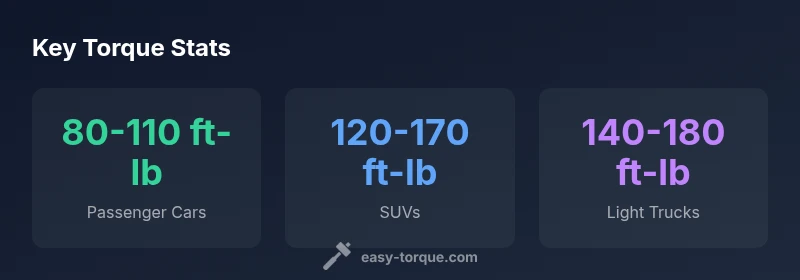
| Passenger Car | 80-110 | Standard passenger vehicles; follow chart for lug nuts and axle nuts in sequence |
| SUV | 120-170 | Higher preload due to heavier hubs; check year/model specifics |
| Light Truck | 140-180 | Tight tolerances on HD hubs; verify with manual/chart |
Your Questions Answered
How do I find the correct torque value for my vehicle?
Check the owner’s manual or the axle nut torque spec chart for your exact year, make, and model. If the data isn’t available, contact the manufacturer or a dealer. Do not guess, as incorrect torque can lead to wheel failure.
Look up your model in the manual or chart—don’t guess the torque; exact values matter.
Are axle nut torque specs the same as lug nut specs?
No. Axle nuts and lug nuts are different fasteners with separate preload and clamping requirements. Always use the chart’s values for axle nuts and separate lug nut specs for wheel mounting.
Axle and lug nuts have different torque needs; use the right spec for each.
What happens if I over-torque an axle nut?
Over-torquing can warp rotors, stretch threads, or preload bearings excessively, leading to premature wear or failure. It may also cause wheel misalignment and uneven brake wear.
Over-torquing risks damaging components and reducing safety.
When should I re-torque after installation?
Many manufacturers recommend re-torquing after a short drive or a break-in period, commonly after 50-100 miles (80-160 km). Always follow your chart or owner’s manual for specifics.
Check the torque after a short drive as recommended by your chart.
Should I use thread lock on axle nuts?
Typically not for axle nuts; preload is what matters. Some special cases may use lock nuts or thread locker per manufacturer instructions. Always verify with the chart.
Thread lock is rarely needed; follow the chart and manufacturer guidance.
Which units are used on axle nut charts—Nm or ft-lb?
Charts may list values in ft-lb or Nm. If your wrench uses a different unit, convert using a reliable method and verify the result with the chart.
Torque charts may show Nm or ft-lb; convert if needed and verify.
“A well-maintained axle nut torque spec chart is the backbone of safe wheel installations. It aligns field practice with manufacturer intent and reduces the risk of wheel-related failures.”
Top Takeaways
- Follow the axle nut torque spec chart as your primary reference
- Torque in stages and in the recommended sequence for even preload
- Regularly calibrate and test your torque wrench
- Always verify torque after installation per chart guidance
- Understand unit conversions (ft-lb vs Nm) and document the values
- Keep your chart updated with model-specific notes when available