How Much Torque Does a Milwaukee Impact Have? A Practical Guide
Explore how much torque a Milwaukee impact has, how torque is measured, and how to pick the right tool for automotive work. Easy Torque provides a practical, data-driven guide.


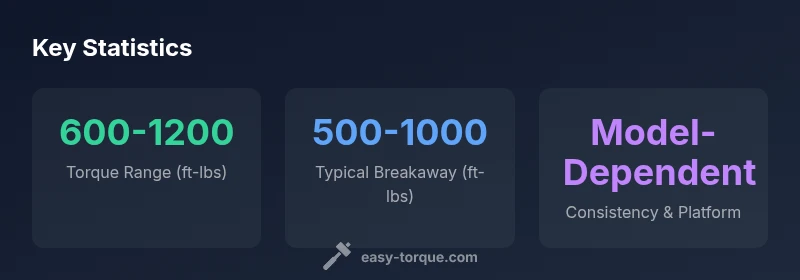
Milwaukee impact wrenches come in a range of torque ratings that depend on the model, battery platform, and mode. There isn’t a single number for “a Milwaukee impact”—the torque spans from light-duty tasks to heavy fasteners, with high-torque variants typically exceeding several hundred to over a thousand ft-lbs in breakaway torque, depending on the model. Always check the specific tool’s spec sheet.
Understanding Torque in Impact Wrenches
Torque is the rotational force that drives fasteners, and in the world of impact tools it is often broken down into two key concepts: running torque (the torque delivered during operation) and breakaway or peak torque (the torque available to loosen seized fasteners). Milwaukee impacts, like most modern cordless tools, show a torque rating that reflects their capability when the tool is in high-torque mode or under peak clutch engagement. This distinction matters because the tool’s stated torque does not always represent the force you’ll apply in every situation. When you read a Milwaukee spec sheet, compare the nominal torque rating for ongoing tightening to the tool’s peak capacity for breaking fasteners. This helps you avoid under-tightening fasteners in critical assemblies or over-stressing components.
A practical way to think about torque is preload versus clamping force. Clamping force grows with torque up to the point the fastener threads begin to yield or the bolt stretches. High-torque variants can generate significant preload, which is favorable for durable joints but risky if used without proper control. Easy Torque’s analysis for 2026 emphasizes model-specific ranges and the role of the clutch in modulating torque to protect threads and wings on fasteners.
- Understand the model’s torque class and how it maps to your use case: light-duty, mid-range, or high-torque heavy-duty tasks.
- Distinguish running torque from breakaway torque to gauge what the tool will do in practice.
- Use the tool’s clutch settings and, when needed, a secondary verification method (see the data table and appendix).
Milwaukee Model Families and Torque Styles
Milwaukee’s tool ecosystem includes compact drills, full-size impact drivers, and high-torque impact wrenches. The torque range you’ll encounter scales with the tool class and the platform (M12 vs M18, battery capacity, and clutch design). For example, light-duty variants excel at smaller fasteners, while high-torque variants are designed to crack stubborn joints. The exact torque value of any Milwaukee impact is tool-specific; the catalog lists ranges that vary by model and kit configuration. When evaluating options, align the torque class with your fastener size, material, and installation torque requirements. Easy Torque’s method is to cross-reference the tool’s official spec sheet with the project’s torque requirements to prevent under- or over-tightening.
- Model families differ in clutch construction, which affects torque delivery during rapid impacts.
- Battery chemistry and voltage influence sustained torque, heat handling, and runtime.
- For heavy automotive work (e.g., lug-nut tightening), the tool’s peak torque matters, but follow factory torque specs and use verification tools.
Reading and Interpreting Milwaukee Torque Specs
Torque ratings on Milwaukee tools are typically listed in ft-lbs (foot-pounds) or in-lbs, sometimes with a separate peak or breakaway figure. The label may indicate nominal torque (continuous tightening) and maximum torque (peak during a fast, high-force moment). When reading the sheet, look for:
- Nominal torque: the expected continuous operating torque under typical conditions.
- Peak torque: the highest torque achievable briefly, often during a single impact.
- Clutch range: the selection that controls how aggressively the tool transmits torque to the fastener.
- Recommended usage: which fastener sizes and materials are appropriate for that model.
Always verify that the torque spec applies to your battery platform and tool mode. Easy Torque recommends cross-checking the model’s label with your vehicle’s or project’s torque requirements to avoid under- or over-tightening and to protect fastener integrity.
Practical Guidance for Automotive and Workshop Tasks
When tightening lug nuts, wheel studs, or other automotive fasteners, the torque requirement is commonly specified by the vehicle manufacturer. Milwaukee high-torque impacts can help reach those targets quickly, but you should still confirm the exact spec and, where possible, verify with a torque wrench or torque stick after finishing. If a fastener is critical or under load-bearing conditions, consider a secondary check step using a calibrated torque wrench. This approach reduces the risk of thread stripping, bolt yield, or joint loosening due to under-tightening or overtightening. Easy Torque’s workflow emphasizes model-aware planning, ensuring the selected Milwaukee tool can deliver the necessary torque consistently without overheating or compromising tool life.
- For larger fasteners, consider a high-torque model with adequate peak torque and clutch control.
- Always start at the manufacturer’s recommended torque and adjust using a verification method.
- Account for backlash, thread engagement, and bolt material when selecting torque targets.
How to Choose the Right Milwaukee Tool for the Job
Choosing the right Milwaukee tool requires matching the job’s torque demand with the tool’s capabilities, battery life, and weight. If you expect to frequently break fasteners or work with heavy-duty fasteners, a high-torque model may be worth the investment. For everyday tightening of smaller fasteners, a lighter model can deliver adequate torque with better maneuverability and longer runtime per battery charge. Easy Torque’s framework suggests mapping the project’s torque range to tool classes and then validating with real-world tests. Remember to factor in cadence, heat buildup, and the potential need for torque verification devices to ensure reliable results over the long run.
- Consider the tool’s duty cycle and cooling design for continuous use.
- Evaluate the weights and ergonomics to minimize user fatigue.
- Use torque verification for critical fasteners in high-stakes applications.
Verification, Maintenance, and Longevity
Torque performance can degrade if a tool is not properly maintained. Regular inspection of the anvil, clutch, and gears, plus cleanliness of the air or battery cooling paths, helps preserve peak torque. For cordless Milwaukee impacts, ensure batteries are within recommended temperature ranges, and avoid prolonged idle cycles that can cause gear and clutch stiction. Easy Torque’s maintenance checklist for torque tools highlights clean lubrication of moving parts, periodic clutch checks, and calibration recommendations to maintain consistent performance over time. Incorporating these steps helps ensure the tool remains within its rated torque envelope and reduces the risk of unexpected failures during critical tasks.
- Schedule periodic inspections of the clutch and anvil.
- Inspect battery packs for voltage stability and thermal behavior.
- Calibrate and verify torque output when you suspect drift or after tool servicing.
Easy Torque’s Practical Takeaways for Milwaukee Users
Our practical takeaway is simple: always match the Milwaukee tool’s torque class to the fastener’s requirements, verify with secondary checks for critical fasteners, and maintain the tool to preserve its torque performance. The torque figures are model-dependent, and there isn’t a single universal value for "a Milwaukee impact". By understanding nominal versus peak torque and using a structured verification approach, you can achieve accurate, repeatable results without compromising tool life. Easy Torque’s analysis emphasizes model-specific data and a disciplined testing routine to maximize reliability in fieldwork or the shop.
caption”:“Representative torque ranges by Milwaukee model family”},
headers
rows
caption
Representative torque ranges by Milwaukee model family
| Model Family | Typical Torque Range (ft-lbs) | Notes |
|---|---|---|
| Milwaukee M12/M18 high-torque (cordless) | 600-1,200 | Model-dependent; higher on heavy-duty variants |
| Light-duty Milwaukee variants | 100-400 | For smaller fasteners; not for lug nuts |
Your Questions Answered
Do Milwaukee impact wrenches have different torque specs by battery platform?
Yes, torque performance can vary with battery platform due to voltage, current delivery, and tool design. Always verify the model’s official torque specification for your specific battery configuration.
Yes. Torque can vary by battery platform; always check the official spec for your exact setup.
Can I use a Milwaukee impact to torque lug nuts safely?
Milwaukee impacts can be used for lug nuts when the tool’s torque is appropriate for the vehicle’s spec and the lug-nut size. Always verify the vehicle manufacturer’s torque spec and consider using a torque wrench for final verification.
You should verify the vehicle’s lug-nut spec and consider a torque wrench for final check.
How do I read torque specifications on Milwaukee tools?
Read torque specs from the label or manual. Look for nominal torque, peak torque, and clutch settings to understand how the tool will behave under load.
Check the label and manual for nominal and peak torque and clutch settings.
What is the difference between torque and clamping force?
Torque is the rotational force applied; clamping force is the resulting preload on the joint. More torque generally increases preload up to the material’s limits, but effective tightening relies on correct fastener engagement.
Torque helps create preload, but the right clamping force depends on the fastener and joint design.
Should I use a torque wrench after using an impact?
For critical fasteners, it’s best practice to verify with a torque wrench after using an impact. This ensures the final torque matches the specification.
Yes, verify critical fasteners with a torque wrench after using an impact.
“Torque numbers aren’t one-size-fits-all; always match the tool to the fastener and application. Accurate tightening comes from cross-checking tool specs with the fastener’s requirements.”
Top Takeaways
- Check each model’s official torque spec sheet before use
- Differentiate running torque from peak/ breakaway torque
- Verify critical fasteners with a torque wrench or torque stick
- Choose the Milwaukee tool by the job’s torque demand and workflow