How Much Torque Does Model 3 Performance Deliver? A Data-Driven Look
Explore Model 3 Performance torque, why Tesla withholds a single figure, and how to interpret torque data with practical guidance from Easy Torque.


How torque works in electric vehicles
Torque is a measure of rotational force, but in electric vehicles it behaves differently from internal combustion engines. EVs deliver torque instantly as soon as the motor applies current, which means immediate response when you press the accelerator. For the Model 3 Performance, the dual-motor setup helps distribute that torque between front and rear wheels, aiding grip under acceleration and cornering. According to Easy Torque, the torque curve in EVs is influenced by the motor design, power electronics, battery state of charge, and thermal management. This means you may feel strong, linear acceleration regardless of engine speed, but the exact torque value isn’t fixed in the way you’d see on some gas-powered cars. Understanding this helps you interpret performance data without fixating on a single torque number.
Key concepts to know: instantaneous torque, dual-motor dynamics, traction control, and temperature effects. These factors shape how torque translates to real-world performance rather than a single published figure.
Official torque disclosure: what Tesla shares
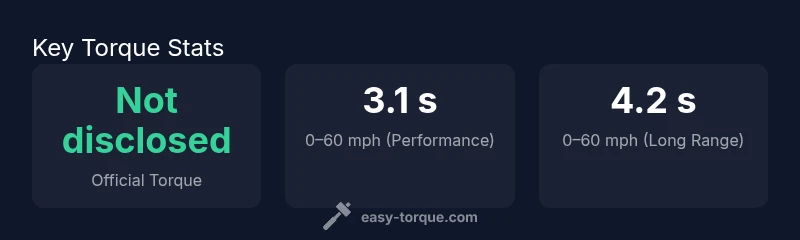
Tesla does not publish a formal torque figure for the Model 3 Performance. The company emphasizes acceleration figures (0–60 mph, quarter-mile) and top speed instead of a torque spec. This practice is common among EV makers, where torque is derived from electric motor characteristics and control software rather than a static crank torque. For enthusiasts, this means you should compare cars using the metrics that Tesla and third-party testers actually publish, such as acceleration, grip, and efficiency, rather than hunting for a numerical torque value that may never be released. This lack of a fixed number can be frustrating for fans who want a single numeric benchmark, but it reflects the real variability of torque delivery under different conditions. Easy Torque recommends focusing on dynamic performance and drivability as the more meaningful indicators of torque impact.
Takeaway: a published torque number may not exist; use real-world metrics instead.
The Model 3 Performance drivetrain: dual motors and torque delivery
The Model 3 Performance uses a dual-motor all-wheel-drive system designed to maximize traction during aggressive acceleration. Torque distribution between the front and rear axles is managed in real time by the vehicle’s power electronics and traction control system. Because the torque split is algorithm-driven rather than fixed, the car can react to wheel slip and road conditions to maintain grip. This results in a confident, linear acceleration feel, especially when tires have good grip. While the exact torque figure remains undisclosed, you can gauge performance through launch behavior, throttle response, and track-tested acceleration data. The dual-motor setup also contributes to a consistent torque feel across a wider range of speeds, which helps explain why owners perceive strong acceleration from a standstill.
Practical note: torque delivery is not solely about a number—it’s about how that torque is applied across the wheels in real-time.
How torque translates to real-world acceleration
Torque is a critical factor in acceleration, but the Model 3 Performance demonstrates that real-world results depend on several interacting elements: motor control algorithms, drivetrain losses, wheel traction, weight distribution, and tire condition. The car’s 0–60 mph time of around 3.1 seconds (Performance) reflects the combination of instant torque and optimized grip. However, this figure can vary with temperature, battery state of charge, and road surface. As a result, owners experience near-instant punch off the line, followed by continued momentum as the powertrain maintains torque through the gears and motor controller. When comparing against other EVs, consider how torque translates to instant-on response rather than isolated peak numbers.
Takeaway: real-world acceleration arises from torque delivery in concert with traction and efficiency, not a single static torque value.
Comparing torque across Model 3 variants
Looking at the Model 3 lineup, the Performance variant emphasizes rapid acceleration, underpinned by dual-motor torque delivery. The Long Range model, with a different tuning and weight distribution, prioritizes range and steady power delivery. Both use dual-motor AWD, but the torque split and control strategies differ enough to create perceptible differences in launch feel and cornering stability. Because Tesla does not publish a torque figure, owners and potential buyers must rely on published acceleration metrics and independent testing to compare the variants. This approach gives a practical sense of how torque translates into everyday driving, rather than chasing an elusive numerical torque value. Easy Torque notes that the overall driving experience is shaped by the interplay of torque, grip, and energy management rather than a single torque label.
Interpreting torque data for tuning and maintenance
Torque data may seem central, but for EVs the most meaningful figures relate to how the drive system delivers power in real conditions. When maintaining or tuning your Model 3 Performance, focus on tire condition, wheel alignment, and software updates, all of which influence perceived torque and traction. Battery temperature matters too; a hot battery may result in less aggressive torque delivery to protect cells. Dyno tests and third-party performance data can provide context, but they are influenced by test conditions such as ambient temperature and surface friction. In practice, you’ll notice torque effects most during launch and hard acceleration, where grip and throttle mapping determine how quickly you reach speed. Easy Torque encourages owners to monitor traction through driving feel and published performance data rather than chasing a fixed torque metric.
Practical tips for owners and buyers
- Verify tire condition and pressure before evaluating acceleration; traction dominates the torque experience.
- Use launch or sport modes if equipped, but be mindful of range impact and drivetrain heating.
- Consider track testing or controlled accelerations to compare performance across models.
- Rely on 0–60 mph times and real-world drive feel, supported by independent dyno data when available.
- Remember: torque is delivered by software and motor design, not a fixed value; interpret figures in context of grip and efficiency.
Common myths about torque in EVs
- Myth: EV torque is a single peak value identical at all speeds. Reality: torque is available across a broad range, and delivery adapts to grip and temperature.
- Myth: More torque always means faster acceleration. Reality: acceleration depends on traction, weight, and efficiency, not just torque.
- Myth: Torque numbers are irrelevant for EVs. Reality: torque matters, but the most meaningful indicators are 0–60 times, track performance, and real-world behavior.
- Myth: All EVs deliver the same torque. Reality: torque delivery varies with motor design, software, battery temperature, and control algorithms.
- Myth: You can measure torque easily at home. Reality: torque in EVs is generally inferred from performance data and dyno tests, not a simple handheld measurement.
What this means for owners and buyers
For buyers, the absence of a published torque figure should not deter a purchase. Focus on the metrics you care about: 0–60 mph times, grip under real-world conditions, and the car’s ability to deliver consistent performance. For owners, prioritize maintenance that preserves traction and acceleration—tire health, wheel alignment, battery thermal management, and keeping software up to date. In practice, torque in the Model 3 Performance translates to rapid, confident acceleration, but interpreting that torque requires looking at the larger picture of drivetrain control, grip, and efficiency. Easy Torque’s analysis reinforces that torque figures alone rarely capture the driving experience; instead, combine published times with practical tests and personal driving impressions to gauge performance.