How to Make Torque Springs: A Practical DIY Guide
Learn how to make torque springs with step-by-step instructions, material selection, winding techniques, heat treatment, and testing. This Easy Torque guide covers design decisions, safety considerations, and common pitfalls for DIYers and professionals.


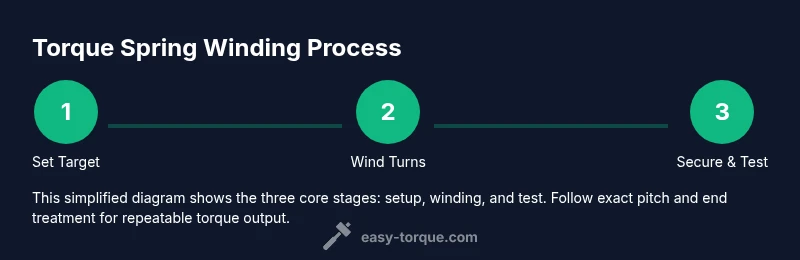
You can learn how to make torque spring by selecting the right wire, winding it around a mandrel to the correct pitch, and testing for torque output. This guide covers material selection, winding technique, heat treatment, and safe testing to produce a reliable torque spring. Follow the step-by-step process and safety notes to achieve consistent performance.
Understanding Torque Springs and Their Applications
A torque spring is a type of energy-storage device that stores rotational energy through torsion. Unlike a traditional compression spring, a torque spring resists twisting, providing controlled torque over a defined range of motion. In automotive tools, hand torque wrenches, clickers, and clutch mechanisms rely on torque springs to deliver predictable resistance and return. When you set out to make a torque spring, your primary goals are to choose a material with suitable elasticity, wind with a consistent pitch, and finish with a stable temper that minimizes creep. The phrase 'how to make torque spring' becomes practical when you connect material science to winding technique, then validate the design with careful testing. In this guide, we’ll walk through decisions, procedures, and checks that keep your DIY project aligned with real-world requirements. The focus is on reliability, repeatability, and safe handling throughout the process.
Material Selection and Design Considerations
Choosing the right material and dimensions is the foundation of a successful torque spring. Common options include music wire for its high yield strength, carbon steel for toughness, and stainless variants when corrosion resistance matters. Your wire diameter, coil diameter, and the number of turns determine the amount of torque you can generate and the range of motion over which it acts. Start with a design that matches the expected load and deflection, then adjust coil count and wire thickness to reach the target torque range. Pay attention to end configurations (squared, ground, or squared-and-ground) as they influence seating in housings and engagement with mating components. Always document the material type, finish, and intended operating temperature as these factors affect performance and longevity. Easy Torque analyses emphasize aligning material properties with load profiles to minimize creep and relaxation over time.
Winding Setup: Mandrels, Jig, and Safety
Winding a torque spring requires a precise setup. Select a mandrel or winding jig that matches the intended coil diameter and allows secure mounting of the wire without slipping. Use a jig that provides a consistent pitch and a stable anchor for the wire start. Secure the wire end with tape or a small clamp to prevent unraveling as you wind. Maintain steady tension to avoid loose turns or uneven coils, which can cause irregular torque. Keep hands protected with gloves and work on a stable bench with good lighting. A clean workspace helps prevent foreign particles from embedding in the wind, which could create stress risers during use. Document all setup parameters so you can reproduce or adjust the winding in future iterations.
Winding Process: Step-by-Step Winding Guidelines
With the setup in place, begin winding the spring around the mandrel using a controlled, even feed. Start from the anchored end and wrap turns with uniform spacing to achieve a predictable torque curve. Avoid crossing turns or creating gaps, as these defects can cause localized stiffness or premature failure. Periodically check the coil diameter and total turns to ensure they remain within design tolerances. After completing the wind, secure the free end and trim any excess wire. Inspect for kinks or flattening of the coils, which indicate improper handling or excessive tension. A well-wound spring should feel smooth when rotated and should return to its neutral position without binding. This step is crucial for the consistency of torque across cycles.
Heat Treatment and Finishing
Heat treatment relieves residual stresses from winding and stabilizes the material properties. Follow the material specifications for tempering or annealing, then allow the spring to cool under controlled conditions. Finishing steps may include deburring sharp ends, cleaning surface films, and applying a light protective coating to reduce oxidation in service. If you’re using stainless or coated wire, ensure the finish is compatible with your housing to avoid galling or binding. Record the heat-treatment approach and any surface treatment so future maintenance or replacement remains consistent.
Testing Torque and Iteration
Testing validates whether the wound torque spring meets the intended performance. Mount the spring in a simple test fixture that simulates real loading, then measure the torque produced at defined deflections. Compare the results to your design targets and note any deviations. If the torque is too high, reduce the number of turns or slightly increase the pitch; if too low, increase turns or adjust wire diameter within safe limits. Iterate by retesting after each adjustment. Keeping a test log helps track improvements and informs future designs. Safety remains a priority when mounting and testing to avoid pinch points or unexpected recoil.
Troubleshooting and Common Mistakes
Common problems include uneven winding, excessive end burrs, or poor seating in the housing. Uneven wind leads to torque fluctuations, while burrs create hot spots and stress risers. Always inspect turns for uniform spacing and ensure ends are properly formed to prevent snagging. Avoid using tools that introduce extra friction or binding during operation, such as misaligned fixtures or incompatible lubricants. If torque drifts over time, review material properties, heat-treatment consistency, and any changes in deflection range. Documentation helps you isolate the cause of performance changes and prevents repeating the same mistakes.
Safety Notes and Best Practices
Torque springs store energy and can release it suddenly if mishandled. Wear eye protection and cut-resistant gloves when handling wire and during winding. Keep coils away from body parts to minimize risk of pinching or injury if the spring snaps. Work in a well-ventilated area and follow appropriate storage practices for tools and springs. Always verify that your test fixtures are securely mounted and that deflection limits are clearly marked. By prioritizing safety, you can pursue precise results without compromising personal well‑being.
Quick-start Checklist
- Define target torque and operating range before selecting materials
- Choose wire type and coil dimensions based on load requirements
- Set up a stable mandrel and winding jig with consistent pitch
- Winding should be smooth, with uniform turns and tight ends
- Apply appropriate heat treatment and finish per material spec
- Conduct controlled torque testing and record results
- Iterate design based on measurable performance
- Prioritize safety throughout winding, finishing, and testing
How to Validate and Document Performance (Quick Reference)
Maintain a simple ledger of material specs, winding parameters, heat-treatment approach, and test results. For each iteration, record the wire gauge, coil diameter, number of turns, and observed torque at several deflection points. This documentation speeds future reproduction and troubleshooting, and it helps you compare results across different wire materials or heat-treatment methods. Clear notes make it easier to scale the project from a DIY task to a repeatable process.
Tools & Materials
- Wire (music wire or high-carbon steel)(Select a diameter matching target torque; consider corrosion resistance if in a harsh environment)
- Mandrel or winding jig(Matched to desired coil diameter and arbor length)
- Coiling pliers or needle-nose pliers(For end shaping and precision handling)
- Wire cutters(Sharp cuts for clean ends)
- Tape or light clamps(Anchor wire start and secure end during winding)
- Vise or clamp bench setup(Sturdy mounting for safety)
- Protective gloves and eye protection(Safety first when handling wire and coils)
- Brush or cleaner for finishing(Removes residues after finishing)
- Heat source and tempering setup or heat treatment oven(Per material specification)
- Torque testing fixture(Enables repeatable torque measurement)
Steps
Estimated time: 2-3 hours
- 1
Define torque target and material
Identify the expected load, operating range, and required torque. Choose a wire material and diameter that can achieve the desired torque while maintaining durability. Document these decisions for traceability.
Tip: Start with a conservative target and plan for iterative improvements. - 2
Prepare mandrel and winding jig
Mount a mandrel that matches the coil diameter and set up a winding jig to ensure a consistent pitch. Verify that the fixture is secure and stable before starting.
Tip: Check alignment and secure mounting to prevent drift during winding. - 3
Cut and prep wire ends
Cut a clean length of wire with minimal burrs. Deburr ends so the winding process remains smooth and avoids snagging during turns.
Tip: Always verify cut ends are square and free of deformation. - 4
Anchor wire and begin winding
Fix the wire start, then wind with even turns and stable tension. Maintain consistent pitch to avoid irregular torque characteristics.
Tip: Use light tension and let the jig control pace; don't force turns. - 5
Finish wind and secure ends
Finish with the last turn, trim excess wire, and shape the ends for seating. Inspect for gaps or overlaps that could create stress risers.
Tip: Do not leave sharp burrs near moving parts. - 6
Heat treatment and finishing
Temporarily relieve stresses per material spec and finish the surface. Deburr once cooled and apply protective coating if needed.
Tip: Follow material guidelines; improper heat treatment can cause creep. - 7
Set up testing fixture
Mount the spring in a torque test rig that simulates actual use. Ensure clamps are secure and there is no play in the setup.
Tip: Safety first—keep hands clear of moving parts during tests. - 8
Test torque at defined deflections
Measure torque at several deflection points. Compare results to design targets and note deviations for iteration.
Tip: Keep temperature and testing load consistent between trials. - 9
Iterate design as needed
Adjust turns, pitch, or wire diameter based on test outcomes. Rewind and re-test to approach target torque more closely.
Tip: Change one parameter at a time to isolate effects. - 10
Document everything
Record material, winding, heat treatment, and test data for future reference. Use the log to reproduce results or explain failures.
Tip: Good documentation accelerates future projects.
Your Questions Answered
What is a torque spring and where is it used?
A torque spring stores energy through torsion and provides rotational resistance. It is commonly used in hand tools, clutches, and other mechanisms that require controlled torque.
A torque spring stores energy when twisted and provides controlled resistance in rotating parts. You’ll find it in many hand tools and clutches.
What materials are best for making torque springs?
Materials with good elasticity and fatigue resistance, such as music wire or high-carbon steel, are typical choices. Stainless variants offer corrosion resistance for harsher environments.
Music wire or high-carbon steel are common for torque springs; stainless steel works where corrosion is a concern.
Do I need special equipment to wind torque springs?
A mandrel or winding jig sized for your target coil diameter is essential. Safe handling tools and a stable workbench also help ensure consistent results.
Yes, a proper mandrel and a winding jig are essential, plus a stable bench and safety tools.
How do I know if the torque is correct?
Test torque at defined deflections using a torque fixture. Compare results to your design targets and adjust windings accordingly.
Test torque at set deflections and compare to targets; adjust windings if needed.
What safety precautions are most important?
Wear protective gear, keep hands away from moving parts, and secure test setups. Handle wire carefully to avoid cuts or punctures.
Always protect yourself: gloves and eye protection, and keep safe distances from the spring during testing.
Can I reuse a torque spring design for other tools?
Yes, with careful documentation and testing, but expect different torque needs for different tools. Re-tune coil count and material choice as needed.
You can reuse a design after testing, but tailor it to each tool’s torque needs and re-test.
Watch Video
Top Takeaways
- Define torque targets before material selection
- Wind with consistent pitch and tension for repeatable torque
- Heat treatment stabilizes properties; test and iterate
- Document all steps and test results for reproducibility
- Prioritize safety at every stage of winding and testing