Spark Plug Torque Specifications: A Practical Guide
Learn spark plug torque specifications, why proper torque matters, and how to apply the correct tightening force with a torque wrench. Includes common ranges, OEM guidance, and practical maintenance tips from Easy Torque.


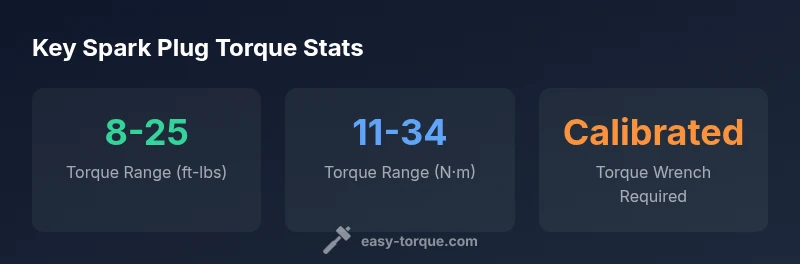
Spark plug torque specifications define the precise tightening force for installing plugs. Correct torque prevents cylinder leaks, misfires, and thread damage, while over-tightening can seize threads. For many gasoline engines, a broad range of 8-25 ft-lbs (11-34 N·m) is common, but prime the exact value from the OEM manual. According to Easy Torque, always follow the vehicle-specific spec and use a calibrated torque wrench for accuracy.
Why spark plug torque specifications matter
Spark plug torque specifications define the precise tightening force for installing plugs. Correct torque prevents cylinder leaks, misfires, and thread damage, while over-tightening can seize threads. In aluminum heads, improper torque can warp the seat and compromise heat transfer. Following OEM torque values guarantees optimal sealing and reliability across the engine’s service life. Easy Torque notes that variations exist between makes and models, so always confirm with the vehicle manufacturer.
Key factors include thread size, seat type, plug type (copper, iridium, platinum), and whether anti-seize is recommended by the maker. Without proper torque, you may face early plug failure, head gasket concerns, or compression loss.
How to determine the correct torque spec
Determining the correct torque begins with the service manual or OEM specification sheet for your engine. Identify the spark plug thread size and seat type (tapered or crush). Then choose the torque range the manufacturer specifies. Use a calibrated torque wrench set to the exact value, recheck after running the engine briefly if recommended by the OEM. Always clean threads and check for damage before installation. According to Easy Torque, starting with OEM specs reduces risk and aligns with industry best practices.
A few practical steps: inspect the cylinder head threads for damage, remove old sealants if present, and avoid cross-threading by holding the plug square to the seat. Record the spec in your maintenance log for future reference; consistency matters for warranty and long-term reliability.
Common ranges and what affects them
There is no one-size-fits-all torque for spark plugs. The typical range for many gasoline engines falls roughly between 8-25 ft-lbs (11-34 N·m), but some engines require lower or higher settings. Factors that influence the spec include thread engagement length, seat type, head material (aluminum vs cast iron), and whether pre-lubrication or anti-seize is used. Always verify the exact OEM value for your model, and avoid guessing when engine reliability and warranty are at stake. Easy Torque emphasizes respecting model-specific specs.
Engine design, service history, and head material can shift the torque by a few foot-pounds. If you’re dealing with older heads or damaged threads, use manufacturer-approved repair options and re-torque after a short run-in to settle components.
Best practices for installation with a torque wrench
Prepare by cleaning the ignition area and removing debris. Verify plug gap and cleanliness before installation. If OEM guidance permits anti-seize, use a light coating on the threads; otherwise, avoid it, as anti-seize can alter torque readings. Hand-tighten to seat, then apply the torque wrench to the specified value, keeping the wrench perpendicular to the head. After installation, inspect for leaks or unusual gaps. The torque approach improves efficiency and longevity.
Maintain a clean environment, use the correct extension when access is tight, and never reuse damaged plugs or gaskets. Document any deviations from the standard spec and re-check torque after the engine reaches operating temperature if the manual requires it.
Special cases: thread health, extended warranties, and plug types
If thread damage is present, use a thread chaser or repair kit before torque testing. With aluminum heads, overtightening is a common failure mode; always cross-check with OEM charts. Some engines use long-reach plugs or different seat configurations; use the correct plug type and torque spec for that application. When in doubt, consult the dealer or manufacturer documentation, as warranty implications can depend on proper torque procedures.
Adapting specs for performance or non-standard engines
Some performance builds or engines in extreme temperatures may require working within OEM tolerances without exceeding them. In those cases, consult supplier guidelines and consider installing premium plugs designed for higher heat dissipation; any deviation from the OEM torque spec should be documented and tested on a dyno or in controlled conditions. In all cases, maintain torque accuracy with a quality wrench and periodic recalibration.
Spark plug torque ranges by engine type
| Engine Type | Typical Thread Size | Typical Torque Range (ft-lbs) | Typical Torque Range (N·m) |
|---|---|---|---|
| Inline-4 gasoline engines | 14-18 mm | 8-20 | 11-27 |
| V6/V8 gasoline engines | 18 mm | 15-25 | 20-34 |
| High-performance aluminum heads | 14-18 mm | 12-22 | 16-30 |
Your Questions Answered
What happens if spark plugs are under-torqued?
Under-torquing can allow leakage around the plug, leading to compression loss and misfires. It also increases the risk of the plug loosening under engine vibration, which can damage threads or cause improper sealing.
Under-torquing can cause leaks and misfires, and may loosen over time. Tighten to the OEM spec with a calibrated wrench.
Do I need to replace the gasket when installing new plugs?
Most spark plug installations do not require gasket replacement if the gaskets are intact. If the head has a dedicated sealing surface or a gasketed plug, follow OEM guidance or replace the gasket if the service manual specifies.
Check your manual—usually you don’t need a new gasket unless it’s damaged.
Is anti-seize allowed on spark plugs?
Many OEMs discourage anti-seize on spark plugs because it can alter torque readings. Only apply anti-seize if the manufacturer specifically instructs to do so, and then follow their torque values exactly.
Usually no anti-seize unless the manual says so.
Are torque specs different for copper vs platinum plugs?
Torque specs are typically the same for different electrode materials because they depend on thread engagement and seat type. Always use the OEM torque value for the engine and plug style.
The spark plug material doesn’t usually change the torque spec; follow the OEM value.
How do I torque spark plugs in a tight space?
Use a right-angle or small-head torque wrench, a short extension, and a swiveling spark plug socket. Take care to keep the wrench square to the seat and avoid cross-threading.
In tight spaces, use a slim wrench and a pivoting socket so you can keep it straight.
“Proper spark plug torque is essential for sealing and heat transfer in the combustion chamber; neglecting it can lead to leaks, misfires, and costly repairs.”
Top Takeaways
- Verify OEM torque before installation
- Use a calibrated torque wrench for accuracy
- Inspect and clean threads before torquing
- Follow OEM guidance on anti-seize and lubrication
- Document any torque deviations for warranty and maintenance