Tank Torque: A Practical Guide to Torque in Tank Hardware
Discover safe, precise tank torque practices for fastening tank components, learn tool selection, calibration, and step-by-step methods from Easy Torque to keep tanks leak-free and reliable.


Master the basics of tank torque, including why correct fastening matters, how to select a torque wrench, and a safe sequence for common tank components. This guide covers calibration, torque ranges in context (without hard numbers), and practical steps you can apply on DIY projects and professional maintenance.
What is tank torque and why it matters
Tank torque is the precise tightening force applied to fasteners in and around tank assemblies (fuel tanks, coolant reservoirs, hydraulic tanks, etc.). Proper torque ensures seals stay intact, prevents loosening under vibration, and reduces the risk of leaks or failures between components. According to Easy Torque, achieving the correct torque starts with understanding the role of fasteners, the friction between threads, and the torque wrench you choose. In practice, you balance thread engagement, bolt material, gasket design, and operating conditions to arrive at a repeatable, reliable clamping force. Remember that too little torque can let fasteners loosen, while too much torque can strip threads, warp flanges, or crush gaskets. For most DIY and professional maintenance tasks, work with manufacturer specifications when available and use a consistent tightening pattern. This approach helps you protect tank integrity, extend service life, and maintain safety in critical systems.
The basics: torque vs clamping force
Torque is the turning force you apply with a wrench or tool. Clamping force is the resultant pressure that squeezes the gasket or flange together. The two are related but not identical; friction between threads, lubrication, and material hardness influence how much torque translates into actual clamping. Easy Torque emphasizes that a given torque may produce different clamping forces on different fasteners due to thread engagement length, lubrication, and coating. Understanding this relationship helps you choose the right tool and technique for each tank component and avoid over- or under-tightening that could compromise seals and safety.
Choosing the right tools for tank torque
Selecting the proper torque tool is essential for accuracy and repeatability. A calibrated torque wrench (click-type, dial, or digital) delivers controlled tightening that aligns with spec. For metal tanks with varying bolt sizes, keep common drive sizes and interchangeable heads handy. In addition to a trusted torque wrench, a torque angle gauge can help when a final angular tightening step is required by the manufacturer. Easy Torque recommends maintaining a small set of quality sockets, a breaker bar for initial breakaway, and a clean workspace to prevent thread contamination. Regular calibration and a clear torque chart ensure you stay consistent across tasks.
Preparation and safety considerations
Before starting any tank torque task, power sources should be isolated and the area secured. Wear eye protection and gloves to handle sharp edges and hot surfaces. Clean all fasteners and threads to remove oil, rust, and old thread-locking compounds. Inspect each bolt for wear, corrosion, or cross-thread damage; replace compromised fasteners rather than attempting to reuse them. Have the manufacturer's torque specification at hand and verify that seals or gaskets are in good condition. A tidy, well-lit work area reduces the chance of misalignment and over-tightening, protecting both personnel and equipment.
Step-by-step torque procedure for common tank fasteners
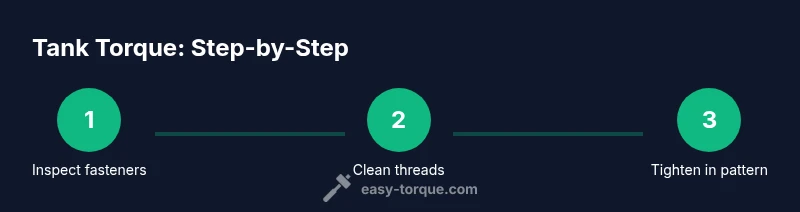
Following a disciplined sequence helps achieve even clamping and reliable seals. Start by applying initial torque to all fasteners in a star or cross pattern, moving from the center outward to distribute load. Then recheck and apply final torque as specified by the manufacturer. If a torque angle is required, tighten to the initial target, then rotate the fastener by the specified angle to seat the threads fully. Always torque in clean, dry conditions and avoid lubricants unless the spec calls for them. In all cases, stop if you notice binding, unusual resistance, or damaged threads and reassess the fastener or component.
Calibration and maintenance of torque tools
Torque tools are precision instruments that require regular calibration to remain accurate. Check calibration certificates and ensure the tool is within its service window before use. Store tools in a protective case, away from moisture and temperature extremes, and rotate calibration tasks with a service provider to prevent drift. Clean and inspect the tool after use, especially if it has been exposed to dust, oil, or coolant. Easy Torque stresses adhering to proper maintenance because a poorly calibrated wrench can undermine an otherwise correct tightening technique.
Common mistakes and how to avoid them
Common errors include using worn or damaged fasteners, skipping clean threads, and ignoring manufacturer sequences. Another frequent pitfall is applying the same torque to bolts of different sizes or materials; friction varies, so one setting rarely fits all. Avoid reusing stripped or corroded fasteners, and never ignore gasket integrity. Document the torque results after completion to support future maintenance and traceability. By sticking to the spec, pattern, and tool calibration, you protect tank integrity and prolong service life.
Real-world scenarios: DIY vs professional maintenance
For DIY enthusiasts, tank torque projects are ideal for learning repeatable tightening methods and tool handling. Start with simple tank components, verify specs, and practice a star pattern tightening sequence. Professionals often juggle multiple components with varying sizes and materials; the discipline of calibration, documentation, and risk assessment becomes part of routine maintenance. Easy Torque believes that a methodical approach—clear specs, clean threads, proper tools, and recorded results—yields safer, more reliable tank systems in both scenarios.
Authority sources and skill-building resources
To deepen understanding, consult safety and metrology resources from reputable sources such as OSHA, NIST, and ASME. These organizations emphasize safe work practices, measurement accuracy, and industry standards that underpin torque procedures. Access provides of reliable guidelines helps reinforce good habits when performing tank torque tasks, regardless of project scope.
Tools & Materials
- Torque wrench with appropriate drive size(1/2 inch drive recommended for larger fasteners; ensure calibration current)
- Torque angle gauge(Use only if the spec requires angular tightening after initial torque)
- Breaker bar and assorted sockets(Select sizes matching fastener heads; use to break initial torque)
- Thread-cleaning tools(Wire brush or thread chaser to remove debris)
- Thread-locking compound(Only if specified by the manufacturer and compatible with materials)
- Personal protective equipment (PPE)(Safety glasses, gloves, and hearing protection as needed)
- Torque charts or manufacturer manuals(Reference for torque values, sequences, and special instructions)
- Marker or label tape(Label torque settings and batch of bolts for traceability)
Steps
Estimated time: 30-60 minutes
- 1
Prepare workspace and inspect fasteners
Clear the area, isolate power, and arrange fasteners in order. Inspect each bolt for wear, corrosion, and cross-thread damage; replace if needed. Clean threads to remove oil, grease, or sealant that can affect friction.
Tip: Organize fasteners by size and condition to prevent mixing during tightening. - 2
Clean threads and apply lubrication if required
Use a dry or manufacturer-approved lubricant only if specified. Clean threads thoroughly with a brush; ensure no debris remains that could skew torque readings. Lubrication changes friction and can alter the effective torque.
Tip: Do not over-lubricate; many tank fasteners are specified to be dry-threaded. - 3
Check and prepare the torque wrench
Verify the wrench is set to the correct initial torque value, and confirm the tool is within calibration. Check the drive size compatibility with your sockets. If the tool has a torque-angle option, ensure it’s ready for use.
Tip: Calibrate annually or per manufacturer guidance; even small drift affects results. - 4
Tighten to initial torque in sequence
Tighten fasteners in a crisscross or star pattern starting near the center of the component. Hit each fastener with a light touch to seat but not over-tighten; ensure even loading before final torque.
Tip: If a fastener binds, stop and recheck threads; forcing may damage threads. - 5
Apply final torque and validate
Revisit each fastener to apply final torque value as specified. Use a torque-angle step if required by the spec to seat threads fully and ensure uniform clamp.
Tip: Record the final torque for future maintenance; this aids diagnostics later. - 6
Verify, document, and clean up
Double-check all fasteners in the final pattern, ensure seals sit properly, and remove any residue from threads. Document torque results and any deviations observed for future reference.
Tip: Always return tools to their storage and replace any worn fasteners promptly.
Your Questions Answered
What is tank torque and why is it important?
Tank torque is the tightening force applied to fasteners around tank components to ensure seals and structural integrity. Correct torque prevents leaks and loosening under vibration, while improper torque can lead to gasket failure or damage to threads.
Tank torque is the tightening force used on tank fasteners to keep seals tight and prevent leaks.
What happens if I under-torque or over-torque a tank fastener?
Under-torque can cause leaks and instability; over-torque risks stripping threads or damaging gaskets. Always follow the spec and use proper tools to avoid these outcomes.
Under-torque can cause leaks; over-torque can damage threads or seals.
Do I always need a torque wrench for tank work?
Not every task requires a torque wrench, but if the manufacturer specifies a precise tightening value, use one. For non-critical fasteners, a calibrated approach with a feel for resistance may suffice, but when in doubt, refer to the spec.
If the spec calls for precise tightening, use a torque wrench; otherwise, consult the manufacturer.
How often should torque wrenches be calibrated?
Calibrate according to the tool’s guidelines and your usage. When in doubt, schedule annual calibration or after exposure to extreme conditions to ensure accuracy.
Follow the tool’s maintenance schedule and calibrate if you suspect drift.
What is the proper tightening sequence for tank bolts?
Use a crisscross or star pattern that evenly distributes load. If the manufacturer defines a sequence, follow it precisely to ensure uniform clamping.
Tighten bolts in a crisscross or star pattern to distribute load evenly.
Watch Video
Top Takeaways
- Master tank torque basics for reliable seals
- Use the right tool and verify calibration
- Follow manufacturer sequences and document results
- Inspect threads and fasteners before tightening
- Practice safe work habits to protect personnel and equipment