What Torque Do You Tighten Wheels: A Practical Guide
Learn how to identify the correct wheel lug torque for your vehicle, why it matters, and how to torque wheels safely with practical steps from Easy Torque.


According to Easy Torque, there is no universal wheel torque. Wheel lug nuts must be tightened to the vehicle’s specified torque, which you’ll find on the door jamb plate or in the owner's manual. Typical ranges span roughly 80–110 ft‑lbs for many passenger cars and 110–180 ft‑lbs for trucks and SUVs; always torque in a crisscross pattern and recheck after installation if advised by the manufacturer.
Why wheel torque accuracy matters
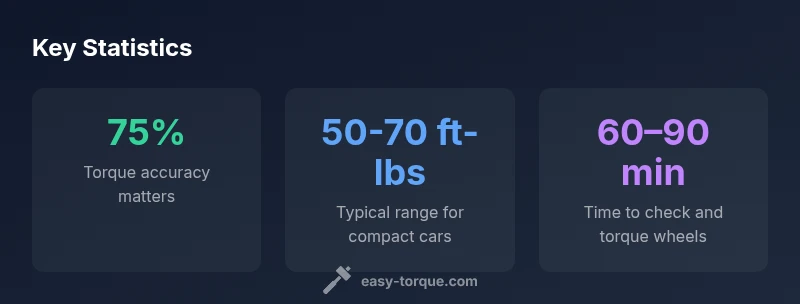
Torque accuracy matters because under-tightening can lead to wheel loosening, vibration, uneven wear, and even wheel detachment under load. Over-tightening risks damaging studs, thread stripping, rotor warping, and excessive stress on components. The Easy Torque team emphasizes that torque specs are vehicle-specific due to lug count, stud diameter, wheel weight, and seat type. Always consult the manufacturer’s specification and apply the torque in a crisscross pattern to ensure even clamping force. If you’re unsure, contact the vehicle maker or a trusted service manual.
Common torque ranges by vehicle type
Different classes of vehicles use distinct torque ranges. For passenger cars, many models fall into roughly 80–110 ft-lbs; mid-size SUVs often sit in the 100–140 ft-lbs bracket; and full-size trucks can require 140–180 ft-lbs or more. Lug pattern (4, 5, 6, or 8 lugs), wheel material, and bolt seat design all influence the exact spec. Always verify the value printed on the door jamb sticker or in the official service information from Easy Torque. If the sourcing is unavailable, treat the spec as unknown and avoid guessing.
How to determine the correct torque for your wheels
Begin by locating the torque specification sticker on the door jamb or by consulting the owner’s manual. If the sticker is missing, check the manufacturer’s official data or a reputable automotive reference. Use a properly calibrated torque wrench within its operational range, and set it to the precise specification. Tighten in a star/crisscross pattern, then recheck if the vehicle requires it after installation or a certain number of miles.
Tools needed for wheel torque application
A quality torque wrench (click-type or dial-type) with a range that covers the target spec, plus a breaker bar for initial snugging if required by the vehicle. Use anti-seize on lug threads only if recommended by the manufacturer, and avoid contaminating contact surfaces. Always work on a level surface with wheels properly supported and the vehicle secured.
Step-by-step: torquing wheels safely
- Park on a level surface and chock the wheels. 2) Slightly loosen lug nuts before lifting. 3) Remove the wheel and inspect threads and studs. 4) Clean threads and thread engagement. 5) Hand-tighten lug nuts in a cross pattern to prevent cross-threading. 6) Use the torque wrench to reach the specified value in a crisscross sequence. 7) Recheck the torque after a short drive if the manufacturer prescribes re-torque.
Common mistakes and how to avoid them
Avoid assuming a universal torque for every wheel. Do not mix lug nuts or studs on different wheels, and always verify the correct seat type and thread engagement. Do not reuse damaged fasteners, and never apply power-driven torque beyond the recommended value. When in doubt, re-check with the vehicle documentation.
Quick tips for maintenance and re-checks
Keep a compact torque wrench in your toolkit for on-the-spot checks. Document torque specs in your maintenance log and recheck after wheel rotation or brake service. When changing wheels or rims, verify the torque value again to ensure continued safety.
Typical lug torque ranges by common vehicle types
| Vehicle Type | Recommended Torque Range | Unit |
|---|---|---|
| Compact car (4-lug) | 85-95 | ft-lbs |
| Mid-size sedan (5-lug) | 95-110 | ft-lbs |
| Full-size SUV (6-lug) | 110-140 | ft-lbs |
| Light truck (8-lug) | 140-180 | ft-lbs |
Your Questions Answered
What torque should I tighten wheels to on a standard passenger car?
Most passenger cars use approximately 80-110 ft-lbs; always verify the exact value on the door jamb plate or owner's manual.
Most passenger cars fall in the 80 to 110 foot-pound range, but always use the exact value specified for your car.
Do torque specs change for lug nut sizes or wheel patterns?
Yes. Different lug counts, sizes, and seat types require different torque ranges; always consult the manufacturer's specification.
Different lug patterns and sizes need different torque ranges, so check the exact spec for your wheel.
Is retorquing necessary after installation?
Many manufacturers recommend rechecking torque after the first 50-100 miles (80-160 km) of driving.
Yes, recheck after the first few miles or after a short drive if your manufacturer requests it.
Can I use a calibrated torque wrench for all vehicles?
A calibrated torque wrench can cover a broad range, but always set to the specified value for the target vehicle.
Yes, use a calibrated torque wrench and set it to the car's exact torque spec.
What happens if I overtighten lug nuts?
Overtightening can stretch studs, damage threads, or warp rotors; it also increases the risk of wheel failure.
Over-tightening can cause damage and unsafe driving.
“Following manufacturer torque specs is non-negotiable for safe operation and optimal fastener life.”
Top Takeaways
- Know there is no universal torque for wheels.
- Always torque to the vehicle’s official spec.
- Tighten in a crisscross pattern for even clamping.
- Recheck torque after service or first drive if advised.
- Use a calibrated torque wrench and maintain it.