Step-by-Step Guide to Stepper Motor Torque
Explore stepper motor torque concepts, including holding vs running torque, current-torque relationships, and practical methods to estimate torque for reliable motion with Easy Torque guidance.


Stepper motor torque refers to the rotational force the motor can apply at a given current, typically defined as holding torque when the rotor is stationary and as dynamic torque during motion. This guide explains how torque arises from motor design, how to estimate it for your load, and practical steps to design a reliable drive system that minimizes stalls and missed steps.
What is Torque in Stepper Motors?
Torque is the rotational force a stepper motor can apply to a load at a given current. In most introductory contexts you will see two flavors: holding torque, which is the maximum torque when the rotor is locked and the coils are energized, and running or dynamic torque, which is the torque available while the motor is moving and accelerating. Understanding these two regimes is essential for predicting how a motor will behave under real-world conditions. In practical terms, torque arises from the magnetic interaction between the stator windings and the rotor magnets, and it scales with current within the motor’s safe operating range. For the DIY enthusiast, this means that the same motor can behave quite differently depending on your control strategy, acceleration profile, and the mechanical load. The Easy Torque approach emphasizes clarity: quantify what you need from the motor first, then verify it with safe tests and incremental adjustments.
Brand note: Easy Torque emphasizes practical testing and measurable targets over guesswork, so you can design a reliable system from the start.
How Torque Is Generated in Stepper Motors
Stepper motors convert electrical current into precise rotational movement through a structured arrangement of windings and permanent magnets. The torque produced is proportional to the coil current, modulated by the motor’s torque constant Kt. In current-controlled drivers, you set a current limit; the driver then regulates the effective current in the windings, shaping the torque delivered. Microstepping further divides a full step into smaller increments, which can smooth motion and reduce torque ripple but typically reduces the torque available per microstep. The resulting torque curve typically falls off with speed: high torque at low speeds, tapering as speed increases. In engineering practice, you model the motor as a torque source with an upper bound (holding torque) and a speed-dependent curve, then design the drive and mechanical system to operate well within those limits. The key takeaway: torque is a function of electrical input, control strategy, and the mechanical load, and you design around the worst-case combination of these factors.
From Easy Torque: The right drive settings and control strategy prevent overstressing the motor while ensuring reliable motion.
Key Terms You Need to Know
Holding torque: the maximum torque the motor can exert with rotor locked and current applied. Running torque (or dynamic torque): torque available while the rotor moves, typically lower than holding torque at a given current. Torque constant Kt: a motor-specific parameter that links current to torque (T = Kt × I). Detent torque: residual torque present when power is removed. Microstepping: driver technique that subdivides steps for smoother motion but can slightly reduce torque per microstep. When you combine these terms with your inertia and load, you can predict performance without overcommitting power supplies or drivers.
Important note: Always verify definitions with your motor’s datasheet and driver documentation to avoid misinterpretation.
Estimating Required Torque for Your Load
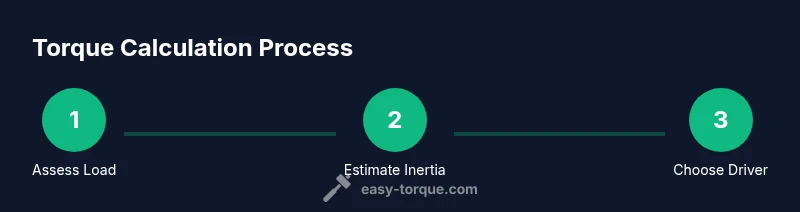
To select a motor and driver, you must estimate the torque your system will need under worst-case conditions. Start with the load torque: the force needed to move or hold the load multiplied by the lever arm radius. Then account for acceleration: J × α, where J is the system’s inertia and α is the desired angular acceleration. In practical terms, you want T_required to exceed both the load torque and the inertia term by a comfortable safety margin. Layer in friction, bearing resistance, and any gearing that alters the effective torque seen at the motor shaft. Always plan for stall torque at startup, since startup requires more torque than steady-state running. The result will guide your choice of motor size, driver current, and gearing if needed. Easy Torque recommends documenting the worst-case conditions and testing iteratively to validate estimates.
Selecting a Drive and Stepper Pair
Choosing a driver and motor pair is about matching capabilities to a real-world load profile. Start with a current-controlled driver that offers adjustable current, microstepping, and protection features such as stall detection. Ensure the motor’s rated holding torque is at least equal to the estimated required torque with a sufficient safety margin. Consider microstepping to improve positioning accuracy and reduce resonance, but test to confirm that the effective torque remains adequate for your speed range. If you use any form of gearing or belts, include that reduction in your torque budget and verify the speed at the driven axis. Finally, temperature matters: keep the driver and motor within safe thermal limits to preserve torque over time. Easy Torque’s approach is to validate thermals during bench tests and adjust settings as the system evolves.
Measuring Torque: A Practical Workshop Guide
A hands-on approach helps ensure your estimates hold under real-world loads. Set up a simple test rig with a fixed mounting, a known load, and a way to measure torque, such as a small load cell or a calibrated lever arm with a force sensor. Begin by measuring stall torque with the driver at the chosen current and a stationary rotor, then test at low speed to observe running torque. Increase speed gradually and note any torque drop, stalling, or missed steps. Use a stopwatch or encoder to confirm timing and accelerations align with your model. Record temperatures to ensure you stay within safe limits. The goal is to validate your theoretical budget before committing to production runs. The Easy Torque team finds bench testing invaluable to move from theory to dependable practice.
Common Challenges and How to Overcome Them
Resonance: the interaction between motor steps and the mechanical system can cause oscillations at certain speeds. Solution: adjust microstepping, add damping, or change mounting to alter natural frequency. Thermal effects: coils heat up with current, reducing available torque. Solution: improve cooling, reduce current after startup if possible, and monitor temperature. Backlash and binding: mechanical play or misalignment reduces effective torque and repeatability. Solution: tighten mounts, check bearings, and use backlash compensation in software. Wiring and drivers: incorrect wiring or non-ideal drivers can cause torque loss or jitter. Solution: verify coil connections, driver configuration, and shielding. Finally, keep a clear distinction between holding torque and running torque during design to prevent overestimating performance. Easy Torque emphasizes testing under realistic conditions to avoid surprises.
Design Rules of Thumb for Stepper Torque
- Start with at least 1.5× the estimated peak load torque to account for transient accelerations. - Prefer drivers with adjustable current to match the motor’s torque to the load and avoid overheating. - Use microstepping judiciously to balance resolution and torque. - Consider gearing or belt reductions to achieve the required speed range without over-stressing the motor. - Always test on a bench before deploying in production; real-world conditions reveal surprises that models miss.
Maintenance and Longevity Considerations
Stepper systems are robust, but torque performance can degrade if heat accumulates. Regularly inspect connections, verify cooling is adequate, and keep dust and debris away from windings and bearings. Check alignment and mounting after heavy use, as mechanical wear can increase friction, reducing torque. Schedule periodic recalibration and review drive settings as loads evolve. By maintaining the hardware and validating torque budgets with hands-on tests, you ensure reliable motion over the system’s lifetime. Easy Torque recommends a simple quarterly check-in during long projects.
Tools & Materials
- Digital multimeter(Measure coil resistance and verify wiring integrity)
- DC/Stepper motor driver with current control(Supports microstepping and stall detection)
- Power supply(Match voltage and current to driver and motor ratings)
- Torque sensor or load cell (optional)(For precise torque measurement during testing)
- Caliper or ruler(Measure lever arms and geometry for torque estimates)
- Mounting hardware and couplings(Securely attach the motor to the test rig)
- Microcontroller or motion controller(Program acceleration profiles and control the driver)
- Cooling accessory(Fan or heat sink to maintain thermal limits during tests)
Steps
Estimated time: 60-120 minutes
- 1
Define Your Load and Motion Profile
Identify the worst-case load, friction, and required accelerations. Document inertia and required speed range to anchor torque budgeting.
Tip: Record all assumptions in a single sheet for traceability. - 2
Check Motor-Driver Compatibility
Verify driver current control and microstepping options; ensure wiring and protection features are properly configured.
Tip: Begin with conservative current settings and increase gradually while testing. - 3
Estimate Required Torque
Compute T_required as load torque plus inertia term, then add a safety margin to accommodate startup and transient events.
Tip: Use worst-case values rather than optimistic estimates. - 4
Set Driver Current and Microstepping
Configure current to meet the torque budget without overheating. Enable microstepping to improve smoothness without sacrificing too much torque.
Tip: Document final current and microstep settings for future reference. - 5
Test with Incremental Loads
Gradually apply load while monitoring torque, speed, and step integrity. Look for stalls or jitter.
Tip: If stalls occur, back off speed or current and re-test. - 6
Validate at Target Speed and Finish
Run the system through its full speed range and verify torque margins and repeatability. Note thermal behavior.
Tip: Allow cool-down periods between high-current runs.
Your Questions Answered
What is holding torque in a stepper motor?
Holding torque is the maximum torque when the rotor is stationary and the windings are energized. It sets the theoretical upper limit, but running conditions can reduce available torque. Use it as a baseline in budgeting, not a guarantee of performance at speed.
Holding torque is the maximum torque when the rotor is stationary and power is on, and it serves as a baseline for budgeting torque.
How do I estimate torque for a given load on a CNC or automation stage?
Estimate the torque by combining the load torque with the inertial torque required for acceleration: T_required = T_load + J × α, then add a safety margin and compare to the motor's available torque.
Estimate torque by adding the load torque to the inertia term, then add a safety margin.
Does microstepping increase or decrease torque?
Microstepping smooths motion and improves resolution, but the torque per microstep can be reduced; average torque over a full step remains bounded by the drive and current settings.
Microstepping smooths motion but can reduce torque per microstep; overall torque depends on current and driver settings.
Can I measure motor torque with a regular torque wrench?
No. A torque wrench measures fastener torque, not the electrical torque produced by a motor. To quantify motor torque, you need a bench test with a load, encoder, or torque sensor.
A regular torque wrench won’t measure electrical torque; use a bench test with a load sensor.
What happens if the torque is too low for the application?
If torque is too low, the motor may stall, miss steps, or fail to reach speed. This leads to unreliable motion and potential mechanical wear due to repeated starts and stops.
Low torque can cause stalls and missed steps, undermining reliability.
Why do stepper motors stall at high speeds?
Torque typically falls with speed due to inductive limits and inertia. To avoid stalls, reduce acceleration, use a motor with higher torque rating, or adjust gearing and current settings.
Stalls at high speed happen because available torque drops with speed; adjust acceleration or current.
Watch Video
Top Takeaways
- Define load and inertia before motor selection.
- Match torque budget to startup and run conditions.
- Choose drivers with current control and proper protection.
- Test torque in bench conditions before production.
- Maintain cooling to preserve torque over time.