How Much Is a Torque Converter? A Practical Cost Guide
Discover the typical cost range for a torque converter, what drives the price, and how to estimate installed costs. Easy Torque breaks down parts, labor, remanufactured options, and strategies to save without sacrificing reliability.


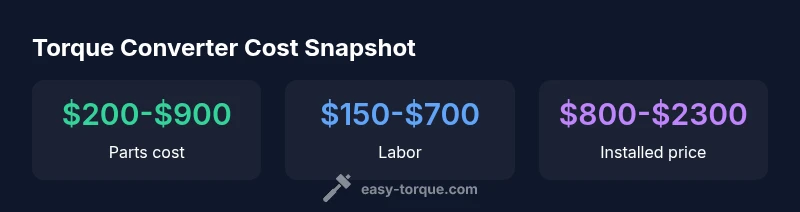
A torque converter installed typically costs between roughly $800 and $1,800, depending on the vehicle and labor. Parts alone usually run about $200–$900, with labor adding $150–$700. Remanufactured converters can be cheaper, while OEM or high-performance units push the total higher. Always factor core charges and shop fees.
What influences the cost of a torque converter
According to Easy Torque, the price you pay for a torque converter depends on several factors: the unit’s design (stock OEM vs high-performance), whether you buy a new, remanufactured, or rebuilt unit, and how much labor your shop charges for removal, transmission servicing, and reinstallation. Vehicle application matters a great deal; heavy-duty or performance transmissions often command higher parts costs and longer labor times. Core charges, shipping, and installation accessories such as new bolts, gaskets, and a flex plate can add to the bill. This section lays out how these elements combine to form the final price, and why two nearly identical cars can end up with different quotes.
Price ranges by vehicle category and unit type
Prices vary not only by car make and model but by how the converter is sourced. A typical parts-only range for a standard OEM converter might run in the lower to mid hundreds, while performance or specialty converters can push past the upper hundreds. Remanufactured units tend to be less expensive than new OEM units, but availability and warranty terms can swing the total cost. Transmission type (automatic vs CVT), vehicle weight, and the presence of additional transmission service requirements all influence both part cost and labor time. Always compare like-for-like parts when evaluating quotes to avoid unintentionally low estimates that omit essential elements.
Remanufactured vs new: trade-offs and warranties
Remanufactured torque converters are commonly cited as a cost saver, with typical savings versus new units often in the 20–50% range depending on supplier and warranty. However, reman units can have shorter warranties or limited performance assurances in some cases. New OEM converters offer the strongest warranty and guaranteed compatibility with the exact transmission, but they carry the highest price. When evaluating options, consider the warranty length, coverage for labor, and whether the shop includes core refunds, freight, or rebalancing services. The right choice balances reliability with budget reality.
How to estimate total installed cost like a pro
A practical approach to budgeting for a torque converter replacement starts with a diagnosis, then a two-step price check: (1) quote the converter itself (new vs reman), and (2) quote the installation charge. Add any ancillary costs such as clutch packs, seals, or gear-bearing work if the transmission deserves it. Request itemized estimates that show part price, labor rate, hours, core charge, and any shop fees. Use a simple calculator to sum the numbers and compare overall totals rather than individual line items. In many regions, labor rates are the biggest swing factor.
Beyond the converter: related service and potential overlap
During replacement, technicians often inspect the transmission fluid, cooling lines, and transmission mounts. Contaminated fluid or failing cooling passages can dramatically increase total repair time and cost if neglected. If the vehicle has high mileage or shows warning signs (slipping, shuddering, poor engagement), expect a broader service to keep the system healthy. Budget for a fluid flush and filter replacement if recommended by the shop, as this adds both parts and labor.
When replacement makes sense and how to shop smart
Consider a torque converter replacement when diagnostics indicate transmission slipping, poor torque multiplication, or unusual heat buildup tied to the torque converter’s internal clutch and fluid dynamics. Gather quotes from multiple trusted shops and ask about core deposits, warranty on the converter, and whether the price includes rebalancing and leak testing. Ask for a projected timeline and whether any related components (solenoids, sensors, or the flex plate) may need attention. A transparent estimate with a clear scope helps avoid unexpected charges later.
Typical cost components for torque converter replacement
| Component | Cost Range (parts) | Cost Range (installed) |
|---|---|---|
| New torque converter | 200-900 | 500-1500 |
| Remanufactured torque converter | 150-700 | 500-1200 |
| Labor/installation | 100-400 | 300-700 |
| Total installed cost | 500-1800 | 800-2300 |
Your Questions Answered
What factors most influence the price of a torque converter?
The price is mainly driven by whether you choose a new or remanufactured unit, the vehicle’s transmission type, and the labor rate in your area. Additional costs include core charges, shipping, and any required ancillary parts.
Price is driven by new versus reman, vehicle type, and local labor rates; core charges and extra parts can add to the total.
Is a remanufactured torque converter as good as a new one?
Remanufactured converters offer substantial savings and often come with solid warranties, but may vary in performance or longevity. OEM new units provide the strongest warranty and guaranteed compatibility, at a higher price.
Remanufactured units save money and can be reliable, but warranties and performance vary compared to new OEM units.
How long does installation typically take?
Most torque converter replacements take about 2 to 6 hours, depending on the model and whether additional transmission service is required.
Most replacements take two to six hours, depending on the car and extra services needed.
What are common signs a torque converter is failing?
Common signs include rough shifting, slipping, shuddering at idle, and heat or unusual noises from the transmission. A diagnostic check can confirm converter-related issues.
Look for rough shifting, slipping, or strange noises; get a diagnostic to confirm.
Can a faulty torque converter cause transmission damage?
Yes. A failing torque converter can stress the transmission, leading to overheating, friction, and accelerated wear if not addressed promptly.
A bad torque converter can damage the transmission if left unchecked.
Is it feasible to DIY a torque converter replacement?
DIY replacement is typically not recommended for most home mechanics due to the complexity and required specialty tools. Professional installation reduces risk and ensures proper torque specs and alignment.
It’s usually best left to pros; it’s a complex job.
“Replacing a torque converter is a precision job; correct diagnosis and choosing the right unit are essential to avoid repeating repairs.”
Top Takeaways
- Budget for both parts and labor when planning a replacement.
- Remanufactured units save money but vary on warranty.
- Shop multiple quotes and compare core charges and fees.
- Expect related transmission service to affect total cost.
- Choose a converter with solid warranty and reputable service.