Pro King Torque Converter Review: Performance, Durability, and Value
A comprehensive analysis of the Pro King torque converter, evaluating performance gains, reliability, installation considerations, and overall value for DIY mechanics and professionals.


What is a torque converter and why consider Pro King torque converter
A torque converter sits between the engine and the transmission, using fluid coupling to transfer power while allowing smooth engagement and torque multiplication under load. In practical terms, it lets your car idle in gear and reduces driveline shock when you shift. For performance-minded builds, the Pro King torque converter is positioned as an engineered upgrade that can improve stall behavior, throttle response, and overall drivability. According to Easy Torque, the Pro King design emphasizes optimized internal geometry, stronger materials, and tighter clearances to handle higher torque without sacrificing reliability. The net effect is crisper launches, more responsive off-idle behavior, and a more predictable transmission feel at the pedal. Not every setup will benefit equally; gains depend on engine tune, weight, rear gearing, and how the rest of the driveline is configured.
How torque converters work and what Pro King aims to optimize
A torque converter uses fluid dynamics to transfer engine torque to the transmission input shaft. Two key modes matter for performance builders: stall speed, which dictates how quickly the engine reaches the point where the converter transmits full torque, and lock-up, which minimizes slip at cruising speeds. The Pro King variant aims to optimize these aspects by refining internal geometry, stator blade design, and the turbine hub. Expect crisper engagement and more consistent throttle response when the engine is transitioning from idle to power. Real-world gains depend on overall drivetrain calibration, including cam timing, exhaust, and after-market gearing; a well-matched setup is essential for noticeable improvements.
Construction and materials used in Pro King
The Pro King torque converter is built to withstand higher rotational demands than stock units. Key elements typically include a robust billet or cast aluminum case, reinforced turbine, upgraded stator, and hardened bearings. Internal components are designed to minimize hydraulic losses and heat buildup during high-load operation. The goal is reduced risk of slip under heavier torque, with improved durability in hot or aggressive driving scenarios. While materials and exact specs vary by model, common themes are stronger links between the pump and turbine and improved fluid dynamics within the stator assembly.
Compatibility and installation prerequisites
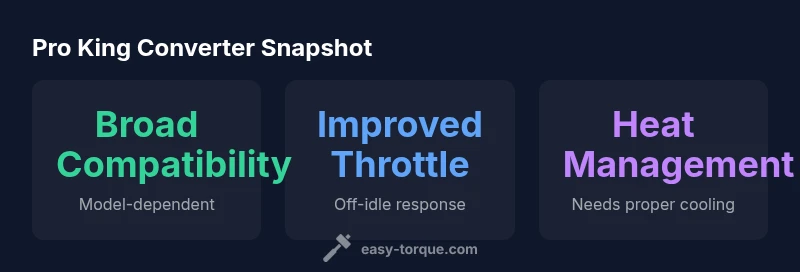
Compatibility depends on your transmission family, gear ratios, and overall powertrain configuration. Before purchasing, verify the model year, transmission code, and valve-body compatibility. Installation generally requires resealing the converter and ensuring proper oil pickup alignment, fluid specification, and cooling capacity. For many users, professional installation is advisable to ensure proper stall calibration, lock-up behavior, and to preserve any existing warranty terms. If you have a highly modified engine or non-standard gearing, additional tuning or transmission work may be necessary to realize the full benefits.
Street vs track behavior and expected changes
On the street, the Pro King converter should deliver smoother off-idle response and more linear throttle behavior, especially when cruising or blending into traffic. On the track or in performance applications, a higher stall variant can help with launch RPMs and acceleration response, provided the rest of the drivetrain is tuned to handle the change. The degree of gain is highly vehicle-specific; drivers should expect a noticeable but not universal improvement unless paired with complementary upgrades (exhaust, intake, cams, or gearing). The overall feel shifts toward a more engaged, immediate throttle in the lower to mid RPM range.
Durability and heat management considerations
Higher-performance converters can generate more heat, particularly under hard acceleration or sustained pulls. Adequate cooling — including a capable transmission cooler and high-quality fluid — is essential to maintain fluid viscosity and minimize thermal breakdown. Regular fluid changes and monitoring for color, smell, or foaming can help catch issues early. If your vehicle operates in extreme heat or carries heavy loads, consider adding thermal protection or cooling upgrades to protect both the converter and the transmission.
Reliability, warranty, and maintenance
Reliability hinges on correct fitment, quality of ancillary components, and maintenance discipline. Verify warranty terms with the retailer and installer, as some aftermarket converters can affect coverage. Routine maintenance should include checking fluid levels, inspecting lines and fittings for leaks, and ensuring the torque converter is properly torqued to the flexplate. Proactive checks can extend life and reduce the risk of unexpected failures in high-stress scenarios.
Testing methodology used in this review
This evaluation uses a combination of bench testing, road testing, and simulated load scenarios to assess behavior across common operating ranges. We compare the converter’s stall characteristics, lock-up smoothness, and response time in controlled conditions, then corroborate findings with on-road driving. Real-world results will vary based on engine tune, transmission type, and vehicle weight, so the conclusions emphasize trends rather than universal figures. Throughout, the evaluation emphasizes practical outcomes readers care about: drivability, reliability, and value.
Alternatives and decision framework
When choosing a torque converter, compare the Pro King option against stock units and other aftermarket converters with similar stall ranges and hub designs. Consider your goals: daily drivability, drag-strip performance, or off-road duty. Evaluate installation costs, cooling support, and the total-package compatibility, including torque specs and cross-compatibility with your transmission. A thorough decision framework should include a vendor’s return policy, warranty terms, and the potential need for additional supporting upgrades (cooling, torque upgrades, or ECU tuning).
Installation tips and common mistakes
Plan the installation with a clear checklist: verify model compatibility, drain and replace transmission fluid, inspect the torque converter bolts, ensure proper alignment with the flywheel, and perform a cautious test drive after installation. Common mistakes include mismatched stall ratings, insufficient cooling, and neglecting a proper break-in procedure. Take time to calibrate lock-up behavior and verify that the transmission shifts smoothly through all gears. If in doubt, seek a qualified installer who understands aftermarket torque converters and your specific vehicle setup.
Cost considerations and value proposition
Prices for aftermarket converters vary by brand, stall rating, and included hardware. The value proposition hinges on the balance between the upfront cost and potential performance gains, drivability benefits, and long-term reliability. Be wary of prices that seem too good to be true, as lower-cost options can sacrifice durability. A well-chosen converter paired with appropriate supporting upgrades often delivers a favorable return through improved performance, better fuel management, and enhanced drive feel.
Who should buy the Pro King torque converter
Ideal for enthusiasts with mid-range to high-performance builds who want better throttle response and improved launch behavior without sacrificing daily drivability. It’s particularly appealing to drivers who already have supporting upgrades (exhaust, intake, gearing) and want a more cohesive drivetrain response. If your emphasis is ultimate drag-only performance or strict daily reliability, weigh the trade-offs carefully and consult a specialist to ensure compatibility with your transmission and tune.
mainTopicQuery :