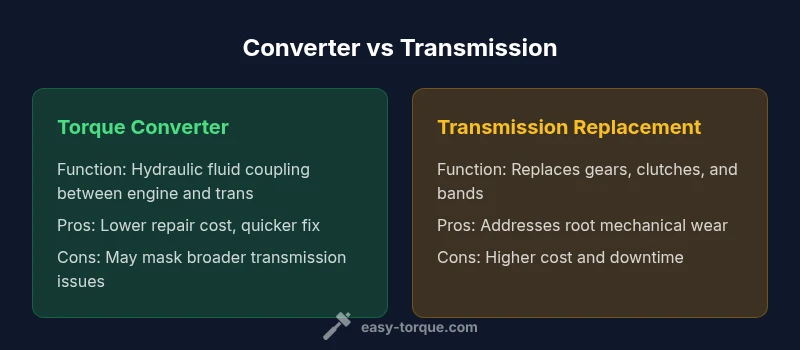
Converter vs Transmission: Replacement Guide for Cars
A detailed, objective comparison of replacing a torque converter vs the entire transmission. Learn signs, costs, downtime, warranty, and practical steps to decide the best long-term fix for your vehicle.


Should torque converter be replaced with transmission? In most cases the converter is replaced when the problem is isolated to the fluid coupling and valve body, not the gears. A converter replacement is typically cheaper and quicker than a full transmission rebuild. If the transmission shows internal wear or slipping due to clutch or gear damage, a complete transmission replacement may be the wiser long-term solution.
Core decision logic
When evaluating whether to replace a torque converter or the entire transmission, the central goal is to identify the root cause of the failure. According to Easy Torque, a targeted converter replacement is sensible when diagnostic data and symptoms point to problems with the hydraulic fluid coupling rather than the gears or clutches themselves. This approach generally leads to lower upfront cost and shorter downtime, making it appealing for everyday drivers faced with a shopping list of repairs. The oft-asked question, should torque converter be replaced with transmission, is answered most reliably by isolating the symptoms to the converter. If, however, the vehicle exhibits transmission-wide issues—persistent slipping, harsh or unpredictable shifts, or metal debris in the pan—the root cause likely lies inside the transmission. In those cases, a complete replacement or rebuild can offer a longer-term fix, even if it means higher upfront expense and longer downtime.
Comparison
| Feature | Torque Converter Replacement | Transmission Replacement |
|---|---|---|
| Cost and value | Lower upfront cost and shorter downtime | Higher upfront cost and longer downtime |
| Labor time | Typically fewer hours | Typically more hours |
| Reliability impact | Good if converter is sole issue | Addresses internal wear and clutch/gear failures |
| Symptom coverage | Covers converter-related symptoms (slippage, shudder) | Covers broader transmission wear and failure modes |
| Compatibility & scope | Affects only the fluid coupling within the transaxle | Addresses gears, clutches, and bands as a system |
| Warranty considerations | Converter warranty often shorter; fluid changes matter | Transmission warranties may be longer for internal components |
Pros
- Lower upfront cost and faster repair
- Reduced downtime and simpler service
- Easier initial diagnosis when symptoms clearly point to the converter
- Less risk of extended shop time due to complex transmission work
Drawbacks
- If the true root cause is transmission wear, problems may recur after a converter replacement
- May not resolve issues caused by internal transmission damage
- Limited protection against future failures if underlying issues persist
Converter replacement is commonly the better short-term fix when symptoms are converter-related, but a full transmission replacement is warranted if internal transmission wear is evident.
In practice, start with a converter-focused diagnosis if data supports it. If symptoms align with converter faults, replacement saves time and money. If gears, clutches, or bands show wear, opt for a full transmission solution to avoid repeated repairs.
Your Questions Answered
What is the primary difference between a torque converter problem and a transmission problem?
A torque converter issue usually involves the hydraulic coupling between engine and transmission, causing slipping or shudder without direct gear damage. Transmission problems involve worn gears, clutches, or valve bodies inside the gearbox. Diagnosis should focus on symptoms, codes, and fluid condition to determine which component is failing.
Converter issues show up as slipping or shudder from the fluid coupling, while transmission problems involve rough shifts or gear wear.
When should I replace the converter rather than the entire transmission?
Replace the converter when diagnostics point to problems with the hydraulic coupling, locking mechanism, or valve body, and the gears and clutches still appear sound. This approach minimizes cost and downtime if the transmission itself is healthy.
If the symptoms point to the converter and the rest of the transmission is healthy, a converter replacement is usually the smarter move.
What risks arise from delaying a necessary transmission replacement?
Delaying a needed transmission replacement can lead to progressive damage, higher repair costs, and potential roadside breakdowns. If warning signs persist, broader failures may develop, reducing reliability and resale value.
Ignoring signs can turn a manageable fix into a major, expensive repair.
Can a failing torque converter cause transmission failure?
A failing torque converter can contribute to transmission strain and heat, potentially accelerating wear in the transmission. However, it is not the sole cause of all transmission failures, so a full diagnostic is essential.
Converter issues can drag the whole system down, but more often you need to confirm the root cause.
Are there maintenance steps to extend life after choosing a replacement path?
Follow manufacturer guidelines for fluid type and service intervals. Regular fluid checks, proper towing practices, and filter replacements help protect either path you choose, preserving longevity and performance.
Regular maintenance helps protect your choice, whether converter or full transmission.
Top Takeaways
- Identify the root cause before deciding
- Converter replacement is quicker and cheaper when the issue is converter-related
- Full transmission replacement is sometimes the only durable solution for internal wear
- Warranty and maintenance history influence the choice
- Plan for downtime and long-term reliability when budgeting