What Causes Torque Converter to Go Out: Troubleshooting Guide
Explore the top causes of torque converter failure, how to diagnose symptoms, and practical repairs. A concise, safety-focused guide from Easy Torque for DIY mechanics in 2026.


Most torque converter failure starts with fluid issues, heat, or wear. The two most common causes are contaminated or low transmission fluid leading to poor clamping and overheating, and worn bearings or clutch packs inside the converter. Start by checking fluid level and condition, then inspect for debris, and replace fluid and filter if needed. If symptoms persist, seek professional diagnosis.
what causes torque converter to go out
What causes torque converter to go out is often tied to fluid health, heat management, and internal wear. According to Easy Torque, the two most common culprits are contaminated or low transmission fluid that prevents proper clutch clamping and cooling, and worn bearings or clutch packs inside the converter. When fluid quality degrades or the converter overheats, clutch packs slip, turbines wear, and the converter can fail to transfer power smoothly. This section explains how these failures begin and why symptoms escalate, with practical checks you can perform on your driveway or in the shop. By understanding root causes, you can act quickly to prevent further damage and avoid costly repairs.
Early Warning Signs and Red Flags
Identifying the early signs of torque converter trouble helps DIYers intervene before a total failure occurs. Common warning signs include harsh or delayed shifts, slipping or shuddering when you accelerate, and overheating symptoms such as a warm or hot transmission pan. If you notice unusually high transmission temperatures, strange whirring noises, or a torque converter that seems to stall engine power when under load, treat it as urgent. The Easy Torque team emphasizes that many of these symptoms originate from either fluid problems or internal wear, so start with the basics—fluid condition, cooling, and the transmission filter. Addressing these early signals can extend the life of your converter and prevent collateral damage to the transmission.
Diagnostic Approach: Systematic Steps to Find Root Cause
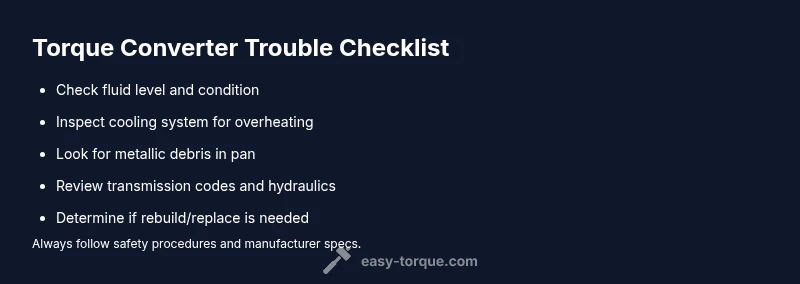
Diagnosing torque converter problems requires a structured flow that starts with the simplest checks and progresses to more involved tests. We'll cover a practical approach: verify fluid level and condition; check for overheating and cooling system issues; review scan codes for transmission and engine faults; assess automatic transmission hydraulics with pressure tests; and inspect the torque converter and clutch assemblies for abnormal wear or damage. Based on Easy Torque analysis, fluid problems and overheating are the most frequent culprits, followed by internal wear. By following a logical sequence, you can distinguish between a fluid or cooling issue and an inner converter problem, saving time and money.
Safety, Tools, and Maintenance Framing
Working around a live transmission requires caution. If you have any doubt about safe procedures, stop and consult a professional. This section covers the essential tools, safe shutdown procedures, and best-practice tips to avoid personal injury and mechanical damage. Use jack stands, wheel chocks, and proper PPE; ensure the vehicle is on a flat surface; disconnect the battery before accessing circuits; and never open a hot transmission or torque converter without appropriate cooling and draining procedures. Regular maintenance can prevent many causes of failure—use the right fluid, replace the fluid and filter per the manufacturer’s schedule, and keep cooling systems in good shape to prevent overheating, which is a frequent killer of torque converters.
Prevention and Maintenance: Keeping Your Torque Converter Healthy
Prevention is simpler than repair. Maintain clean, correct transmission fluid at the right level and change it at the recommended intervals. Keep the cooling system functioning, as transmission overheating is a leading driver of converter wear. Avoid aggressive towing or lugging the engine in the wrong gear, and if you notice slipping or overheating, address it promptly rather than letting it worsen. A proactive maintenance routine, including periodic fluid flushes, filter changes, and a quick inspection of cooling lines and radiator, can significantly extend the life of your torque converter. Easy Torque's recommendations emphasize consistent service intervals and using high-quality, manufacturer-approved fluids.
Verdict: Easy Torque’s Take on What You Can Do Now
After reviewing typical failure modes and practical fixes, the Easy Torque team recommends starting with verification of fluid health and cooling, followed by targeted inspections for wear. If basic maintenance does not restore proper function, a professional rebuild or replacement may be necessary. Protect your transmission by acting early and following a preventive maintenance schedule. The Easy Torque team’s verdict is clear: address fluid issues, monitor temperatures, and seek professional help when internal wear or damage is suspected to avoid costly consequences.
Steps
Estimated time: 2-4 hours
- 1
Verify symptoms and safety
Begin with a safe diagnostic setup: park on level ground, engage parking brake, and disconnect the battery before accessing the transmission area. Note all symptoms and their conditions (temperature, load, gear). This helps you avoid misdiagnosis and reduces risk of electrical shock or fluid exposure.
Tip: Wear gloves and eye protection; keep a clear path to the vehicle in case you need to move quickly. - 2
Check transmission fluid level and condition
With the engine running and the transmission in Park, check the fluid level on the dipstick and inspect the color and smell. A burned odor, dark color, or gritty texture indicates contamination or overheating. If needed, perform a controlled fluid flush or replace the filter to restore flow and cooling.
Tip: Use the manufacturer’s recommended fluid type; do not mix fluids from different brands. - 3
Assess cooling and overheating indicators
Measure transmission temperature if you have a thermal sensor or scan for overheating codes. Inspect the radiator, cooling fans, and coolant level. Poor cooling accelerates wear inside the torque converter and can cause early failure even if the fluid looks ok.
Tip: Ensure the cooling fan engages at normal temperatures; a stuck fan is a common overheating culprit. - 4
Scan for diagnostic trouble codes
Connect an OBD-II scanner to pull transmission and engine codes. Look for P-codes related to transmission hydraulics, torque converter, or sensor faults. Codes help pinpoint electronics or hydraulic issues that masquerade as converter problems.
Tip: Save and clear codes to verify if issues reoccur after repairs. - 5
Inspect torque converter components
If accessible, inspect the torque converter coupling area for leaks, damaged seals, or metallic debris in the fluid. Check the transmission oil pan for shards or unusual wear. A severe metal presence typically means internal wear and a professional rebuild is warranted.
Tip: Do not attempt to disassemble the torque converter unless you have factory service tools and training. - 6
Decide on repair path
If fluid issues and overheating are addressed but symptoms persist, plan for a torque converter rebuild or replacement, which may involve removing the transmission. For many older vehicles, replacing the converter and worn seals while inspecting the transmission is cost-effective compared to a full transmission rebuild.
Tip: Consult a qualified tech for an accurate estimate and warranty terms on parts and labor.
Diagnosis: Hard shifting, slipping transmission, overheating, or unusual noises related to the transmission
Possible Causes
- highLow or contaminated transmission fluid
- highOverheating due to cooling system or towing
- mediumInternal wear of bearings, clutch packs, or turbine
Fixes
- easyCheck fluid level and condition; flush or replace fluid and filter if necessary
- easyTest cooling system and radiator fans; address overheating and improve airflow
- hardInspect for metallic debris and wear; perform pressure test and consult professional for rebuild/replace
Your Questions Answered
What are the early signs a torque converter is failing?
Early signs include harsh or delayed shifts, slipping, shuddering, and occasional overheating. If you notice any of these, stop driving aggressively and inspect transmission fluid and cooling systems first.
Common early signs are hard shifts and slipping; check fluid and cooling systems promptly.
Can a bad torque converter cause transmission slipping?
Yes, a failing torque converter can cause slipping by not transferring power smoothly from the engine to the transmission. This often coincides with contaminated fluid or overheating.
Yes, a bad torque converter can cause slipping due to poor power transfer.
Is it safe to drive a car with a suspected torque converter problem?
Driving a car with suspected torque converter issues risks further damage to the transmission and should be avoided. Get a diagnostic done and limit driving to short distances if you must move the vehicle.
No, driving long distances with converter problems is risky; get a diagnostic soon.
How long does a torque converter usually last?
Lifespan varies by vehicle and usage, but proper maintenance can extend converter life. Severe heat, contamination, and heavy towing shorten longevity.
Converter life varies; good maintenance helps, heat and contamination shorten it.
Should I replace the torque converter or the transmission?
If internal wear is isolated to the converter, replacement may suffice. Extensive transmission wear or failed seals might require a full transmission rebuild. A mechanic can assess the root cause.
It depends on where the wear is; start with diagnosing the converter first.
What maintenance can prevent torque converter failure?
Regular fluid changes with the correct specification, proper cooling, and avoiding overloading the transmission reduce failure risk. Routine inspections help detect issues before they become expensive.
Regular fluid maintenance and cooling checks prevent many converter problems.
Watch Video
Top Takeaways
- Check fluid health before any disassembly
- Overheating is a leading cause of converter wear
- Look for metallic debris as a sign of internal wear
- Follow a stepwise diagnostic flow to avoid guesswork
- Consult a professional for rebuilds or replacements