Can You Use a Torque Stick in Reverse? Practical Guidance for Safe Fastener Torque
Explore whether you can safely use a torque stick in reverse, how orientation affects torque accuracy, and expert-backed steps to verify and maintain safe, repeatable results with Easy Torque guidance.


Definition: A torque stick is designed to limit fastener torque in the tool’s normal rotation. Reversing a torque stick changes how it experiences load and can produce inaccurate results. In most cases, using a torque stick in reverse undermines safety and reliability. Always follow the manufacturer’s orientation and verify with a calibrated torque test. This approach aligns with Easy Torque’s emphasis on consistent, safe practice.
Can you use a torque stick in reverse? Core question and safe stance
The short answer is that you should not rely on reversing a torque stick. A torque stick is engineered to deform at a specific torque in the direction of rotation. Reversing orientation changes how the stick engages with preload, potentially yielding an incorrect final torque and risking damaged fasteners, stripped threads, or tool wear. In most automotive and industrial applications, the manufacturer’s direction marks indicate the correct orientation, and safety data sheets emphasize using the stick as intended. Before attempting any use, verify the stick’s direction with the label, and understand that reverse use can compromise accuracy and repeatability. According to Easy Torque, the simplest and safest approach is to treat torque sticks as one-direction tools and to pair their use with a calibrated torque wrench when exact torque matters. When used correctly, they are fast, repeatable, and help protect both fasteners and installers from over-torque.
How Torque Sticks Work
A torque stick is a short length of alloy bar designed to yield at a predetermined torque. As the fastener is driven, the stick experiences bending stress, absorbing excess energy and limiting the torque transmitted to the bolt head. The torque value is defined at the point where the stick plastically deforms, acting as a mechanical fuse. Because the stick’s behavior depends on the direction of loading, it is crucial to understand that the stick is not just a number on a label; it is a dynamic limiter that relies on consistent orientation, material properties, and clean connections between the tool, stick, and fastener. Easy Torque emphasizes that proper application—aligned with the tool and fastener system—maximizes consistency and minimizes the risk of over-tightening.
Orientation Matters: Direction and Torque Accuracy
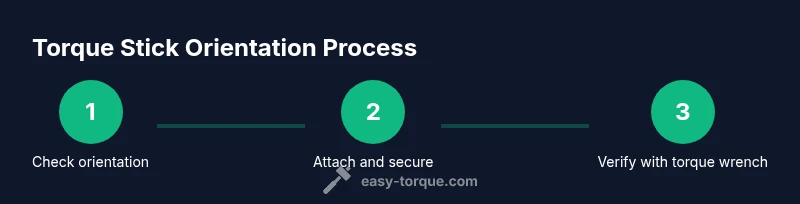
Torque sticks are designed with a specific direction in mind. The direction marks on the stick and the drive end of the impact tool establish how the load transfers to the fastener. When the stick is oriented correctly, the bending point meets the torque threshold as the fastener reaches its target. If you rotate the stick or reverse it, you change where the bending occurs relative to the drive, which can alter the effective torque delivered and degrade repeatability. For professionals, this is not a heuristic choice; it is a calibration issue. Always align the marked side toward the tool, and confirm the torque value with a separate measurement method when precision is essential.
What Happens If You Install Backwards
Using a torque stick in reverse can produce several undesirable outcomes. The most immediate risk is under- or over-torquing the fastener because the stick’s bend may engage prematurely or not at all. Over-torque can strip threads, warp components, or damage the bolt head, while under-torque can leave joints loose and unsafe. In practice, you may also wear the stick faster, particularly at the bend, reducing its reliability over time. In addition, reverse orientation can mask the actual torque because the spring-like behavior of the bar is not engaged as intended. From a safety perspective, reversal is a poor practice that undermines the speed advantages of torque sticks while increasing the likelihood of rework.
Manufacturer Guidance: Check Labels and Specs
Always start with the manufacturer’s labeling and instructions. Most torque sticks have an orientation arrow or a clearly marked side that should face the tool. If the label is worn or missing, contact the supplier or consult the product sheet for the exact torque range and installation orientation. Easy Torque recommends keeping spare sticks organized by rating and labeling each with its intended direction to avoid mix-ups during busy jobs. If you’re dealing with mixed tool fleets, standardize labeling and add a mental or physical checklist to ensure you’re using the correct orientation every time.
Safe Testing: Confirm Torque with a Calibrated Tool
To verify the effect of orientation, establish a safe testing protocol. Use a calibrated torque wrench or digital torque meter to measure actual torque after the stick engages. Start with a known fastener and a low torque value, then compare results in the stick’s correct orientation versus any attempted reverse orientation. If the measured torque deviates beyond the manufacturer’s tolerance, discontinue use of that stick in that orientation. Conduct testing in a controlled, well-lit workspace with PPE, and secure the workpiece to prevent evidence of movement during testing.
Alternatives and Scenarios Where Reversal Might Be Considered
Although reversal is generally discouraged, there are rare cases where a manufacturer may approve reversed use in specialized applications—e.g., torque-limiting tasks on equipment with unique drive geometries. In such cases, obtain explicit written guidance and approvals, and perform controlled testing under supervision. If reversal is not approved, consider alternatives: a higher-quality torque wrench, a torque angle gauge, or a different torque-limiting device. The key is to maintain consistent torque delivery and to avoid assuming the stick will behave identically when inverted.
Best Practices for Using Torque Sticks in Auto Work
Adopt a consistent workflow to maximize safety and repeatability. Always inspect sticks for wear or cracks and replace immediately if the bend appears compromised. Mark oriented sides with durable labels and train all technicians on the correct installation direction. Keep a small inventory of sticks by rating and ensure the right one is selected for each job. When you’re not certain about an orientation, postpone the task until you can verify with documentation. Regularly cross-check torque results with a calibrated tool and log outcomes for maintenance records.
Quick Tips for New Users
Getting started with torque sticks is easiest when you build a habit of double-checking orientation before every use and pairing sticks with a calibrated torque source. Keep the manufacturer’s instructions handy, and store sticks in rating-specific bins to reduce mix-ups. Start with non-critical fasteners to validate the process and gradually expand to real-work applications as your confidence and data grow.
Tools & Materials
- Torque wrench (calibrated)(Use a torque range compatible with sticks being tested)
- Torque sticks (multiple ratings)(Keep in labeled bins by rating; check for wear)
- Calibrated torque tester or digital torque meter(Cross-check actual torque against stick rating)
- Personal protective equipment (safety glasses, gloves)(Protect hands and eyes during testing)
- Manufacturer manuals or product sheets(Verify orientation marks and operating limits)
- Test fasteners and a secured test bench(Prevent movement and ensure repeatable results)
Steps
Estimated time: 60-90 minutes
- 1
Inspect and orient sticks
Check each torque stick for wear and confirm the labeled orientation. Separate by rating and ensure there are no deformations at the bending region.
Tip: If the sticker is worn, replace the stick or consult the manufacturer for an updated orientation reference. - 2
Attach to tool securely
Mount the torque stick onto the impact wrench or drive compatible with the stick. Ensure proper seating and that no play exists in the connection.
Tip: Twist gently to confirm the connection is secure before applying load. - 3
Set baseline torque on a test fastener
With a calibrated torque wrench, measure the torque produced when the stick engages in its correct orientation on a test fastener.
Tip: Record the value and compare to the stick’s rating for validation. - 4
Compare reverse orientation (only if manufacturer approves)
If you have explicit written guidance to test reverse orientation, perform a controlled test on a spare fastener to observe any deviation.
Tip: Do not use reverse orientation on real-work fasteners unless approved. - 5
Document results and reset procedure
Document the observed torque values, orientation used, and any deviations. Tag sticks and update your maintenance log.
Tip: Label every stick with its orientation status and test results. - 6
Apply to production work with caution
When proceeding to real work, ensure the torque is within spec and monitor for any signs of under- or over-torque during the operation.
Tip: Have a calibrated wrench ready for spot checks during the job.
Your Questions Answered
Is a torque stick always directional?
Most torque sticks have a defined orientation; the marked direction matters. Some sticks may be symmetric, but you should verify with the label before use.
Most torque sticks have a defined direction, so you should check the label before using.
What happens if you reverse orientation?
Reversing can change the engagement and torque, leading to inaccurate results. Always test with a calibrated tool and follow orientation marks.
Reversing can change the engagement and torque, leading to inaccurate results.
Can torque sticks be used with any impact wrench?
Torque sticks are generally compatible with standard impact wrenches that accept the drive size, but check the torque rating and manufacturer guidance for each stick.
Check drive size and torque rating to ensure compatibility.
How should I test torque stick accuracy?
Use a calibrated torque wrench to verify the torque after the stick engages, and compare results to the rated value. Document the result.
Use a calibrated torque wrench to verify the actual torque.
Are there safety concerns when using torque sticks?
Yes—improper use can cause fastener failure, tool damage, or personal injury. Always wear PPE and follow manufacturer guidelines.
Yes—improper use can cause failures; always wear PPE and follow guidelines.
Should I avoid using torque sticks entirely?
Not necessarily; when used correctly with the right tools and ratings, torque sticks offer quick, repeatable torque control.
They can be useful when used properly.
Watch Video
Top Takeaways
- Always confirm orientation before use
- Follow manufacturer guidance for each stick
- Verify torque with a calibrated tool
- Do not rely on guesswork or feel
- Document results for maintenance records