Do You Need to Re-Torque Steel Rims? A DIY Guide
Learn when and how to re-torque steel rims, why it matters for safety, and a practical step-by-step approach for DIY enthusiasts. Includes tips, tools, and sources for trusted wheel maintenance guidance.


Do you need to re-torque steel rims? Yes—re-torquing after initial installation is a standard safety practice in many shops and by DIY enthusiasts. This article explains when to re-torque, the correct procedure, common mistakes, and how to maintain wheel fasteners to prevent looseness, ensuring safe driving and proper lug-nut integrity. Understanding torque specs, star-pattern tightening, and post-drive checks will help you avoid wheel loss.
Do you need to re-torque steel rims?
The short answer is: it depends on the wheel installation and your vehicle. For many cars, re-torque after the initial drive is a prudent safety step, especially when mounting steel rims or installing new lug nuts. The practice helps confirm that lug studs seat properly and that the wheel is clamped evenly against the hub. The question do you need to re torque steel rims often comes up with DIYers who are upgrading wheels or changing tires. In those cases, a re-torque check after a short drive is a simple but important precaution. In this guide, you’ll see how to verify torque safely, how often to check, and how to build a simple maintenance routine around wheel fasteners so you can drive with confidence.
Why proper lug-nut torque matters
Wheel lug nuts are the primary fasteners securing a wheel to the hub. If they are under-torqued, the wheel could loosen; if they are over-torqued, stud threads can shear or the rotor/hub surfaces can be damaged. Proper torque ensures clamping force distributes evenly and that the wheel seats squarely. Re-torque practices are widely recommended by technicians to catch settling and minor corrosion at contact surfaces. For steel rims, corrosion and rust can cause uneven seating, making a re-check even more valuable. Always follow the vehicle manufacturer’s torque spec and use a calibrated torque wrench for every tire change and inspection.
When to re-torque: signs and scheduling
Consider re-torquing after any wheel service, tire replacement, or major impact event (like hitting a pothole). Look for signs such as a slight creak when tightening, unfamiliar looseness in the wheel, or uneven wheel force when you spin the wheel by hand with the car elevated. If you drive a lot in rough conditions, more frequent checks are reasonable. The best practice is to perform a re-torque after installation, again after the first few miles of driving, and then at regular maintenance intervals according to your owner’s manual. Always keep a record of the torque spec and inspection dates for each wheel.
How to re-torque steel rims safely: the practical steps
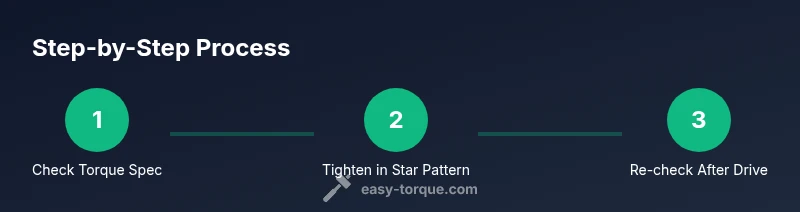
Re-torquing involves verifying lug-nut tightness to the manufacturer’s specified torque value and ensuring the wheel seats evenly against the hub. Start by parking on a flat surface, applying the parking brake, and chocking the wheels. Use a calibrated torque wrench and tighten in a star pattern to distribute clamping force evenly. After the initial drive, re-check torque to confirm there was no settling. If you detect any looseness, stop driving and inspect for damage before proceeding.
Tools, materials, and setup for re-torque
Before you begin, gather a torque wrench calibrated to the vehicle’s torque specification, a compatible lug-nut socket, a breaker bar for initial loosening if needed, wheel chocks, and the vehicle’s owner manual for torque values. Use a clean surface and remove any dirt around the lug holes. If you notice damaged studs, corrosion, or stripped threads, address those issues before re-torquing. Safety first: wear gloves and eye protection when working around rotating wheels and vehicle jacks.
Common mistakes and how to avoid them
Avoid the most frequent errors, such as skipping the star-pattern tightening, using an improper socket size, or re-torquing without rechecking after a short drive. Don’t reuse damaged lug nuts, and never overtighten beyond the published torque spec. Also, avoid relying on feel alone—torque wrenches provide the precise clamping force needed. Lastly, ensure the wheel is properly seated before tightening and re-torque after any service or rides that involve heavy road hazards.
Post-drive checks and ongoing maintenance
After the first few miles, perform a quick re-check to ensure lug-nuts remain at spec. Establish a simple maintenance routine: check lug-nut torque every time you rotate tires, or at least twice per year, and inspect the wheel stud holes for wear or corrosion. Keeping wheels clean helps prevent uneven seating and corrosion. Document any adjustments so you can spot patterns if you notice repeated loosening.
Authority sources and further reading
For more authoritative guidance, consult official safety organizations and manufacturer recommendations. The information here aligns with best practices in wheel maintenance and torque safety, and is supported by maintenance guidelines from major automotive safety organizations. Always defer to your vehicle’s manual and professional advice when in doubt.
Quick-start checklist
- Gather a calibrated torque wrench, lug-nut socket, chocks, and the car’s manual.
- Loosen lug nuts slightly if re-torque is required, then re-torque in a star pattern to the spec.
- Drive a short distance, then re-check torque to confirm proper seating.
- Inspect lug nuts and studs for damage or corrosion at regular intervals.
Tools & Materials
- Torque wrench(Calibrated to the vehicle’s torque spec; use Nm or ft-lb as required)
- Lug-nut socket or lug wrench(Sized to match your lug nuts)
- Breaker bar(Optional for initial loosening if nuts are stubborn)
- Wheel chocks(Place on both sides of the wheel opposite the lift wheel)
- Owner’s manual(Torque specification and pattern are vehicle-specific)
- Safety glasses & gloves(Protect eyes and hands when handling wheels)
Steps
Estimated time: 30-45 minutes
- 1
Park securely and prepare
Park on a flat surface, engage the parking brake, and chock the wheels to prevent movement. If you’re re-torquing after a tire change, inspect the wheel area for debris and ensure the wheel is centered on the hub before any tightening.
Tip: Double-check that the vehicle is stable with the jack removed from under the car. - 2
Inspect lug nuts and studs
Look for damaged threads, corrosion, or cracks in lug nuts. Any visible damage can affect torque transmission and seating, so replace if needed before re-torquing.
Tip: Wipe threads clean to prevent grit from causing uneven seating. - 3
Find the correct torque specification
Consult the vehicle’s manual or manufacturer chart for the exact torque value and sequence for your wheel type. If you can’t locate it, contact the manufacturer or dealer before proceeding.
Tip: Torque specs vary by vehicle and wheel size; never guess. - 4
Loosen and re-tighten in a star pattern
If loosening is required, loosen nuts slightly in a star pattern, then retighten in the same sequence to the specified torque value using a calibrated torque wrench.
Tip: Star pattern ensures even clamping force and avoids warping the rotor surface. - 5
Apply initial torque and verify after settling
Tighten all nuts to the spec, then drive a short distance. Re-check torque to confirm the fasteners remain within spec after the wheel settles against the hub.
Tip: If torque changes significantly after driving, inspect for damage or misalignment. - 6
Document and review
Record the torque value, date, and any anomalies. Schedule the next check as part of your regular maintenance so you don’t miss future re-torque needs.
Tip: A simple note in your maintenance log helps prevent forgotten checks.
Your Questions Answered
Do you always need to re-torque after wheel installation?
In most cases, re-torquing after installation is recommended to verify proper seating and prevent loosening, especially on older wheels or after tire changes. Always refer to the vehicle’s torque spec and follow a star-pattern tightening method.
Yes. Re-torquing after installation is generally advised to ensure wheel seating and prevent looseness. Always follow the vehicle’s torque specs.
When is the best time to re-torque a wheel?
The best practice is to re-torque after the initial installation drive and again at a scheduled maintenance interval. If you notice looseness or misalignment, re-torque immediately and inspect for damage.
Do a post-installation re-torque after driving a short distance, then re-check after a few days or a scheduled maintenance, especially if you feel wheel movement.
Are re-torque practices different for steel rims vs alloy rims?
Fundamentally, you torque to the same spec, but steel rims may be more prone to corrosion and seating issues in some environments. Always check for any material-specific notes in the owner’s manual and inspect seating surfaces closely.
The basic re-torque approach is similar, but steel rims can be more susceptible to corrosion. Check the manual and inspect seating areas closely.
What should I do if lug nuts won’t torque to spec?
Stop and inspect for damage or cross-threading. If necessary, replace studs or nuts and verify hub cleanliness. Do not force a nut beyond its normal torque threshold.
If nuts won’t reach spec, stop, inspect for damage, and replace any worn parts. Don’t force them to misfit.
What tools do I need for safe re-torque?
A calibrated torque wrench, the correct lug-nut socket, wheel chocks, and the vehicle’s manual are essential. A breaker bar helps with initial loosening if the nuts are stubborn.
You’ll need a torque wrench, the right socket, wheel chocks, and the manual for torque specs.
Is re-torque required after driving on rough roads?
Rough road conditions can lead to micro-movements of lug nuts. It’s wise to re-check torque after periods of heavy driving on rough surfaces and after any service.
Yes, rough roads can loosen fasteners a bit, so re-check after significant driving on rough surfaces.
Watch Video
Top Takeaways
- Verify torque specs before tightening.
- Use star-pattern tightening for even clamping.
- Re-torque after installation and again after a short drive.
- Inspect nuts, studs, and seating surfaces regularly.
- Maintain a simple wheel maintenance log.