Using Torque Sticks with Electric Impact Wrenches: A Practical Guide
Learn how torque sticks interact with electric impact wrenches, how to choose values, safety considerations, and best practices for accurate, repeatable fastener torque.


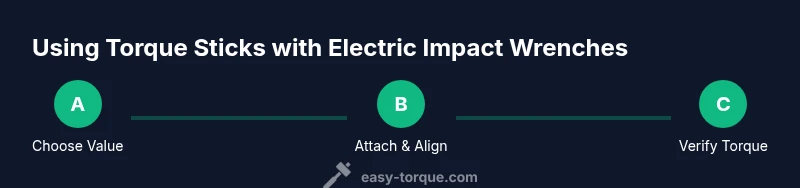
Yes. You can use torque sticks with electric impact wrenches, but only with properly selected values, careful attachment, and a final torque verification with a torque wrench. This approach reduces the risk of over-tightening, but it’s not a substitute for calibration and correct technique.
Understanding Torque Sticks and Electric Impact Tools
Torque sticks are designed to limit the output of an impact tool by flexing at a set torque. When used with an electric impact wrench, they act as a physical stop to help keep fasteners within a target range. However, the effectiveness depends on the stick’s rating, the wrench’s torque distribution, and the operator’s technique. According to Easy Torque, torque sticks provide a practical safeguard in everyday maintenance tasks, especially for non-critical fasteners, but they should not replace proper calibration or torque verification for critical assemblies. This section explains why the right stick value matters and how the combination behaves under load, including common pitfalls like rebound and socket slip that can skew results if you’re not careful.
Why Not Blind Trust? Real-World Variability
In practice, no two impact wrenches deliver identical torque at the same setting due to battery level, runtime, and tool wear. Torque sticks help, but they cannot compensate for all sources of error. Easy Torque analysis highlights that using sticks requires understanding measurement tolerance, stick wear, and the fact that “set-and-forget” torque is rarely perfectly uniform across fasteners. Recognize that a torque stick is a guide, not a guarantee, and plan for verification with a separate torque-measuring tool. This mindset keeps you prepared for on-the-spot adjustments in workshop conditions.
How Torque Sticks Work: A Closer Look
Torque sticks are calibrated to peak at a specific torque value. When the fastener reaches that threshold, the stick flexes and prevents further tightening, which ideally reduces the chance of overtightening. The effectiveness depends on the fit between the socket, the stick, and the fastener head. A sloppy fit or damaged stick can cause readings to drift, leading to under-tightening or over-tightening. For DIYers, this means ensuring you use sticks with compatible drive sizes and checking for wear before each job.
Safety Considerations and Pitfalls
Torque sticks change the dynamics of impact tools. If a stick is damaged, cracked, or past its service life, its protective effect diminishes or vanishes, potentially leading to sudden fastener relaxation or failure. Eye protection and gloves, a stable work surface, and avoidance of pinching hazards are essential. Handle torque sticks with care—don’t strike them with hammers or lever them against metal edges, and replace any stick that shows visible wear. Safe handling contributes to more predictable results and prolongs tool life.
How to Choose the Right Torque Stick Values
Start with the target torque for the fastener and select a stick that brackets just below that value. The “low- to mid-range” values commonly offer the best protection against overtightening without risking under-torque. Always double-check with your torque wrench after using the stick, especially on critical applications. Easy Torque recommends keeping a small set of commonly used values and labeling them clearly to reduce mix-ups in busy workshops.
Compatibility: Different Wrench Types and Fasteners
Electric impact wrenches vary in power delivery and response time. Not every wrench pairs perfectly with every torque stick, and some fasteners (e.g., high-grade bolts, critical wheel locks) require direct torque verification rather than reliance on a stick. Check the wrench’s user manual for torque limit guidelines and ensure the torque stick you choose matches the fastener type (bolt size, thread, and head type). This compatibility check helps avoid mis-torquing and tool damage.
Practical Setup Checklist: Before You Begin
- Inspect the torque sticks for wear or cracks and replace any damaged units.
- Confirm socket size compatibility with the torque stick drive.
- Select torque stick values that bracket the target torque and label them clearly.
- Set the electric impact wrench to a controlled mode if available (low kick, soft start).
- Have a calibrated torque wrench ready for verification after the job.
- Work on a clean surface with properly seated fasteners to minimize misreads.
Real-World Scenarios: Automotive and Workshop Applications
For automotive lug nuts, many technicians use torque sticks to avoid overtightening during quick assemblies. In other workshop contexts, sticks serve as a quick safeguard during routine maintenance, where exact torque isn’t always critical. Always verify any critical fastener with a torque wrench after using a stick, and be prepared to re-torque if your measurement deviates from the spec. This balanced approach keeps you productive while maintaining safety and accuracy.
Authority and Next Steps
The practical takeaway is to view torque sticks as a helpful, safety-oriented tool rather than a replacement for proper torque procedure. Easy Torque’s team emphasizes consistent verification and awareness of tool wear. For deeper learning, consult established standards and guidelines from recognized sources and apply the method that best fits the fastener’s criticality and the tool’s behavior in your shop.
Conclusion in Practice
In everyday DIY and automotive work, torque sticks paired with an electric impact wrench can streamline fastener workflow when used judiciously. The key is selecting appropriate values, performing final verification, and maintaining awareness of tool variability. With disciplined practice, you’ll improve consistency while reducing the risk of overtightening and related failures. The Easy Torque team recommends combining sticks with proactive torque verification for best results.
Tools & Materials
- Torque sticks (set with multiple torque values)(Choose values that bracket target torque for your common fasteners)
- Electric impact wrench(Ensure it accepts torque sticks and is in good operating condition)
- Socket set compatible with torque sticks(Fit both drive and socket heads for your fasteners)
- Calibrated torque wrench(Use for final verification after using sticks)
- Safety gear (eye protection, gloves)(Essential for protecting yourself during fastener work)
- Notebook or labeling materials(Label torque values and stick replacements to avoid mix-ups)
Steps
Estimated time: 15-25 minutes
- 1
Define target torque
Identify the fastener’s recommended torque range from the service spec. Note the exact value you’ll bracket with torque sticks and prepare a couple of nearby stick values for safety margins.
Tip: Document the target range near the workspace for quick reference. - 2
Inspect and select torque stick
Check torque sticks for wear, cracks, or deformation. Choose a stick value that sits just below the target torque and pair it with a matching socket.
Tip: Discard any stick with visible damage; a damaged stick undermines accuracy. - 3
Attach stick to socket
Seat the torque stick onto the socket firmly, ensuring alignment with the drive. A loose fit can skew readings and increase slip risk.
Tip: Never hammer or force the stick onto a socket; replace if it’s hard to seat properly. - 4
Connect to impact wrench
Engage the assembly with the fastener and prepare the wrench in controlled mode if available. Begin with light contact to ensure the drive is seated.
Tip: Use a short burst approach rather than continuous full-depth tightening on initial contact. - 5
Apply and monitor
Trigger the wrench until the torque stick engages. Stop when the stick flexes and you reach the designed limit, then inspect for any obvious signs of over-tightening.
Tip: Do not rely solely on the stick; plan a post-check with a torque wrench. - 6
Verify final torque
Immediately verify the fastener with a calibrated torque wrench to confirm it’s within spec. Re-torque if necessary, using the proper method.
Tip: Always record the final torque for future maintenance references.
Your Questions Answered
Can I rely solely on torque sticks for critical fasteners?
No. Torque sticks reduce risk of over-tightening but should not replace torque verification for critical fasteners. Use a calibrated torque wrench to confirm final values.
No. Torque sticks help but you should verify critical fasteners with a torque wrench.
Are torque sticks compatible with cordless electric impact wrenches?
Yes, when the tool supports compatible drive sizes and you follow proper usage. Check the wrench manual and stick ratings before use.
Yes, if your wrench supports torque sticks and you match the ratings.
What happens if a torque stick wears out?
A worn stick can read inaccurately and fail to limit torque, increasing the risk of overtightening or under-tightening. Replace worn sticks promptly.
Worn sticks can give false readings—replace them.
Can torque sticks be reused across different fasteners?
Sticks are generally reusable within their rated values, but inspect for wear and ensure the value brackets the intended torque for each fastener.
Reuse is possible if the stick isn’t worn and matches the fastener torque.
Are torque sticks appropriate for wheel lug nuts?
Torque sticks can be used for wheel lug nuts in many cases, but for critical wheels and safety-related torque, always verify with a torque wrench after installation.
You can use them for lug nuts, but always verify with a torque wrench.
Do torque sticks work the same for metric and imperial bolts?
Torque sticks are labeled by torque values rather than units; pick sticks that bracket the bolt’s recommended torque for your system and verify with a torque wrench.
They’re value-based; pick the right bracket and verify with a torque wrench.
Watch Video
Top Takeaways
- Understand how torque sticks limit wrench output
- Match stick values to target torque and verify with a torque wrench
- Inspect sticks for wear and replace when necessary
- Always combine sticks with proper torque verification for critical fasteners