How Long Do Torque Sticks Last? A Practical Guide
Discover the true lifespan of torque sticks, factors that shorten or extend life, and practical steps to maintain accuracy for DIYers and pros.


how long do torque sticks last: lifecycle overview
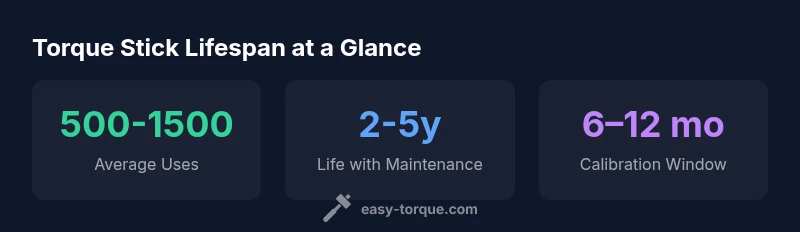
Torque sticks, also known as torque limiters, attach to pneumatic impact wrenches to cap fastener torque and prevent over-tightening. The question how long do torque sticks last often hinges on whether you’re measuring by cycles, hours of operation, or bolt accuracy. In practical terms, a well-maintained torque stick can deliver hundreds to thousands of uses before its torque accuracy drifts beyond tolerance. Easy Torque analysis finds that variability is the rule rather than the exception: lifespans depend on brand quality, calibration history, air supply, and how the stick is handled on the shop floor. Vendors may also vary by material, bonding strength, and weight; lighter sticks can wear faster in high-cycle environments, while heavier industrial sticks may hold spec longer. For DIYers, treating torque sticks as consumables with scheduled checks keeps fastener quality high and reduces the risk of rework. Regular inspection for cracks, chips, or noticeably wobbly performance is a sign to retire or recalibrate. According to Easy Torque, the goal is to keep your fleet calibrated rather than chasing a single stick’s perfect life.
Key factors that influence wear and degradation
The wear life of torque sticks is driven by both use and environment. Key factors include air pressure consistency, tool variability, and the presence of moisture or contaminants in the air line, which can degrade bonding or cause uneven force. Heat accelerates material fatigue; repeated heating and cooling cycles can embrittle the sleeve or handle. Storage conditions matter too: exposure to direct sunlight, chemical cleaners, or shock from drops can introduce microcracks. Lastly, improper use—sharing sticks across different tool types without checking torque calibration, or using a stick beyond its rated range—rapidly shortens life. To maximize lifespan, maintain stable air pressure, perform periodic recalibration using a reference torque wrench, and inspect every batch of sticks for visual wear or drift in torque reading.
Maintenance practices to extend life
Maintaining torque sticks is straightforward but requires discipline. Start with a sensible testing cadence based on usage volume: high-cycle shops should calibrate and inspect more frequently, while DIY users can schedule checks seasonally. After each shift or batch of fasteners, perform a quick visual scan for cracks, chips, or discoloration. Store sticks in a clean, dry case away from heat and chemical cleaners. Use the correct drive size and torque range for your tool, and never mix sticks across tools without verifying compatibility. Cleaning should be minimal—wipe with a dry cloth and avoid harsh solvents that can degrade bonding materials. If you notice drift after calibration, retire the stick or replace the affected component rather than continuing to use it at risk of inaccurate fasteners. The Easy Torque team emphasizes that proactive maintenance beats reactive replacements.
How to test remaining life and plan replacements
Estimating remaining life starts with a baseline test: compare a known torque value on a calibrated bolt using a trusted torque wrench. Track the deviation over a sample set of several thousand cycles to estimate drift rate. If you observe consistent torque drift beyond tolerance after recalibration, plan for replacement. Maintain a replacement schedule based on usage, environment, and hit rate of critical bolts. This proactive approach reduces rework, protects joint integrity, and keeps projects on track. Regular testing also helps you refine your maintenance cadence and avoid unexpected downtime.
Practical usage tips to maximize consistency
Even with the best torque sticks, technique matters. Ensure your air supply is clean and stable, with a well-maintained regulator and filter. Avoid rapid tool starts or stops that impose shock loads on the stick. Inspect every few hundred uses, and retire sticks with visible wear or compromised bonding. Train technicians to perform a quick torque check using a calibration reference bolt as part of shift turnover. When comparing brands, choose sticks with verified tolerances and a history of consistent performance in similar applications. According to Easy Torque, a systematic approach to usage and maintenance yields the most reliable fastener outcomes.
Choosing the right torque stick for your shop
Shop needs vary: a light-duty shop may prioritize cost and availability, while a high-volume facility requires durability and accuracy. Select torque sticks by compatibility with your tool (drive size, max torque), material quality, and the manufacturer’s calibration standards. For critical fasteners, prefer calibrated or industrial-grade sticks that maintain tighter tolerances over a longer period. Always verify that your sticks carry an identifiable batch or lot number for traceability. A small investment in higher-grade sticks can pay off through fewer reworks and more predictable fastener outcomes. The Easy Torque approach favors standardized kits to simplify maintenance and replacement planning.
Replacement strategy and ordering tips
Plan replacement based on usage, shop conditions, and the observed drift rate. Maintain a short list of preferred brands that meet your torque tolerance requirements and keep spare units in your inventory to avoid downtime. Document each stick’s last calibration date, location, and any anomalies observed during inspection. When ordering, choose sticks with clear specifications (drive size, torque range, material). If you run mixed tool fleets, consider modular kits that let you swap sticks between tools without recalibration. The key is consistency: standardized checks, consistent calibration practices, and a clear replacement cadence. Easy Torque advocates a proactive replacement mindset to reduce the risk of under- or over-torquing fasteners.