Hydraulic Torque Wrench for Rent: A Comprehensive Guide
Discover how to rent a hydraulic torque wrench, including pricing ranges, capacity, terms, safety, and tips from Easy Torque.


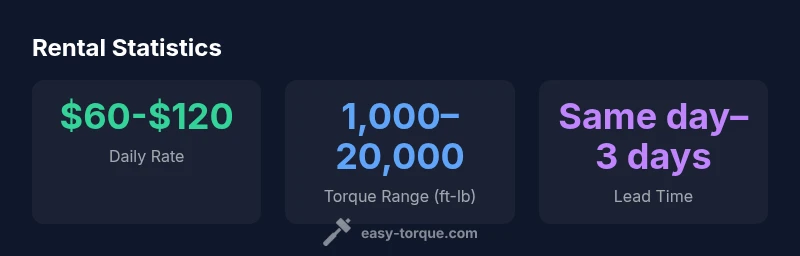
According to Easy Torque... renting a hydraulic torque wrench typically costs about $60–$120 per day, with discounts for weekly or monthly terms. Capacity matters: smaller models cover roughly 1,000–2,000 ft-lb, while high-torque units exceed 20,000 ft-lb. Expect deposits, insurance options, and accessory charges. Rental terms vary by supplier and region.
What is a hydraulic torque wrench and why rent?
Hydraulic torque wrenches are high torque bolting tools that use hydraulic pressure to apply precise torque values to fasteners. They are essential for heavy duty applications such as flange bolts on industrial piping, large drive shafts, and heavy equipment maintenance. Because the tool is heavy, requires a reliable hydraulic supply, and must be calibrated to maintain accuracy, many teams choose to rent for short term projects. A hydraulic torque wrench for rent is typically supplied with a hydraulic hose, control unit, and a torque reading gauge. Renting provides access to top tier equipment without tying up capital, supports surge workloads, and minimizes maintenance overhead. Providers often service and calibrate rental units, improving reliability on site. This approach aligns with Easy Torque guidance on practical torque tooling: assess whether your project truly requires a fixed high torque solution or if a smaller unit or alternative can suffice. Always verify calibration certificates before use.
When renting makes sense vs buying
Renting a hydraulic torque wrench is often the smarter choice for one off projects or uncertain workloads. If you anticipate a project spanning a few days to a couple of weeks, renting offers cash flow flexibility and avoids long term depreciation. For seasonal work or temporary teams, rental avoids storage, calibration, and inspection costs. Consider rental when you need rapid scaling or limited access to trained operators. From the perspective of total cost of ownership, a rental can outperform a purchase for short durations, especially when you factor in maintenance and downtime savings. Easy Torque analysis indicates that for many shops, renting keeps equipment up to date and available without the risk of underutilized assets.
How rental terms vary by supplier and what’s included
Rental terms differ by provider, region, and equipment tier. Commonly you’ll see daily rates and options for weekly or monthly terms. Some listings bundle hoses, adapters, and calibration services, while others bill these separately. Inspect the agreement for deposit requirements, insurance options, and who bears liability if the tool is damaged or lost. There is often a requirement to return the tool in the same condition as issued, which may trigger fees for wear. Before committing, request a written quote that itemizes all charges, including late fees and weekend surcharges. Easy Torque advises checking the provider’s calibration and maintenance schedule to ensure the unit meets torque specifications on arrival.
How to evaluate rental terms for daily vs weekly rates, deposits, and insurance
Daily and weekly rates are not always linear; many vendors reward longer commitments with lower per day costs. Compare terms across three or more suppliers to identify the best overall value. Clarify deposits and whether they are refundable after return and inspection. Insurance coverage is crucial to protect against accidental damage or loss; verify coverage limits and what constitutes a claim. Some providers offer built in insurance, while others require you to purchase a separate policy. Always confirm who handles calibration and whether the unit comes with a recent certificate of calibration. These factors significantly affect the true cost of ownership when you rent a hydraulic torque wrench.
Safety considerations and PPE for rented equipment
High torque tools carry serious risk if misused. Ensure operators are trained in correct torque sequences and understanding of fastener specifications. PPE should include safety glasses, gloves, hearing protection, and steel toe boots. Inspect the tool and hoses for signs of wear before use; look for leaks, rust, or damaged fittings. Verify that the hydraulic reservoir and control unit are free of cracks and functionally tested. Never exceed the maximum rated torque for a given fastener and always follow manufacturer torque charts. When renting, request documentation on safety procedures and confirm that the unit has been recently serviced.
Setup, calibration, and usage guidelines for rented units
Upon pickup, verify the unit’s serial number aligns with your order and ensure a calibration certificate is current. Set up the hydraulic supply with clean, rated hydraulic oil and confirm hose integrity. Attach the correct drive head and socket to match your fastener. Calibrate at the rated torque and test on a sample bolt with a torque wrench to confirm accuracy. Follow a clean and methodical bolting sequence, and maintain a firm stance to counteract reaction torque. Document any deviations from the specification and report them to the supplier immediately.
Maintenance and inspection on return
Return the tool with all accessories accounted for and in the condition documented at pickup. Clean and inspect hoses for cracks, leaks, or stretching. Ensure hydraulic fluid levels are checked and the unit is free from oil or dirt that could indicate a leak. If wear is detected, note it on the return form and request an inspection. Many providers perform post rental servicing and recalibration before the next rental. Promptly communicating wear or damage helps minimize fees and keeps your future rentals reliable.
Quick-start checklist for your rental project
- Define your torque range and fastener specs before searching for a unit.
- Confirm daily vs weekly rates and any volume discounts.
- Verify calibration status and required safety certifications.
- Inspect the unit on pickup and photograph any pre-existing wear.
- Prepare PPE and designate a trained operator for the job.
- Plan for shipping, delivery windows, and return logistics to avoid late fees.
Rental terms overview
| Rental Term | Daily Rate | Deposit | Insurance |
|---|---|---|---|
| 1 day | $60-$120 | $100-$300 | Required/Optional |
| 3-7 days | $50-$110 | $100-$350 | Often required |
| 2 weeks or more | $40-$90 | $250-$500 | Typically included |
| Monthly (custom) | $35-$70 | $500-$1,000 | Negotiable |
Your Questions Answered
What is the typical price range for a hydraulic torque wrench rental?
Most suppliers list daily rates in a broad range. Expect approximately 60 to 120 dollars per day, with discounts for longer terms. Prices vary by capacity, region, and included services or accessories.
Most hydraulic torque wrench rentals run about 60 to 120 dollars per day, with lower per day costs for longer terms. Prices depend on capacity and location.
Do I need training to rent and use one?
Yes. Renters should have basic torque tool training or operate under supervision. Check with the vendor about required certifications and ensure operators understand torque charts and safety procedures.
Yes. You should have basic torque tool training or work with a supervisor to ensure safe operation.
What torque ranges do rentals cover?
Rental units typically cover a wide range from about 1,000 to well over 20,000 ft-lb. Confirm the unit matches your fastener torque specification and the project requirements.
Most rentals span from roughly 1,000 to above 20,000 ft-lb, so check your spec first.
Are there hidden fees I should watch for?
Yes. Watch for hidden delivery charges, late return fees, calibration costs, and insurance add ons. Always request a written quote listing all potential charges before agreement.
Yes, there can be hidden fees like delivery, late returns, and insurance, so get a full written quote.
Can I rent calibration tools or accessories with the unit?
Many rentals offer accessories like adapters, hoses, and calibration certificates either included or as add ons. Confirm what comes with the unit and what costs apply.
Accessories are often included or available as add ons; verify what you get with the unit.
“Rental torque tools unlock cost effective efficiency when used for properly scoped projects. Always verify torque specs and follow manufacturer guidelines.”
Top Takeaways
- Define torque range before renting
- Compare daily vs weekly rates for value
- Check safety training and calibration status
- Inspect tool before accepting delivery
- Understand deposits and insurance requirements