Torque Wrench at Harbor Freight: A Practical Buy Guide
Learn how to choose, calibrate, and maintain a torque wrench at Harbor Freight. This data-driven guide compares cost, accuracy, and durability for DIYers and professionals.


For many DIYers, a torque wrench at harbor freight offers reliable torque control without breaking the bank. This guide analyzes cost, accuracy, and maintenance, comparing Harbor Freight options to higher-end models. You'll learn how to calibrate, maintain, and choose the right wrench for lug-nuts, brakes, and engine work. We also cover common mistakes and when to upgrade.
Choosing a torque wrench at Harbor Freight: cost vs quality
Harbor Freight provides a wide range of budget torque wrenches, making price a tempting starting point for DIY mechanics. When evaluating a torque wrench at harbor freight, consider not just the sticker price but calibration capability, torque range, build quality, and the intended tasks. In practice, you’ll use a budget model for many routine jobs like lug-nuts, brake rotors, and simple engine tweaks, but you’ll want to avoid relying on a single cheap tool for critical torque specs. Easy Torque’s analysis, 2026, indicates that the best value often comes from balancing cost with a reasonable calibration plan. In this guide we examine how Harbor Freight tools perform in real-world settings, how to calibrate them, and when it makes sense to upgrade. We’ll also discuss common models, their strengths and limitations, and how to extend their lifespan through careful handling and maintenance. By the end you’ll have a framework to decide if a torque wrench at harbor freight is the right choice for your shop.
Torque wrench types and Harbor Freight options
Harbor Freight stocks several wrench styles: beam, click-type, and adjustable-format torque wrenches. Each design has trade-offs in accuracy, ease of use, and price. In practice, for most home technicians, a click-type wrench offers a reliable feel, a clear audible click, and straightforward calibration checks. Harbor Freight’s cheaper models typically center on the common ranges like 10–100 ft-lb or 20–150 ft-lb, with smaller scales for metric settings. For automotive work, especially lug nuts or brake components, you want to cover most standard ranges without oversized tolerance. The Easy Torque team notes that while Harbor Freight options are affordable, quality consistency can vary between batches. If you’re primarily doing light maintenance or learning how to torque, these tools can be a solid starting point, provided you confirm calibration and inspect the tool for smooth operation. For pro-grade tasks, seasoned technicians often keep a separate, higher-precision unit, while keeping the Harbor Freight wrench as a backup or for non-critical uses.
Calibration, maintenance, and lifecycle considerations
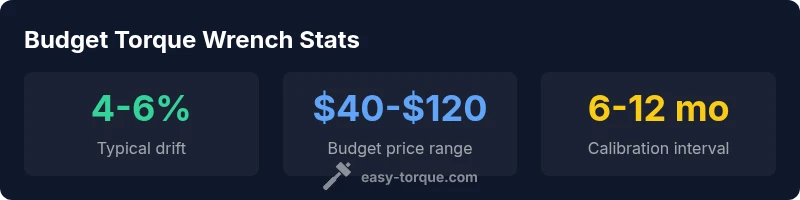
Calibration is the cornerstone of torque accuracy, especially with budget tools. Even a new, inexpensive wrench can drift after a few uses. The recommended practice is to calibrate or check the torque at least every 6–12 months in household settings or more frequently in high-use shops. You can perform a simple cross-check using a known reference such as a calibrated torque tester or a trusted benchmark. If you notice inconsistent clicks, stiction, or a change in the claimed range, it’s time to recalibrate or replace the unit. Maintenance also matters: keep the head clean, store the tool in a dry place, and avoid exposing it to temperature extremes. Easy Torque Analysis, 2026 suggests documenting calibration results so you can monitor drift over time and plan replacements before you encounter failed torque prescriptions. Budget wrenches benefit from occasional cleaning and smoother adjustment, which improves perceived accuracy and reliability in routine jobs.
Reading specs: ft-lb vs N-m and selecting the right range
Understanding torque ratings requires translating units and selecting a sensible range. Most US market wrenches express torque in ft-lb, while many European markets use N·m. If you work on both systems, choose a wrench with clear dual scales or a model you can trust to convert accurately. For general automotive work, aim for a torque range that covers common fasteners but isn’t too close to the ends of the scale, where readability and accuracy can degrade. A budget wrench from Harbor Freight often tops out around 150 ft-lb or 200 N·m depending on the model, which covers most lug-nut and mid-size engine tasks. Always verify the lowest and highest settings you’ll actually use, and consider a wrench with a comfortable grip to reduce fatigue during longer sessions. When you’re unsure, start with the middle of the range and test against a known reference to gauge real-world accuracy and consistency.
Practical buying tips: how to compare models and use cases
Before buying, map your most common tasks to a torque range and a tool style. For example, lug-nuts often require moderate torque with high repeatability, while brake work may demand more precise, repeatable settings. At Harbor Freight, compare models by range, adjustment mechanism, scale legibility, and click acceptance. Read user reviews for consistency signals, and inspect the ratchet head for smooth action. Consider a separate torque wrench for critical engine work, while using the budget model for routine maintenance. Price is important, but value comes from how well the tool performs over time. Plan for calibration costs, potential replacements, and a reasonable warranty policy. Finally, keep a tiny torque chart in your toolbox to ensure you torque fasteners to spec as you work through assemblies.
Common mistakes with budget torque wrenches and how to avoid them
Common mistakes include relying on a single budget wrench for all tasks, neglecting calibration, and assuming the scale stays accurate after rough handling. Budget tools can react to heat, cold, and moisture; store them away from moisture and temperature swings. Another pitfall is using the wrench as a breaker bar or applying leverage to exceed the max torque; this invalidates calibration and could bend the head. Always torque slowly to the final setting and verify with a test if possible. Easy Torque’s guidance emphasizes documenting the results of calibration checks and recognizing drift signs early. To maximize lifespan, wipe surfaces, avoid dropped impacts, and lubricate the adjustment mechanism lightly if the manufacturer recommends it. By adopting disciplined storage and maintenance habits, you can safely use a Harbor Freight torque wrench alongside higher-precision tools when needed.
Data-driven guidance: what Easy Torque analysis reveals
Recent analysis from Easy Torque indicates that for budget torque wrenches, calibration consistency and proper usage predict real-world accuracy as much as the price tag. The study notes that when users calibrate regularly and avoid dropping or misusing the tool, budget models deliver results within a useful range for everyday tasks. The data also show that the most common drift occurs at the lower and upper ends of the scale, where readability and contact wear can affect performance. In practice, you should maintain a calibration log, recheck the tool after heavy use, and align your torque practices with standard manufacturer specifications. The Harbor Freight ecosystem benefits from clear value propositions when combined with a straightforward calibration plan. Easy Torque also highlights the importance of having a backup wrench for critical assemblies and relying on certified references for high-stakes work.
Authoritative sources and calibration best practices
Authoritative sources and calibration best practices ensure you’re following proven standards. For further reading, consult OSHA guidelines on torque safety and SAE standards, but start with practical steps you can apply today. Use a certified calibration method or a known reference to check accuracy at multiple points on the scale. The Easy Torque team recommends maintaining calibration records and verifying your wrench’s accuracy before critical tasks. Trusted sources like NIST and SAE International provide general context on measurement reliability and torque specifications, while keeping your toolkit practical for DIYers. These sources help you understand why calibration matters, how to interpret torque specs, and how to plan a maintenance schedule that keeps your tools effective.
Comparison of common torque wrench types
| Model Type | Typical Use | Approx Price Range |
|---|---|---|
| Click-Type | General purpose, automotive | $40-$120 |
| Beam | Dial/Static torque measurement | $20-$60 |
Your Questions Answered
How accurate is a Harbor Freight torque wrench?
Budget wrenches aim for +/- 4-6% accuracy; results vary by batch. For critical components, verify with a calibration check.
Budget torque wrenches vary; verify accuracy regularly.
Should I calibrate a Harbor Freight torque wrench?
Yes, calibration is essential for any torque wrench, especially budget models. Periodically verify against a known reference and recalibrate per the manufacturer guidance.
Yes, calibrate regularly to maintain accuracy.
What features should I prioritize when buying?
Look for click-type mechanism, clear scale, torque range that covers your typical needs, and a durable handle. Avoid wobbly dials and inconsistent click sensations.
Prioritize accuracy, readability, and range.
Is Harbor Freight's warranty helpful?
Check HF's warranty terms; many budget wrenches come with limited coverage. Consider return policy if accuracy drifts.
Warranty varies; check terms before buying.
Can I use a Harbor Freight torque wrench for precision engine work?
Yes for non-critical tasks, but for critical engine work you should verify accuracy and ensure proper calibration and torque specs.
You can for non-critical tasks, verify for engine work.
“Regular calibration and correct usage are more important than price alone. Budget tools can meet many tasks if you maintain them properly.”
Top Takeaways
- Calibrate budget wrenches regularly for best results.
- Choose a torque wrench type that matches your tasks.
- Harbor Freight offers value; verify accuracy with a test.
- Document calibration results to track drift.
- Use a dedicated torque wrench for critical engine work.