Torque Wrench for Electricians: Safe, Precise Electrical Connections
A practical guide to selecting, using, and maintaining a torque wrench for electricians to ensure safe, reliable electrical connections across panels, terminals, and equipment.


With the right torque wrench, electricians ensure secure connections, prevent terminal damage, and maintain electrical safety. This guide shows how to pick the right wrench, calibrate it, and use it correctly in panels, junction boxes, and equipment cabinets. Key steps: choose the right range, respect manufacturer specs, and verify torque after installation.
The electrician's need for torque control
Electrical connections rely on precise clamping forces. Under torqued terminals can loosen under vibration, leading to arcing, heat buildup, and intermittent faults. Over torqued fasteners risk thread stripping, insulation damage, or conductor deformation. The professional practice is to treat torque as a safety parameter on par with wire size and insulation rating. According to Easy Torque, establishing a torque routine starts with recognizing when torque matters most in electrical work: lug screws on feeders, terminal screws in distribution gear, and bonding screws in panels. By adopting a torque discipline, electricians create auditable maintenance that reduces downtime and improves safety. A good torque program also coordinates with calibration schedules and tool maintenance, so outcomes stay consistent across crews and sites.
Types of torque wrenches and what electricians should know
Torque wrenches come in several styles, including digital, click, and beam types. Digital wrenches provide numeric readouts and data storage, which helps with traceability in service records. Click wrenches emit a tactile click when the target torque is reached, offering a reliable stop without continuous reading. Beam wrenches show a simple indicator scale, which is inexpensive and robust for field use. For electrical work, a wrench with a broad, stable handle grip, good corrosion resistance, and a drive size compatible with panel lugs is ideal. When selecting a tool, consider ease of cleaning after exposure to dust and moisture, as well as compatibility with insulated tools used in live environments. A well chosen wrench minimizes slip and helps you maintain exact torque across many connections.
How to choose the right torque wrench for electricians
Choosing a torque wrench for electrical work means matching tool specifications to the common fasteners encountered in panels and equipment racks. Start with the torque range that covers the lowest and highest torque you expect to apply to terminal screws and lug bolts while staying within the tool’s accuracy spec. For electrical work, a compact drive size like 1/4 inch or 3/8 inch is typically sufficient for small screws, while larger lugs may require 1/2 inch for adequate leverage. Accuracy class matters; look for a spec that remains within a few percent of target torque across the operating range. Durability under workshop conditions, ease of calibration, and availability of replacement parts are also important considerations. Always ensure the tool ships with a calibration certificate or traceable calibration history to confirm reliability.
Reading torque specs and codes for electrical installations
Electrical equipment carries torque specs from manufacturers and standards bodies. Always consult the equipment datasheet or user manual for the exact torque values for each fastener type. Torque specs may be listed in inch-pounds or Newton-meters and are often accompanied by a tolerance range. When possible, use the torque chart provided by the manufacturer and cross-check any similar connectors in related equipment. In addition to manufacturer specs, observe any local code requirements that govern electrical installations, particularly for critical feeders, service connections, and grounding lugs. If a spec is missing, contact the equipment supplier or engineer for guidance rather than guessing. Consistency across panels is essential for reliability and safety.
Setup for a safe torque process in electrical environments
Work in a clean, dry environment and keep all tools within reach to minimize time on live circuits. Before torquing, inspect fasteners for thread damage, burrs, or corrosion, and clean mating surfaces with a lint-free cloth. If using a torque wrench in a live panel, ensure all safety protocols are followed, including PPE and de-energizing procedures when required. Calibrate the wrench before use, and if it has a locking mechanism, verify it is engaged to prevent drift during the torque application. After torquing, re-check the fastener to confirm the wrench clicked at the correct torque and record the result for maintenance logs. Store tools in a dry case away from humidity and extreme temperatures to preserve accuracy.
The calibration and maintenance mindset for electricians
Calibration is not a one-time event. Regular calibration ensures torque accuracy over time, especially in environments with temperature fluctuations, dust, and frequent use. Establish a calibration schedule based on tool usage, manufacturer recommendations, and your site requirements. A traceable calibration certificate provides evidence for audits and compliance records. Keep a log of calibration dates, results, and any adjustments performed. In addition to calibration, inspect the wrench head for wear, ensure the handle grip remains intact, and replace worn parts promptly. Proper storage, cleaning, and periodic checks help sustain accuracy and reliability across job sites.
Step-by-step approach to a typical electrical connection
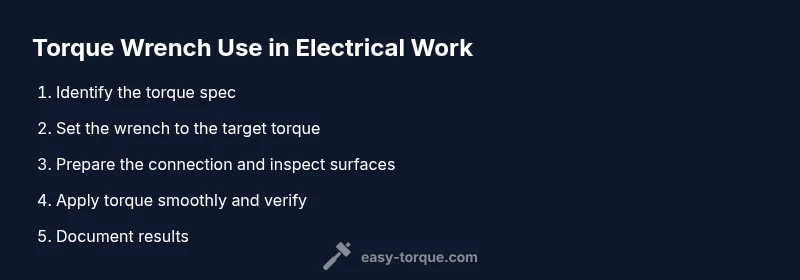
A typical electrical connection involves identifying the torque spec, setting the wrench to that target, preparing the surface, and applying torque in a controlled manner. First, verify the correct fastener and its torque, then adjust the wrench within its rated range. Clean mating surfaces and lightly lubricate if specified by the manufacturer. Apply torque in a smooth, even pull without jerks, and stop as soon as the wrench signals or the click occurs. Finally, re-inspect the connection to ensure no gaps or misalignment and log the torque value for maintenance records.
Common mistakes and how to avoid them
Common missteps include using the wrong drive size for a fastener, ignoring calibration schedules, and applying torque too quickly, which can cause tool drift. Another frequent issue is relying on a wrench outside its rated range, which yields inaccurate results. Avoid over-tightening by using the stress-free range the tool is designed for and always confirm a torque after installation. Additionally, never mix torque wrenches with incompatible attachments or adapters, as this can introduce play and inaccuracy. Finally, avoid using damaged or dirty fasteners, which can give false readings and lead to loose connections.
Practical testing and verification of torque
After torquing, verify that the fastener seated properly and that there is no looseness. For critical connections, re-torque after a short cooldown or after a vibration test to confirm stability. Maintain a log of torque values and results for each connection, which helps with future maintenance and audits. If a fastener repeatedly fails to reach the target torque, inspect the thread condition, check for cross-threading, or consider using a higher grade fastener. Testing should be part of a broader maintenance protocol that improves reliability and safety across electrical systems.
Quick-start checklist for field use
- Identify correct torque specs from manufacturer documentation
- Select a wrench with appropriate range and drive size
- Calibrate and verify zeroing before use
- Clean mating surfaces and inspect fasteners
- Apply torque steadily and confirm the wrench click
- Re-check and document results in maintenance log
Real-world scenarios and tips from the field
In service panels, tight, vibration-prone environments demand reliable torque. In these cases, a calibrated digital wrench with data storage helps engineers audit torque values across crews. Always ensure you have spare batteries and a backup wrench in case one tool fails during a critical installation. Routine maintenance practices such as cleaning and zeroing the wrench after each use save time and prevent drift. The goal is consistent, traceable torque that supports long service life for electrical connections.
Tools & Materials
- Torque wrench (electrical-grade, adjustable range)(Prefer digital or click type with a clear scale and good grip)
- Calibration certificate or traceable calibration history(Ensure within the manufacturer recommended interval)
- Insulated tools for electrical work(Pliers, screwdrivers, and wrenches with proper insulation rating)
- Cleaning cloths and isopropyl alcohol(For removing dust and debris from fasteners)
- Appropriate fasteners and connectors(Verify compatibility with panel lugs and screws)
- Torque spec sheets or manufacturer manuals(Keep for quick reference on site)
- Torque-angle gauge (optional)(Useful for certain connector types requiring angle tightening)
- Storage case or tray(Helps keep tools dry and organized)
Steps
Estimated time: 30-60 minutes
- 1
Identify the torque spec
Review the equipment manual or lug spec to determine the target torque for the fastener. Confirm units (inch-pounds or Newton-meters) and tolerance. This step establishes the goal for the entire procedure.
Tip: If the spec is unclear, reach out to the equipment supplier for confirmation. - 2
Select the correct wrench and drive size
Choose a torque wrench whose drive size matches the fastener and whose range covers the target torque. Ensure the tool is clean and within calibration limits before use.
Tip: Avoid adapters that bypass the wrench's built-in range or alter effective torque. - 3
Set the target torque
With the wrench clean, rotate the handle to the specified torque value. If using a digital wrench, verify the setpoint on the display; for click wrenches, listen for the audible click.
Tip: Lock the setting if the tool offers a locking mechanism to prevent drift. - 4
Prepare the connection
Inspect the fastener threads and mating surfaces for damage. Clean and dry as needed. Ensure the clamp area is free of debris that could affect torque application.
Tip: If lubrication is required, apply only as specified by the manufacturer. - 5
Apply torque in a controlled manner
Place the wrench on the fastener and apply torque smoothly without jerks. Stop once the wrench indicates the target torque or the audible click is heard.
Tip: Maintain a steady pull and avoid re-tightening after the click unless instructed. - 6
Verify and document
Re-check the fastener to confirm it remains at target torque. Record the value, date, and location in the maintenance log for traceability.
Tip: If the fastener drifts, re-inspect the threads and consider replacing the fastener.
Your Questions Answered
What is a torque wrench and why is it used in electrical work?
A torque wrench applies a specific amount of turning force to fasteners, ensuring reliable electrical connections without damage. It helps maintain consistent clamping force on lugs and screws and reduces the risk of loosening under vibration.
A torque wrench applies a precise turn force to fasteners, ensuring reliable electrical connections and reducing loosening risk.
Do electricians need a different torque wrench than mechanics?
Electricians benefit from torque wrenches with small, precise torque ranges and robust insulation for work near live circuits. Mechanics often work with different fasteners and may require higher torque ranges; choose a wrench that fits electrical fasteners first.
Electricians should pick a torque wrench suited for small electrical fasteners and safety requirements, rather than purely higher ranges used by mechanical work.
How often should torque wrenches be calibrated for electrical work?
Calibration intervals depend on usage and environment. In electrical work, a conservative approach is to calibrate annually or after a defined number of uses, especially if the tool is exposed to temperature or humidity changes.
Calibrate at least once a year or after heavy use, and whenever you suspect drift in electrical settings.
Can I use a standard automotive torque wrench for electrical work?
A standard automotive torque wrench may work for some electrical fasteners, but ensure its torque range and insulation are appropriate for electrical panels and safety standards. Prefer tools designed for electrical environments when available.
A basic automotive wrench can be used for some jobs if it meets the torque range and safety needs, but specialized electrical torque wrenches are safer for panels.
What safety measures should I follow when torquing live circuits?
Follow standard electrical safety protocols, including de-energizing when required, using insulated tools, and keeping hands dry. If live work is unavoidable, use PPE and verify that the device can tolerate handling within safe limits.
Follow safety rules, use insulated tools, and de-energize when possible before torquing; wear PPE if live work is required.
What is the best practice for torque verification after installation?
Recheck torque after installation to confirm it did not drift during tightening or vibration. Document the result and re-torque if needed per the spec or maintenance procedure.
Verify after installation and log the result; re-torque if needed per the spec.
Watch Video
Top Takeaways
- Follow manufacturer torque specs for each fastener
- Regularly calibrate torque wrenches and document results
- Use the right wrench size and drive for electrical connectors
- Inspect surfaces and fasteners before torquing
- Log torque checks as part of maintenance records