Torque Wrench for Mini Split: Safe, Accurate Fastening
Learn how to choose and use a torque wrench for mini split maintenance and installation. Step-by-step guidance, safe practices, and reliable torque practices to prevent leaks and damage.


Using a torque wrench for mini split work ensures leak-free refrigerant connections and secure mounting. This guide covers how to select the right torque specs, choose the proper wrench, and perform torque steps safely during installation and maintenance. Follow the manufacturer’s torque values and verify all joints after tightening.
Why a precise torque wrench matters for mini split service
A torque wrench for mini split work is not merely a convenience; it is a safety and performance essential. Proper torque defines the clamping force at every joint, ensuring a leak-tight refrigerant connection and a solid mechanical mount for outdoor units. Without accurate torque, flare nuts can over-tighten, causing thread damage, or under-tighten, leading to leaks and vibration. The mini split system relies on tiny clearances and precise seal contacts, so consistent torque becomes a repeatable standard across installations and service calls. According to Easy Torque, investing in a reliable torque wrench and learning to apply the correct setting reduces the risk of refrigerant loss and warranty disputes. In practice, you must account for thread condition, lubrication, and any thread compounds used. Do not rely on “feel” alone—torque readings quantify the exact force and provide a proven safeguard against common mistakes. This foundation sets the stage for selecting specs, tools, and procedures that keep mini splits operating efficiently.
Selecting the right torque specs for mini split connections
Torque specs vary by manufacturer, model, and the connection type (line set flare nuts vs. mounting bolts). Always start with the official torque values in the service manual or installation guide. When spec pages are missing, contact the manufacturer or consult a trusted distributor to confirm the correct numbers for your unit. Do not guess, especially with refrigerant line connections where mis-sizing can cause leaks or distortion. The material of the line set (copper, aluminum, or composite) can influence the required torque due to different friction characteristics. If thread sealants or lubricants are approved by the manufacturer, apply them as directed and adjust the reading accordingly. Remember that adapters or different drive sizes can alter torque delivery, so re-check the wrench reading after any change. Recording the exact torque for each joint helps future maintenance and reinforces warranty compliance. Easy Torque emphasizes documenting spec adherence as a best practice across every service call.
Tools and adapters needed for mini split torque work
A well-equipped toolkit makes accurate torque work faster and more reliable. At minimum, you should have a torque wrench with an adjustable range appropriate for refrigerant fittings and unit mounting bolts, plus the ability to set a precise torque value. Include a few necessary adapters—flare-nut crowfoot adapters or a 3/8 or 1/2 inch drive with the correct length—to reach tight spaces without altering the torque reading. A torque angle gauge is highly beneficial if your spec calls for angle tightening rather than a single torque value. Keep a set of clean rags and a lubricating or anti-seize compound only if approved by the manufacturer. A leak detector or soap solution helps verify joints after tightening. Finally, carry a current torque specs sheet (printed or digital) and appropriate PPE—gloves, eye protection, and a face shield when needed. Proper tools reduce misreads and improve reliability. - pro_tip: Start with clean threads; dirt and old sealants can shift the effective torque value.
Why use a torque wrench in the field vs a standard wrench
A standard wrench provides rotational force but no fixed torque limit. In contrast, a torque wrench delivers a defined amount of rotational force, preventing under- or over-tightening. For mini splits, this distinction matters at every connection—from the flare nuts on the line set to the outdoor unit mounting bolts. The time you save by guessing is offset by the risk of refrigerant leaks, damaged threads, or mount misalignment. Torque wrenches also support consistency across technicians and jobs, which is crucial for warranty compliance and system performance. When you stick to the specified torque and verify each joint afterward, you create predictable results and fewer callbacks. Easy Torque recommends using a calibrated tool and rechecking readings after any adapter change or repositioning. The goal is repeatable, verifiable tightening rather than reliance on hand tightness.
How to prepare the system safely before torquing lines
Safety and system readiness are prerequisites for any torque work. Power down the heat pump or outdoor unit and lock out electrical circuits as per your shop’s policy. Wear approved PPE—gloves and eye protection—and ensure the workspace is clean and dry. Inspect threads and flare nuts for damage or corrosion; replace any compromised hardware rather than trying to repair it. Verify you are working with the correct line set sections for the model and that any sealants or lubricants used are approved by the manufacturer. If the system has been pressurized or recently serviced, confirm that pressure is within safe working limits before loosening fittings. Finally, set your torque wrench to the target value before touching any fasteners and keep a record of the initial readings.
Understanding torque sequences and preventing leaks
Many mini split installations require a specific tightening order to ensure uniform load distribution across joints. Start with the flare nut connections closest to the service ports and work outward, or follow the manufacturer's recommended sequence. In practice, tighten in small increments, then recheck each joint for movement or signs of leakage. If a joint remains tricky to tighten or reads a questionable torque, pause and reassess—misalignment or debris can mask true torque values. When multiple joints share a common thread or when using adaptors, validate that the wrench reads the intended value after each accessory change. Document any deviations in torque sequence for future reference and warranty purposes. Adhering to a logical, manufacturer-approved sequence minimizes the risk of leaks and helps you diagnose issues quickly later on.
Verifying torque quality with tests and leak checks
Confirming that joints are properly torqued is as important as tightening them. After completing all torques, perform a post-tightening check using appropriate methods: a visual inspection for even gaps, a soap-solution bubble test on leak-prone connections, or a refrigerant leak detector if available. For line-set flare joints, listen for subtle leaks and re-torque if your spec allows. If using sealants, ensure they are fully cured and do not interfere with sealing surfaces. Document the final torque values and test results. If leaks are detected, you must identify the root cause—damaged threads, wrong gasket, or improper torque—and correct it before returning the system to service.
Common mistakes to avoid when torquing mini split fittings
Even experienced technicians can slip into bad habits. Common mistakes include using an under- or over-sized torque wrench, misreading a dial or scale, forgetting to account for adapters, reusing damaged flare nuts, or skipping post-tightening checks. Another frequent error is relying on hand-tightening near the final torque instead of incremental tightening, which can lead to uneven clamping force. Failing to follow the manufacturer’s torque sequence can cause leaks and misalignment. Finally, ignoring calibration schedules and using a non-calibrated tool risks inconsistent results. By staying disciplined—set, check, and re-check—you reduce callbacks and improve system reliability.
Maintenance and calibration schedule for torque tools
Torque tools require regular calibration and maintenance to stay accurate. Follow the tool manufacturer’s recommended interval for calibration, typically based on usage, environment, and age. Store torque wrenches in a protective case, avoid exposure to extreme temperatures, and reset them after use. Regularly inspect for signs of wear, such as worn scales or handle looseness, and replace damaged components promptly. For busy shops, set a quarterly or semi-annual calibration cadence and log every calibration to ensure traceability. Easy Torque emphasizes that a well-maintained torque wrench is a long-term investment in accuracy and reduces the risk of inaccurate tightening on critical joints.
Documentation and safety compliance after torque work
Concluding torque work with proper documentation supports compliance and future service. Record the exact torque values for each joint, the model and serial numbers of the components, and the date of service. Note any deviations from the standard procedure and reasons for them, plus the test results of leak checks or pressure tests. Maintain safety documentation that reflects PPE usage, lockout/tagout procedures, and any hazardous materials handling. Keeping thorough records helps with warranty claims, future maintenance planning, and adherence to safety regulations. By creating clear, auditable records, you reinforce trust with customers and protect your team from miscommunication or omissions.
Tools & Materials
- Torque wrench (click-type or digital)(Ensure the range covers line-set flare nuts and outdoor mounting bolts)
- Adapters (flare-nut crowfoot, 3/8" or 1/2" drive)(Use only adapters that maintain the torque reading)
- Torque angle gauge(Helpful if your spec requires angle tightening)
- Leak detector or soap solution(For post-tightening leak verification)
- Manufacturer torque specs sheet(Printed or digital copy of required torque values)
- Personal protective equipment (PPE)(Gloves, eye protection, and long sleeves as needed)
- Clean rags(Wipe threads and surfaces before tightening)
Steps
Estimated time: 60-90 minutes
- 1
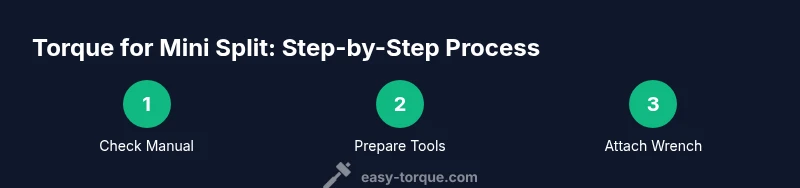
Identify torque specs
Consult the mini split service manual to locate the official torque values for flare nuts and mounting bolts. If the manual is unavailable, contact the manufacturer or distributor to obtain the correct figures. This ensures you tighten to the exact spec rather than relying on guesswork.
Tip: Double-check the joint type before you read the torque value. - 2
Prepare tools and workspace
Set up the torque wrench to the required range and verify it is calibrated. Gather adapters, PPE, leak detection tools, and a release-free surface for the outdoor unit. A clean workspace minimizes misreads and cross-contamination of threads.
Tip: Verify adapter integrity before use; a damaged adapter alters the torque reading. - 3
Power down and secure the system
Shut off the unit, lock out electrical circuits, and confirms the area is dry and safe. Remove any foreign material from threads and inspect for wear or corrosion. This prevents hidden failures during tightening.
Tip: Always follow local safety procedures and wear PPE during service. - 4
Apply torque incrementally
Attach the torque wrench to the flare nut or mounting bolt and tighten in small increments until you approach the spec. If your spec calls for angle tightening, use the torque angle gauge to reach the final specified angle after reaching the nominal torque.
Tip: Use a steady, smooth motion; avoid quick jerks or over-torquing beyond the target value. - 5
Verify joints post-tightening
Recheck all tightened joints and perform a leak check with detector or soap. Ensure there is no movement at the joints and that the seals are intact. Document the final torque readings and any test results.
Tip: If any joint shows movement or bubbles, stop and reassess the assembly. - 6
Record and review
Log exact torque values for each joint, model numbers, and test outcomes. Schedule future calibration as required by tool guidance and warranty needs, and share notes with the service team or customer.
Tip: Maintain a clean audit trail to support warranty claims.
Your Questions Answered
Where can I find the torque spec for mini split flare nuts?
Check the unit's service manual or installation guide for the official torque values. If unavailable, contact the manufacturer or a trusted distributor to obtain the correct figures.
Check the service manual for the official torque values; if not available, contact the manufacturer.
Can I reuse flare nuts or mounting bolts?
Do not reuse damaged or worn flare nuts or bolts. Replace with new components to prevent leaks and ensure a secure seal.
Do not reuse damaged fasteners; replace with new parts to ensure reliability.
Is a torque angle gauge always required?
A torque angle gauge is only required if the torque spec specifies an angle instead of a single torque value. Use it when instructed by the manual.
Only use a torque angle gauge if the manual requires angle tightening.
What are signs of over-torquing?
Signs include thread deformation, nut seat distortion, cracks in fittings, or sudden resistance without the joint tightening. If you notice these, stop and re-evaluate.
Look for thread damage or distorted fittings; stop and reassess if seen.
Can I torque while the system is under pressure?
Never torque while the refrigerant system is under pressure or when the unit is energized beyond safe conditions. Depressurize and isolate the system first.
Do not tighten while under pressure; depressurize and isolate first.
Watch Video
Top Takeaways
- Verify exact torque specs from the manual before tightening.
- Use the right torque wrench and adapters to preserve reading accuracy.
- Tighten joints incrementally and recheck for leaks after completion.
- Document torque readings and test results for warranty and future service.