Which torque wrench is best for Harley motorcycles? A practical guide
Learn how to choose the right torque wrench for Harley motorcycles, read Harley torque specs, calibrate correctly, and avoid common mistakes. A step-by-step Easy Torque guide for DIY mechanics and enthusiasts.


By the end of this guide, you will choose the right torque wrench for your Harley and know how to use it safely. You’ll understand common wrench types, how to read Harley torque specs, and how to verify calibration. Gather a wrench with an appropriate range, a torque-angle gauge (optional but helpful), and a plan for regular calibration.
Harley torque wrench essentials
For Harley-Davidson motorcycles, the difference between a routine bolt and a critical fastener can come down to precision. A proper torque wrench ensures fasteners are tightened to the factory specification, which preserves seal integrity, thread life, and overall reliability on the road. According to Easy Torque, choosing the right tool begins with understanding the fastener type, the service manual’s torque range, and the operating environment. In a typical garage or portable tool kit, you’ll want something reliable, repeatable, and easy to read under variable lighting. The Easy Torque team emphasizes that consistency matters: a wrench that is simple to set, dial, and verify reduces the risk of under-tightening or over-tightening after a long ride. Plan a dedicated calibration routine so your wrench stays accurate through season changes and mileage on your Harley.
Harley torque wrench essentials
For Harley-Davidson motorcycles, the difference between a routine bolt and a critical fastener can come down to precision. A proper torque wrench ensures fasteners are tightened to the factory specification, which preserves seal integrity, thread life, and overall reliability on the road. According to Easy Torque, choosing the right tool begins with understanding the fastener type, the service manual’s torque range, and the operating environment. In a typical garage or portable tool kit, you’ll want something reliable, repeatable, and easy to read under variable lighting. The Easy Torque team emphasizes that consistency matters: a wrench that is simple to set, dial, and verify reduces the risk of under-tightening or over-tightening after a long ride. Plan a dedicated calibration routine so your wrench stays accurate through season changes and mileage on your Harley.
Harley torque wrench essentials (continued)
Beyond the basic wrench, invest in a couple of supportive items: a clean workspace, anti-seize or appropriate thread lubricant where required, and a torque chart for Harley specs. If you service your bike on the road, a compact torque wrench with a clear scale and a robust grip becomes a practical ally. And if you’re serious about maintenance, add a torque-angle gauge to ensure both the torque and the rotational angle meet the spec for fasteners that require angle tightening. In short, select a tool you can rely on, and pair it with a disciplined maintenance habit.
Tools & Materials
- Torque wrench with adjustable range(Choose a range that covers your Harley’s primary fasteners; look for a click-type or digital model with clear readouts.)
- Torque angle gauge (optional but recommended)(Helpful for fasteners specified by angle in Harley service data.)
- Calibration/service certificates(Ensure the wrench is calibrated within the last year or per local regulations.)
- Thread lubricant or anti-seize (where specified)(Use only where the service manual prescribes lubrication; otherwise skip.)
- Harley service manual or torque spec sheet(Essential reference for bolt size, location, and torque values.)
Steps
Estimated time: 45-60 minutes
- 1
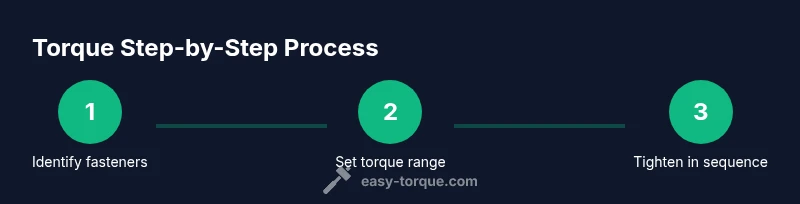
Identify fasteners and specs
Open your Harley service manual or torque spec sheet and list all fasteners you’ll service. Note location, bolt size category, and whether the bolt requires angle tightening. Verify that your torque wrench’s range covers the maximum spec on the list. For best results, cross-check with multiple reputable sources if the spec is unclear.
Tip: Create a quick reference sheet with bolt names and torque ranges to speed up future jobs. - 2
Set the wrench to the target range
Power up the wrench and set it to the highest torque value needed for the project, then confirm the scale reads correctly at that setting. If your bike uses angle tightening, prepare the angle gauge in parallel. Make sure you’re using the correct units (foot-pounds vs newton-meters) as specified in the Harley manual.
Tip: Always double-check the unit and zero the wrench before use. - 3
Prepare threads and fasteners
Clean all threads with a brush and apply the recommended lubricant if called for in the manual. Remove any burrs or corrosion that could affect seating. When using grease or thread locker, confirm the product is compatible with torque procedures.
Tip: Clean threads thoroughly to ensure accurate torque readings. - 4
Tighten in sequence to spec
Tighten fasteners in the sequence recommended by Harley (or the service manual) in small increments until you reach the spec. If angle tightening is required, apply the specified angular turn after reaching required torque. Pause briefly to allow any movement to settle before final torque check.
Tip: Do not skip the sequence; tightening in the wrong order can cause binding or leaks. - 5
Recheck and document
After all fasteners reach the target torque, recheck each one to confirm no movement occurred during the final tightness. Record the final torque values for your maintenance log and note any deviations or issues observed during installation.
Tip: A quick recheck after 5–10 minutes helps catch settling. - 6
Calibration and maintenance
Return the torque wrench to its storage position and ensure it is stored in a climate-controlled area. Schedule regular calibration through a certified service provider, ideally annually or after a defined number of uses. Keep calibration certificates on file for reference.
Tip: Mark your calendar for calibration reminders to avoid drift. - 7
Evaluate results on road tests
After installation, perform a careful road test to listen for leaks, unusual movement, or vibrations that could indicate loose fasteners. If anything feels off, re-check torque and fastener integrity before continuing.
Tip: Don’t ride aggressively until you’re confident all fasteners are secure.
Your Questions Answered
Do I need a torque angle gauge for Harley bolts?
Not for every bolt, but some Harley specifications require angle tightening. If your service manual calls for it, pair your torque wrench with a calibrated angle gauge to satisfy the spec.
Angle tightening is only required for certain fasteners; check the manual and use an angle gauge if specified.
Can I reuse a budget torque wrench for Harley maintenance?
A budget torque wrench can be suitable for non-critical fasteners, but for critical Harley components it’s best to use a reliable, calibrated tool and verify accuracy regularly.
A budget wrench may work for non-critical bolts, but prioritize accuracy for critical Harley fasteners.
How often should I calibrate my torque wrench?
Calibrate at least annually or after a defined number of uses, and whenever you suspect drift or after a hard drop. Calibration validates accuracy and avoids over- or under-tightening.
Calibrate at least once a year or after heavy use, and any time you suspect drift.
What units should I use for Harley torque specs?
Follow the Harley service manual’s unit system, typically foot-pounds or newton-meters, and be consistent within a project.
Use the unit specified in the manual and stay consistent throughout the job.
Is it ever safe to torque by feel on a Harley?
No. Rely on the torque spec and, when applicable, angle-tightening guidance. Feel alone is unreliable and can lead to under- or over-tightened fasteners.
Rely on the official specs rather than feel.
Should I torque in a single pass or multiple passes?
For most Harley bolts, apply torque in incremental passes to the final spec, following the recommended tightening sequence. This minimizes thread friction changes and ensures accurate results.
Use incremental passes and follow the sequence for best accuracy.
Watch Video
Top Takeaways
- Choose a torque wrench with adequate range for Harley fasteners.
- Follow the service manual and tiered tightening sequence.
- Calibrate regularly and document torque results for maintenance history.
- Consider a torque-angle gauge for precise angle tightening when required.