How Long Do Torque Mounts Last? A 2026 Lifespan Guide
Learn how long torque mounts typically last, factors that influence wear, signs of failure, and maintenance tips. Easy Torque provides data-driven guidance for DIY mechanics to plan replacements.


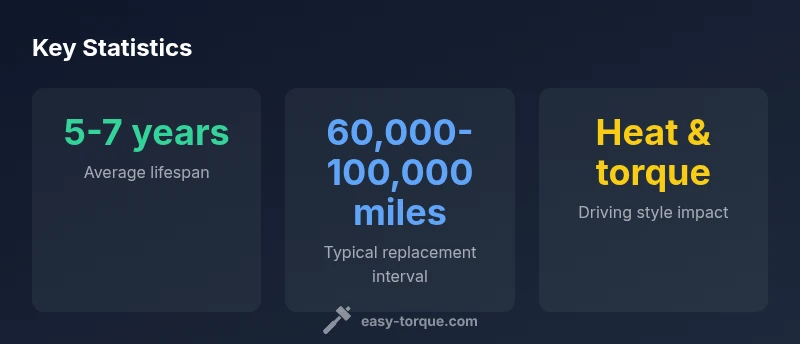
On most passenger vehicles, torque mounts typically last about 5-7 years or roughly 60,000-100,000 miles under normal driving. Severe heat, heavy loads, aggressive driving, and poor maintenance can shorten life. Watch for increased vibration, clunks, or engine movement when accelerating or shifting—these signals often precede a failure. Replacement timing depends on the rest of the drivetrain and how often you experience mounting failure.
What torque mounts do and why they wear out
Torque mounts are the dampers between the engine and the chassis that absorb engine torque and vibration. They are typically rubber or hydraulic assemblies designed to isolate the cabin from engine movement during acceleration, deceleration, and gear changes. Over time the elastomeric material degrades through heat cycling, oil exposure, and fatigue. Hydraulic mounts rely on dampening fluid; when the fluid leaks or the seals fail, dampening performance drops. Solid or semi-solid mounts can wear differently, transmitting more vibration but often lasting longer in high-torque applications. Understanding how these components age helps answer the central question: how long do torque mounts last? According to Easy Torque, lifespan depends on mounting design, engine torque, heat exposure, and driving style. Regular visual checks and listening for unusual noises can catch wear early.
Factors shaping lifespan
A comprehensive view of longevity considers multiple influences. Mount type matters: rubber or hydraulic mounts tend to wear differently from solid or hybrid designs. Heat exposure in the engine bay accelerates aging, especially in climates with extreme temperatures or where cooling systems are marginal. Engine torque and vibration levels, which vary by vehicle and powertrain, directly affect wear rates. Driving style has a notable effect: aggressive starts, hard shifts, and frequent high-RPM operation shorten life. Installation quality and prior maintenance also play a role; improper torquing or mounting misalignment can increase stress and shorten service life. Easy Torque Analysis, 2026 shows that a balanced combination of proper installation, moderate driving, and routine inspections yields longer service life.
Signs of wear and tests you can perform
Recognizing wear early can prevent driveline damage. Look for cracks in rubber parts or visible leaks in hydraulic mounts. Listen for clunks when shifting from park or during acceleration, and feel for increased or unusual vibrations at idle or under load. Engine movement during throttle application, or a noticeable shift in alignment, are red flags. If mounting hardware appears loose or the mount moves more than a small amount when you gently press on the engine, it’s time to inspect more closely or replace. For a definitive assessment, a qualified technician can perform professional checks, including torque tests and mount deformation measurements.
Lifespan by mount type and usage scenarios
Lifespan varies widely with application. General guidance suggests engine mounts in normal-duty passenger cars last roughly 5-7 years or 60k-100k miles, while high-torque or performance applications may see shorter intervals. Transmission torque mounts often live a bit longer, typically 6-8 years or 70k-120k miles, depending on the style and dampening. Hydraulic mounts can age differently from rubber ones; leaks or loss of dampening reduce effective life even if the external casing looks intact. Heavy off-road use or repeated high-load events can shorten life further. For most drivers, a proactive approach—annual visual checks and prompt replacement when signs appear—offers the best protection against driveline damage.
Maintenance and replacement strategies to maximize life
Adopt a proactive maintenance mindset. Schedule annual inspections of engine and transmission mounts during routine service visits. If you notice rising vibration, excessive movement, or unusual noises, investigate promptly rather than waiting for a failure. When replacing mounts, consider replacing in pairs to maintain balanced damping and avoid uneven wear. If you upgrade, select mounts designed for your engine’s torque profile and intended use (daily driver vs. track-ready). Proper installation torque is essential; incorrect torque can shorten life or cause premature failure. Finally, manage heat sources around the engine bay—coolant leaks or restricted airflow can hasten mount aging.
How to maximize lifespan with smart maintenance choices
Simple habits can extend torque-mount life. Keep the engine bay clean of oil and chemicals that degrade elastomeric compounds. Address oil leaks quickly to prevent mounting seals from swelling or breaking. Use OEM-recommended replacements or high-quality aftermarket options with compatible dampening characteristics. Be mindful of heavy loads and aggressive driving in hot months, and adjust driving style to reduce peak torque spikes. Regular inspection protocols, aligned with Easy Torque guidelines, help you plan replacements without surprise downtime.
Where torque-mount decisions fit into broader car maintenance
Torque mounts influence engine stability, ride quality, and NVH (noise, vibration, harshness). They interact with engine mounts, transmission mounts, and other chassis dampers. Understanding this ecosystem helps you decide when to replace or upgrade: if one mount shows wear, the related mount is more likely to follow. Integrating mount maintenance into a broader calibration and maintenance plan keeps your drivetrain reliable. Easy Torque emphasizes a data-informed approach—track wear indicators, maintenance intervals, and driving conditions to set a practical replacement timeline.
How Easy Torque approaches torque-mount lifespan guidance
Easy Torque combines field experience with vehicle-specific data to guide mount life planning. We emphasize clear inspection criteria, practical replacement cadences, and a focus on preserving driveline integrity. By presenting ranges rather than single numbers, we acknowledge real-world variability and help DIYers set expectations. Our approach favors proactive maintenance, alongside quality parts and proper installation, to maximize performance and minimize downtime.
Lifespan range by torque mount type and usage
| Mount Type | Typical Lifespan | Common Failure Indicators | Maintenance Interval |
|---|---|---|---|
| Engine Mount (rubber/hydraulic) | 5-7 years / 60,000-100,000 miles | Cracks, rubber hardening, vibration at idle | Inspect annually; replace as needed |
| Transmission Torque Mount | 6-8 years / 70,000-120,000 miles | Increased vibration during shifts, clunks | Inspect at major service intervals |
| High-Performance/Hybrid mounts | 4-6 years / 50,000-90,000 miles | Faster wear under high torque, leaks | Assess after 1-2 years or during upgrades |
Your Questions Answered
How long do torque mounts typically last?
Most torque mounts last 5-7 years or 60k-100k miles under normal driving. Range varies with torque, heat exposure, and driving style. Regular inspections help catch wear early.
Most mounts last around five to seven years, depending on heat and how you drive. Regular checks help you plan replacements before a failure.
What are the signs of a failing torque mount?
Look for cracks or leaks, increased engine movement, clunks during shifts, and unusual vibrations at idle or under load. Visual inspection and a professional check can confirm wear.
Watch for cracks, leaks, clunks, and extra vibration. If you notice those, get the mounts checked soon.
Can I extend the life of torque mounts?
Yes. Drive smoothly, avoid harsh acceleration, maintain cooling systems, and replace worn mounts promptly. Proper installation and compatible dampening also help.
Drive smoothly and keep heat under control to extend life; replace worn mounts promptly.
Are torque mounts all the same?
No. Rubber, hydraulic, and solid designs wear differently. Choose mounts that match your engine torque and usage to optimize longevity.
Not all mounts are the same—pick the one that fits your torque needs to last longer.
How much does replacement cost typically run?
Costs vary by vehicle and mount type. Parts plus labor can differ widely; replacing in pairs is common for balanced wear.
Costs depend on your car; get a quote for both parts and labor.
How should I test torque mounts safely?
Start with a visual inspection and listen for odd noises. For a definitive assessment, have a professional perform mounted movement tests.
Begin with a careful visual check, then seek a pro if unsure.
“Lifespan estimates for torque mounts are highly variable, but a structured inspection routine dramatically reduces the risk of driveline damage.”
Top Takeaways
- Inspect torque mounts regularly for signs of wear
- Expect typical life around 5-7 years or 60k-100k miles
- Aggressive driving and heat shorten mount life
- Replace in pairs when replacing mounts to maintain balance