How to Fix Torque Steer: A DIY Guide
Learn to diagnose and fix torque steer with a step-by-step, DIY-friendly approach. Check tires, alignment, brakes, and driveline components to reclaim precise steering and stable handling.


This guide shows you how to diagnose and fix torque steer, a steering pull caused by unequal torque distribution. You’ll learn practical checks for tires, alignment, and driveline components, plus safe DIY fixes and when to seek pro help. Following the steps can restore precise steering and confident handling at home.
Why torque steer happens
Torque steer occurs when the engine's rotational force does not translate equally to both front wheels, causing the steering wheel to pull to one side under acceleration. In practice, this is most common in high-torque front-wheel-drive setups, especially when tire conditions or suspension geometry create uneven resistance. According to Easy Torque, torque steer is often a symptom of mismatched tires, worn components, or imprecise alignment, rather than a single defective part. The underlying physics involve differential traction, brake bias, and drive-line layout. If one wheel encounters slightly more grip or if the other wheel is bound by a binding half-shaft or worn CV joint, the steering system must fight to maintain a straight path. Modern cars with electronic steering assist can mask subtle torque differences, but they still respond to root causes such as tire pressure imbalances, misaligned suspension, or a sloppy steering rack. In many cases, a simple tire swap or alignment check can dramatically reduce steer and restore predictable handling. For performance enthusiasts, understanding torque steer helps in dialing in tire choices and maintenance routines to minimize this effect.
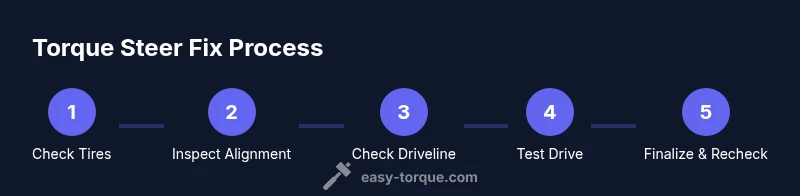
This section expands on the physics, common configurations, and how the drivetrain design can amplify steering pull under load. By understanding the interaction between tires, suspension, and steering, you’ll identify which subsystem is most likely at fault. Easy Torque’s analysis shows that a simple, disciplined approach to diagnosing torque steer—starting with tires and moving through alignment and driveline checks—yields the most reliable improvements. The goal is not to chase a single elusive part but to verify the health of the whole steering path. With the right tools and a calm test plan, you can reduce or even eliminate steering pull and get back to confident, predictable control on the road.
Signs you might have torque steer
Torque steer presents as a consistent pull to left or right under acceleration, especially when road crown or braking forces are minimal. You may notice the pull is more pronounced in certain gears or at engine torque peaks, and it can feel different on dry pavement versus wet. Worn or mismatched tires are common culprits, but steering linkage play, brake caliper sticking, or worn engine mounts can also contribute. If the steering wheel wants to center or wander back after a pull, that’s another clue. Easy Torque notes that torque steer can mask other issues like alignment drift or uneven tire wear; diagnosing requires a systematic check of tires, brakes, suspension, and driveline components. Document when and how the pull occurs, including road conditions and speeds, to help narrow down the root cause when you test changes.
When you notice a steering pull during acceleration, it’s a reliable signal to begin a structured diagnosis. This section helps you recognize symptoms and distinguish torque steer from other steering or handling issues, such as a simple wheel shimmy or a brake drag problem. By noting when the pull happens (under high torque, at certain speeds, or on particular pavement), you’ll be better prepared for the inspection steps and any potential tire or alignment adjustments that follow. Easy Torque emphasizes that a disciplined symptom log speeds up the repair process and reduces unnecessary parts shopping.
Diagnostics: how to confirm torque steer and isolate causes
The diagnostic phase is about confirming torque steer and isolating the root causes across tires, brakes, suspension, and steering components. Start with a controlled road test on a smooth surface at a safe speed while keeping a steady throttle. If the pull aligns with wheel rotation (pull follows a tire rather than system-wide drift), a tire-specific issue is likely; if the pull remains with acceleration regardless of which wheel is loaded, driveline components or steering links may be involved. Inspect tire pressures and tread depth on all four tires; mismatches can easily produce a steer. Swap or rotate tires to see if the pull follows a particular tire or stays with the vehicle. Inspect brake caliper function for sticking or drag; misadjusted or seized calipers can mimic torque steer by creating uneven resistance at one corner. Examine the steering rack, tie rods, and outer bushings for play or wear, as loose connections often translate into steering pull only under load. Don’t overlook engine and transmission mounts, which can transmit torque differently if they are worn. Finally, verify suspension geometry—toe alignment, camber, and caster—and look for worn control arm bushings or worn lower ball joints. Documentation of road tests and observed changes will guide the next fixes and help decide whether a DIY approach is enough or a pro alignment is warranted.
Tools & Materials
- Car jack and jack stands(Use wheel chocks and level ground; never rely on a jack alone.)
- Torque wrench(Use the manufacturer’s lug-nut torque specification and recheck after any rotate/replace.)
- Tire pressure gauge(Check all four tires to the recommended pressure on the door jam or owner manual.)
- Lug wrench or impact wrench(Remove and reinstall wheels as needed during tire inspection and rotation.)
- Wheel chocks(Place chocks on the opposite wheels before lifting to prevent movement.)
- Basic alignment tool or reference marks(Use to check toe visually if professional alignment isn’t immediately available.)
- Tire tread depth gauge(Assess wear differences and plan for replacement if wear is uneven.)
- Shop rags and degreaser(Keep components clean during inspection to spot leaks and wear.)
Steps
Estimated time: 2-6 hours
- 1
Check tire pressures and condition
Park on a level surface and turn off the engine. Use the tire pressure gauge to verify each tire is at the manufacturer’s recommended PSI. Inspect tread depth and look for uneven wear across axles. This step often reveals imbalances that cause torque steer.
Tip: Record the exact tire pressures and wear patterns to compare after changes. - 2
Rotate or swap tires to identify tire-specific issues
If you suspect a tire is causing the pull, rotate the front tires side-to-side and observe whether the steering pull follows a tire or stays with the vehicle. Mark tires before moving them so you can track changes accurately.
Tip: Use contrasting markers (like chalk or paint) on the tire edges to avoid mixups. - 3
Inspect alignment and suspension geometry
Check for obvious toe or camber issues by measuring with simple reference marks or a basic alignment gauge. Look for worn tie-rod ends, control arm bushings, or suspension mounts that could introduce play under load.
Tip: Worn components can be subtle; a professional alignment may be required if unclear. - 4
Check for brake caliper drag or sticking
With wheels installed, gently spin each wheel and listen for binding. Inspect caliper slides and ensure pads retract freely; a sticking caliper can create asymmetric resistance that mimics torque steer.
Tip: Do not attempt to disassemble brake components without proper knowledge or tools. - 5
Inspect steering rack and linkage for play
Move the steering wheel with the car raised to feel for looseness in the steering rack, tie rods, or inner/outer joints. Look for torn boots, rust, or looseness that would translate into steering pull.
Tip: Even small play at the steering wheel can be a big indicator of downstream issues. - 6
Test under controlled driving conditions
Take a short road test on a flat, quiet road. Accelerate smoothly in a straight line and note whether the pull persists, shifts, or changes with speed or gear. This helps confirm torque steer and guides subsequent fixes.
Tip: Avoid high speeds; prioritize safety and control during tests. - 7
Evaluate tire replacement or balancing needs
If wear is uneven or if a single tire shows significant grip difference, consider replacing tires in matched sets. Ensure wheels are balanced after any rotation or replacement to prevent vibration that could mask torque steer.
Tip: Mismatched tires on axles can dramatically worsen steering pull. - 8
Consult professional alignment or driveline service
If the pull continues after DIY checks, arrange a professional alignment, or inspect driveline components like engine mounts or CV joints. A qualified technician can diagnose subtle issues with specialized equipment.
Tip: Ask for a torque steer-specific assessment to target the root cause efficiently.
Your Questions Answered
What is torque steer?
Torque steer is the steering pull or drift you feel when a vehicle accelerates, caused by unequal torque distribution across wheels. It most often occurs in high-torque front-wheel-drive cars due to tire condition, alignment, or driveline issues. A methodical inspection usually reveals the primary culprit.
Torque steer is the steering pull you feel under acceleration from uneven torque; a methodical check helps identify the cause.
Can tires cause torque steer?
Yes. Mismatched tire sizes, worn tread, or improper tire pressures can create uneven traction, which translates into steering pull during acceleration. Replacing worn tires and equalizing pressures on both sides often reduces torque steer.
Yes — worn or mismatched tires can cause torque steer; equalizing or replacing tires often helps.
Is torque steer the same as a pulling steering wheel?
Torque steer is a dynamic steering pull under acceleration caused by torque distribution. A pulling wheel can also result from brake drag, alignment drift, or suspension issues. Diagnosing the source requires checking multiple subsystems.
Torque steer is accelerational steering pull due to torque distribution; a pulling wheel can have other causes.
Will changing tires fix torque steer permanently?
Changing tires can significantly reduce torque steer if the root cause is tire-related. If the problem persists after tires are matched and pressures corrected, other factors like alignment or driveline components may be at fault.
New matched tires often help, but if the pull remains, you’ll need to check alignment and driveline parts too.
Do alignment or suspension issues contribute to torque steer?
Yes. Misalignment or worn suspension components can cause uneven wheel loading and steering pull. A professional alignment and inspection of bushings and ball joints are often necessary when DIY fixes don’t resolve torque steer.
Alignment and suspension issues can cause torque steer; professional alignment may be required if DIY checks fail.
Can driveline components cause torque steer?
Driveline problems like worn CV joints, damaged half-shafts, or engine/transmission mounts can create torque imbalance. These issues typically require expert diagnosis and sometimes component replacement.
Driveline problems can cause torque steer and often need a professional diagnosis and parts replacement.
Watch Video
Top Takeaways
- Start with tires and pressures, a common root cause.
- Keep tires on both axles matched to reduce torque differences.
- Inspect alignment and suspension before replacing driveline parts.
- Always torque wheel lugs to spec after any service.
- Seek professional alignment if torque steer persists after DIY fixes.