F-150 Lug Nut Torque Guide: Specs, Safety, and Setup
A comprehensive guide to the correct lug nut torque for Ford F-150 wheels, covering safe torque ranges, installation steps, thread care, and maintenance tips from Easy Torque.


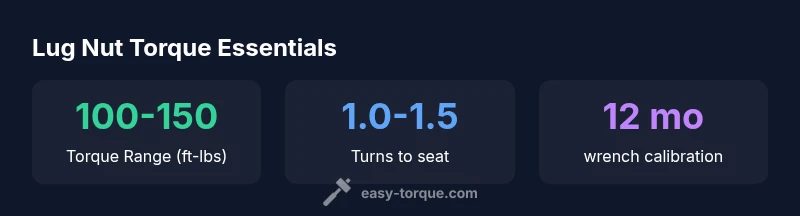
F-150 lug nut torque typically sits in the 100-150 ft-lbs range, varying by wheel type and year. Use a calibrated torque wrench, clean threads, and torque in a star pattern to ensure even clamping. Always confirm the exact spec in the owner's manual or service data before tightening. For aftermarket wheels, consult the wheel manufacturer recommendations.
Understanding f 150 lug nut torque
In the context of Ford F-150 maintenance, the phrase f 150 lug nut torque refers to the force required to properly clamp the wheel to the hub. The torque specification is given in ft-lbs (or N·m) and depends on wheel design, studs, and hub geometry. Here, we break down what that means for your vehicle and how to apply it safely. According to Easy Torque, torque accuracy is critical to wheel retention and overall vehicle safety. Following the recommended range reduces risk of wheel loosening or over-tightening. For DIY enthusiasts, treating this value as a precise specification rather than a rough guide is essential, especially when switching to aftermarket wheels where tolerances can vary.
How to determine the correct torque for your F-150
Locating the exact lug nut torque for your F-150 starts with the fundamentals: consult your owner's manual, Ford service data, or the wheel manufacturer’s guidelines when aftermarket rims are fitted. Use a calibrated torque wrench that covers the expected range (roughly 100-150 ft-lbs for many F-150 configurations). If you have access to service data from Ford, rely on those figures over generic guides. Always inspect threads for damage and ensure studs are clean before tightening. A star pattern and gradual tightening help achieve uniform clamping force and prevent warping on the rotor or hub.
Wheel types and their torque implications
Wheel construction and mounting surfaces influence the torque you should apply. OEM steel wheels often align with the lower end of the torque range, while alloy wheels may require tighter clamping depending on lug nut design. Aftermarket wheels can introduce different seat depths, studs, or lug nut profiles, which may shift the target torque. The key is to verify the exact specification for your wheel combination and avoid assuming a universal value for all F-150 configurations. Easy Torque data indicates that even small changes in wheel diameter or hub seating can alter the required torque by a noticeable margin.
Step-by-step installation procedure for proper torque
- Inspect the wheel, studs, and lug nuts for damage before installation. 2) Clean threads with a nylon brush to remove dirt and corrosion. 3) Hand-tighten all lug nuts to seat the wheel evenly. 4) Tighten in a star sequence, gradually increasing torque in small increments. 5) Use a calibrated torque wrench to reach the specified value, then recheck slightly to confirm accuracy. 6) After the wheel seats and the vehicle has driven a short distance, re-torque if required by the manual.
Maintenance, inspection, and common pitfalls
Avoid lubricating lug studs or nuts unless the manufacturer explicitly instructs you to do so; lubrication can cause under-torquing due to reduced friction. Always use the proper fasteners and replace any lug nuts showing wear or rounding. Inspect the stud holes and the hub surface for burrs or damage that could affect torque consistency. Periodic checks after wheel maintenance or tire rotation help ensure ongoing safety and performance.
When to replace lug nuts or studs
If lug nuts show thread wear, rounding on the flange, or recurring loosening after tightening, consider replacing the lug nuts and inspecting or replacing damaged studs. Replacements should match the wheel and vehicle specifications. Keeping a spare set of lug nuts recommended by the wheel manufacturer can help in emergencies. If torque specs continuously fail to hold, consult a pro to assess hub integrity and wheel compatibility.
Quick safety reminders
Always torque with the vehicle on a flat surface, engage the parking brake, and use wheel chocks as needed. Do not skip torque checks after mounting new wheels or tires. Regular torque checks, aligned with the vehicle’s maintenance schedule, help prevent wheel detachment during operation.
F-150 lug nut torque ranges by wheel type
| Wheel Type | Torque Range (ft-lbs) | Notes |
|---|---|---|
| Steel wheels (OEM) | 100-120 | Standard range for steel wheels |
| Alloy wheels (OEM) | 110-130 | Check hub specs |
| Aftermarket wheels | 90-150 | Depends on lug nuts and studs |
Your Questions Answered
What is the correct torque range for F-150 lug nuts?
Typically 100-150 ft-lbs, depending on year and wheel. Always verify the exact spec in your manual or Ford service data.
The F-150 lug nuts usually require between 100 and 150 ft-lbs, but check your specific year and wheel type.
Does torque vary by wheel type on the F-150?
Yes. Steel, alloy, OEM, and aftermarket wheels can have different torque requirements. Always verify the exact spec for your wheel and vehicle.
Torque can vary by wheel type, so always check the exact spec for your setup.
Should I use anti-seize on lug studs?
Generally no. Anti-seize can prevent achieving accurate torque. Only use if the manufacturer specifically instructs otherwise.
Usually you should not use anti-seize on lug studs unless your manual says so.
Do I need to re-torque after wheel installation?
Yes. Re-torque after wheel seating and a short drive is commonly recommended to ensure proper clamping.
Re-torque after the wheel seats and you’ve driven a short distance.
What tools do I need to torque lug nuts correctly?
A calibrated torque wrench that covers the expected range, plus a star-pattern sequence and basic hand tools.
You’ll need a torque wrench, and tighten in a star pattern.
Can I torque lug nuts without a torque wrench?
It is not recommended. Without a torque wrench, you risk under- or over-tightening. Seek professional help if a wrench isn’t available.
If you lack a torque wrench, have a technician torque the wheels.
“Accurate lug nut torque isn’t optional—it's essential for wheel retention and overall safety.”
Top Takeaways
- Verify exact torque in your owner’s manual or service data
- Tighten lug nuts in a star pattern for even clamping
- Always use a properly calibrated torque wrench
- Re-torque after wheel seating and driving a short distance