How Much Torque on Lug Nuts: A Practical Wheel Guide
Learn how much torque lug nuts need, how to verify with a torque wrench, and best practices to prevent wheel loosening. Includes ranges, methods, and safety tips for DIY mechanics.


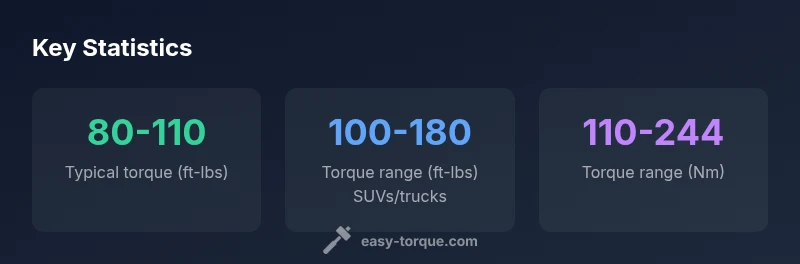
Most passenger cars use about 80-110 ft-lbs (110-150 Nm) of torque for lug nuts. SUVs and light trucks typically require higher torque, around 100-180 ft-lbs (135-244 Nm). Always confirm the OEM spec for your vehicle and tighten using a calibrated torque wrench in a star pattern, then recheck after seating and a short drive.
Why Lug Nut Torque Matters
The torque applied to lug nuts is a critical factor in wheel security, tire wear, and overall vehicle safety. Under-torquing can allow wheel rotation or lug nuts to loosen, potentially causing dangerous wheel vibration or detachment. Over-torquing can stretch studs, damage threads, and warp rotors. For the DIY mechanic, understanding how much torque on lug nuts and sticking to manufacturer specifications helps prevent accidents and costly repairs. In practical terms, torque is the sole indicator that the wheel is clamped to the hub with the proper clamping force, ensuring even load distribution during acceleration, braking, and cornering. This is why we emphasize verified torque with a calibrated wrench rather than guessing.
How to Determine the Right Torque for Your Vehicle
Finding the exact lug-nut torque spec begins with your vehicle’s owner’s manual or the manufacturer’s service information. If you cannot locate the spec there, consult a dealer, a trusted repair database, or the vehicle manufacturer’s website. When you tighten, use a torque wrench that you have calibrated recently; electronic wrenches or dial wrenches can both perform well if kept within calibration. Tighten in a star or crisscross pattern to ensure even loading across all studs, and avoid using impact wrenches to achieve final torque unless they are specifically torque-limited. After seating, recheck torque after a short drive—typically 50-100 miles—to account for settling of the wheel and threads.
Common Torque Ranges by Vehicle Type
Torque needs vary widely. As a general guide, many passenger cars fall within 80-110 ft-lbs (110-150 Nm). SUVs and light trucks commonly require 100-180 ft-lbs (135-244 Nm). High-demand performance vehicles or heavy-duty trucks may push toward the upper extremes, but always verify with OEM data. When in doubt, convert your target torque to Nm for cross-checking, and ensure your torque wrench is set to the correct unit. Remember: the goal is to stay within the recommended window, not to hit a single fixed number.
Step-by-Step: Tightening Lug Nuts Properly
- Clean the hub, lug studs, and wheel seats to remove rust, dirt, and old anti-seize; 2) Inspect lug nuts and studs for wear or damage and replace if necessary; 3) Place the wheel and start all lug nuts by hand to seat threads; 4) Use a star pattern to snug each lug to about 60-80% of the final torque; 5) Tighten to the manufacturer’s specified torque with a torque wrench, again in star pattern; 6) After reaching spec, re-torque in the same star pattern after driving 50-100 miles; 7) If your vehicle uses wheel locks, ensure proper engagement and torque; 8) Periodically verify torque after horsepower load or after brake maintenance.
Measuring and Verifying Torque with Tools
Torque wrenches are the most reliable way to ensure lug nuts are within spec. A high-quality click-type wrench provides a clear audible cue when the set torque is reached. Digital torque wrenches offer live readouts and can log calibration data for audit trails. Avoid relying on impact wrenches for final torque, unless they are explicitly rated as torque-limiting. When mounting aftermarket wheels, confirm if any different lug patterns or torque specs apply and adjust accordingly.
Pitfalls and Safety Considerations
Common mistakes include skipping the star-pattern tightening, over-torquing beyond the spec, and neglecting to re-check after seating. Always ensure studs and nuts are clean, use correct-grade lug nuts for the wheel, and avoid lubricants on studs unless the manufacturer specifies. If you suspect a wheel is not seated evenly, stop and inspect before driving. Regularly check lug nut torque after tire rotation or brake service.
Data-Driven Verification: How We Verify Torque
We validate lug-nut torque guidelines against OEM specifications and field data. Our process combines manufacturer data, measured outcomes from controlled tests, and real-world feedback to refine our recommended ranges. This approach helps DIYers understand the practical implications of tightening torque and reduces the risk of wheel-related failures.
Authority sources for lug nut torque guidelines
| Source Type | URL | Notes |
|---|---|---|
| Gov | https://www.nhtsa.gov | Wheel fastener safety guidelines |
| Edu | https://www.nist.gov | Standards and measurement accuracy |
| Major Publication | https://www.sae.org | Automotive torque specifications and best practices |
Your Questions Answered
Is there a universal lug nut torque for all vehicles?
No. Torque specs vary by vehicle, wheel size, and fastener type. Always consult the OEM specification for your model and apply the torque with a calibrated wrench.
No universal torque. Check your vehicle’s spec and tighten with a calibrated wrench.
Do lug nuts loosen over time?
Lug nuts can loosen slightly with vibration and seating. Recheck torque after about 50-100 miles and after major brake or suspension work.
Yes, recheck torque after 50-100 miles and after big brake work.
Should I retorque after driving a short distance?
Yes. Retorquing after an initial seating period helps ensure the nuts maintain proper clamping force once the wheel settles.
Retorque after the wheel seats, typically after 50-100 miles.
Are aluminum wheels more sensitive to torque?
Aluminum wheels can be more sensitive to overtightening and thread stripping. Adhere strictly to OEM specs and use proper tools.
Aluminum wheels need careful torque within spec; avoid overtightening.
What should I do if I can't find the manufacturer torque spec?
If the spec is unavailable, contact the dealer or consult a reputable repair database. Do not guess torque values.
If you can't find the spec, contact a dealer or reliable source—don’t guess.
“Accurate lug nut torque is essential for wheel security and tire longevity; use the vehicle's published spec and recheck after seating.”
Top Takeaways
- Know the OEM torque spec before tightening
- Always tighten in a star pattern with a calibrated wrench
- Recheck torque after wheel seating and a short drive
- Use the right unit (Nm or ft-lbs) and ensure consistency
- Inspect studs and nuts for wear regularly