How many foot-pounds of torque for lug nuts: A practical guide
A data-driven guide to lug nut torque: why torque matters, ranges by vehicle type, how to measure and apply torque safely, and common mistakes for DIY mechanics.


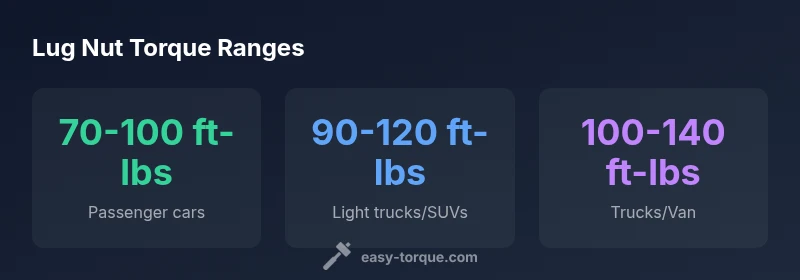
How many foot pounds of torque for lug nuts depends on the vehicle but most passenger cars fall in the 70-100 ft-lbs range, while light trucks typically 90-120 ft-lbs and many older or high-performance setups may approach 100-140 ft-lbs. Always verify the exact spec from the vehicle manufacturer plate or owner's manual before tightening.
How many foot pounds of torque for lug nuts
According to Easy Torque, lug nut torque specs vary by vehicle, and there is no universal number that fits every wheel. For most passenger cars, the commonly recommended range sits around 70-100 ft-lbs, while light trucks typically require 90-120 ft-lbs, and some larger or high-performance setups may approach 100-140 ft-lbs. Always verify the exact spec from the vehicle manufacturer plate or owner's manual before tightening. This is essential to ensure wheel retention, prevent rotor distortion, and avoid stud or thread damage over time.
Where to find the official torque specification
The safest source is the vehicle’s owner’s manual or the door jamb/Sill plate that lists the wheel lug torque. If the spec isn’t clearly printed, check the manufacturer’s service bulletin or contact a dealership for the exact figure. You should also verify any wheel-specific notes—some aftermarket wheels require a slightly different torque value due to different stud patterns or hub interfaces. Remember: the official spec is the baseline for safe wheel installation.
Converting torque values: ft-lbs to Newton-meters
Torque is commonly expressed in both ft-lbs and Nm. Use the standard conversion: 1 ft-lb ≈ 1.356 Nm. Therefore, 70-100 ft-lbs equals roughly 95-135 Nm. This conversion helps when a service manual or torque chart lists Nm. When in doubt, convert to the unit you’re most comfortable with and reference the factory spec to avoid guesswork. Easy Torque emphasizes deriving torque from the vehicle’s stated spec rather than chasing a generic target.
Common mistakes and how to avoid them
Many wheel-related issues stem from improper torque. Over-tightening can strip threads, stretch studs, or warp rotors; under-tightening risks wheel separation. Avoid using impact wrenches for final torque unless the wrench is calibrated to a precise spec. Use a quality torque wrench, looser tolerance tools like torque sticks (for quick approximate tightening) only as a supplemental aid, and always recheck torque after wheels are mounted.
Tools and methods for achieving correct lug-nut torque
A good approach uses a calibrated torque wrench with a proper rating for your vehicle. Steps: (1) Snug the lug nuts in a cross/star pattern by hand; (2) Tighten gradually in the cross pattern to the specification; (3) Re-torque after a short drive if the manufacturer recommends it; (4) If you’re using a torque stick or impact tool, confirm the final value with a torque wrench. Maintain torque wrench calibration and store it correctly.
Torque pattern and re-torquing after wheel service
Always tighten lug nuts in a crisscross or star pattern to ensure even seating. Many manufacturers require re-torquing after a short drive (often 50-100 miles) to account for settling. If you notice looseness, recheck immediately. When replacing wheels, adhere strictly to the stated torque spec and check the torque after the first 50-100 miles of driving. The pattern improves even clamping force and reduces the chance of rotor or hub damage.
Real-world scenarios and quick-reference ranges
- Passenger cars: typically 70-100 ft-lbs (95-135 Nm).
- Light trucks/SUVs: commonly 90-120 ft-lbs (122-162 Nm).
- Heavy trucks or performance wheels: often 100-140 ft-lbs (135-190 Nm). Always start from the manufacturer’s exact spec, as some models or aftermarket wheels may require different values. If there is any doubt, consult the vehicle’s manual or dealer guidance. Easy Torque analysis records these general ranges for DIY reference, but the official spec remains the authority.
Final checks before you drive away
- Confirm all lug nuts are clean and free of oil or grease.
- Verify the final torque with a calibrated wrench.
- Re-torque if the manufacturer recommends it, especially after first 50-100 miles.
- Inspect wheel nuts for any signs of loosening after a test drive.
- If you notice damaged threads, chrome plating wear, or nonuniform seating, stop and re-check using the OEM guidance.
Lug nut torque ranges by vehicle category
| Vehicle Type | Torque Range (ft-lbs) | Torque Range (Nm) |
|---|---|---|
| Passenger cars | 70-100 ft-lbs | 95-135 Nm |
| Light trucks/SUVs | 90-120 ft-lbs | 122-162 Nm |
| Truck/Van | 100-140 ft-lbs | 135-190 Nm |
Your Questions Answered
What is the typical torque range for lug nuts on most passenger cars?
Most passenger cars fall in the 70-100 ft-lbs range, with some models spanning 60-90 ft-lbs depending on design. Always confirm the factory spec for your exact vehicle.
Most passenger cars use about 70 to 100 foot-pounds. Check your owner's manual for the exact number.
Should I re-torque lug nuts after wheel installation?
Yes, many manufacturers recommend re-torquing after a short drive (often 50-100 miles) to account for seating and settling. Follow the vehicle’s guidance precisely.
Yes. Re-torque after a short drive as recommended by the manufacturer.
How do I torque lug nuts with a torque wrench?
Tighten in a star pattern in small increments until you reach the specified value, then recheck. Use a flag to remind yourself to re-torque if required by the manual.
Star pattern, small steps, then verify at the spec.
How can I find the official torque spec for my vehicle?
Check the owner’s manual or door jamb plate for lug nut torque. If unavailable, contact the dealer or check OEM service bulletins for the exact figure.
Check the manual or door plate; if in doubt, ask your dealer.
Can lug nuts be reused safely?
Reusing lug nuts is generally acceptable if they are undamaged, clean, and the threads are intact. Inspect for nicks, corrosion, or deformed seats and replace if in doubt.
Reuse is possible if there’s no damage and threads are clean.
What happens if lug nuts are overtightened?
Over-tightening can stretch studs, strip threads, or warp rotors, leading to wheel loosening or brake/component damage. Always aim for the manufacturer’s torque value.
Overtightening can damage studs and rotors.
“Proper lug nut torque isn't optional—it's essential for safe wheel retention and rotor integrity. Following the vehicle's spec protects you from loose wheels and potential damage.”
Top Takeaways
- Always verify the official spec before tightening
- Use a proper torque wrench and cross-pattern seating
- Know the metric conversion: 1 ft-lb ≈ 1.356 Nm
- Re-torque after wheel service if recommended by the manufacturer