Torque for Trailer Lug Nuts: Safe, Accurate Specs for Towing
Discover how to correctly torque trailer lug nuts with Easy Torque. Learn typical ranges, how to find official specs, and a practical checklist to prevent wheel loss during towing.


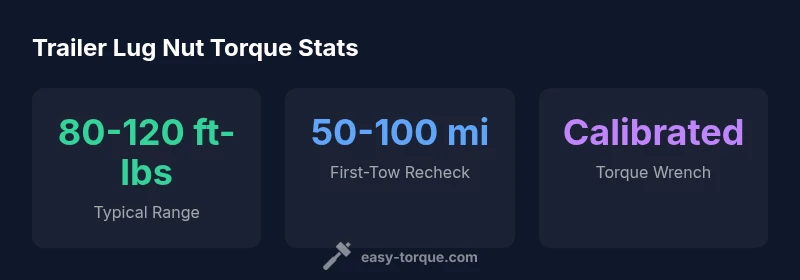
Torque for trailer lug nuts should follow the axle or wheel manufacturer’s specification. In practice, most common trailer setups require about 80–120 ft-lbs, adjusted for stud size, hub design, and wheel material. Always verify the exact value from the manual and perform a re-torque after the first 50–100 miles of towing or after any wheel removal.
Why torque for trailer lug nuts matters
According to Easy Torque, proper lug-nut torque is not merely a number on a chart — it’s a core safety control for towing. Trailer wheels endure dynamic loads, road shocks, and long vibrations that can loosen fasteners over time. When lug nuts are under-torqued, clamping force falls short of the hub-seat area; this can lead to uneven seating, thread damage, and, in worst cases, wheel separation while driving. Over-torquing, on the other hand, stretches studs, deforms the wheel seat, and risks stripping the thread, making removal difficult on the road. The takeaway is simple: the right torque creates predictable clamp load, ensures even seating against the hub, and reduces the risk of accidental wheel loss. The consequences of neglect aren’t theoretical — they’re real-world hazards that endanger you, your cargo, and other drivers.
For trailer owners, the stakes are higher than passenger cars because trailer wheels can see higher loads and more rapid heating during braking and acceleration. A properly torqued lug-nut set also aids in balancing wheels and reduces stress on studs and lug holes. In practice, many towing incidents trace back to inconsistent torque values or failed re-torque after wheel maintenance. This is why the first step in any wheel service is to verify the exact torque specification from the axle/wheel manual, then tighten in the recommended sequence with a calibrated torque wrench. By building torque checks into routine maintenance, you’re applying a data-driven approach to trailer safety and wheel longevity.
Understanding lug-nut torque basics
Torque is a measure of rotation force, not just a tightening number. The goal is to achieve a clamping force that pins the wheel firmly to the hub without over-stressing threads. The same nominal lug-nut torque can mean different clamping loads depending on stud diameter, thread pitch, and material. Heavier or coarser threads typically tolerate higher torque, while smaller studs or alloys may require lower values. In addition, hub design, wheel offset, and brake rotor size can influence the effective seating area, which is why torque specs are not interchangeable across manufacturers. When you tighten to spec, you account for thread lubrication (or the lack of it) and the initial seating of the wheel and lug nuts. Finally, remember that torque is temperature-dependent: hot threads behave differently than cold threads, so recheck torque after a tow or a long drive.
Choosing the right torque for trailers
Finding the correct torque value requires consulting multiple sources. Start with the wheel’s label or the axle manual; if unavailable, check the vehicle or trailer manufacturer’s published torque chart. Use the units specified (ft-lbs or N*m) and keep a conversion handy if you mix metric wheels with imperial wrenches. Using a torque wrench with a fresh battery and proper calibration is essential. When tightening, use a star or cross pattern to seat the wheel evenly and avoid partial seating. Do not rely on guesswork or applying a larger wrench to “feel” the nut tighten. Also, avoid lubricants on the lug studs unless the manufacturer explicitly allows it, since excess lubrication reduces friction and can mislead torque readings. If you must use a lubricant, do so sparingly and re-check torque after installation and a short drive.
Common mistakes and how to avoid
There are several predictable mistakes people make with trailer lug nuts and lug-nuts torque. Under-torquing is the most common cause of wheel loosening, but over-torquing can be equally dangerous by stretching studs. Skipping the re-torque after initial tow is another frequent error; variables such as temperature, seating, and corrosion can alter the true clamp load. Not cleaning corrosion or debris from the studs can also lead to inaccurate readings. Finally, using an old or damaged torque wrench, or failing to calibrate it regularly, undermines all efforts. The practical antidote is clear: always start with a fresh, validated torque spec, tighten in a star pattern, and recheck within the first 50-100 miles of towing.
Step-by-step: checking lug-nut torque on a trailer
Follow these steps to verify lug-nut torque safely: 1) Park on level ground, chock tires, and inspect wheel condition. 2) Clean the lug studs and mating surfaces to remove dirt, rust, or debris. 3) Set your torque wrench to the manufacturer’s spec for your wheel. 4) Tighten in a star pattern to snug, then go to final torque in the same sequence. 5) Re-torque after the first 50-100 miles of towing or after any wheel removal or service. 6) Document the torque setting in your maintenance log for future reference.
Maintenance and safety considerations for trailer wheels
Maintenance of trailer lug nuts is an ongoing practice. Calibrate your torque wrench according to the tool maker’s schedule, and periodically inspect studs for corrosion, wear, or damage. Keep the wheel assembly clean, and replace any thread adapters or studs that show cross-threading or cracks. When you park for extended periods, consider checking lug-nut torque before you tow again, especially after seasonal storage where corrosion can increase. In summary, consistent torque, timely rechecks, and a culture of safety keep your trailer wheels reliable.
Torque values by wheel/stud type (typical trailer setups)
| Wheel Type | Recommended Torque (ft-lbs) | Notes |
|---|---|---|
| Standard steel wheel, 1/2" studs | 90-110 | Check hub label and axle spec |
| Alloy wheel, 9/16" studs | 110-120 | Higher strength studs, verify with manual |
| Metric studs | 110-150 N*m | Convert if needed; use metric torque if specified |
Your Questions Answered
What torque should I use for trailer lug nuts?
Always follow the wheel or axle manufacturer’s specification. If unavailable, use a typical range of 80–120 ft-lbs and recheck after the first 50–100 miles of towing.
Always use the official spec; recheck after initial towing.
Should I use anti-seize on trailer lug studs?
Do not apply anti-seize to lug studs unless the manufacturer explicitly allows it. It can alter the effective friction and lead to unreliable torque readings.
Avoid anti-seize on lug studs unless specified.
Do I need to re-torque lug nuts after mounting?
Yes. Re-torque after the first 50–100 miles of towing to account for seating and any settling.
Yes—re-torque after the first drive.
What tools do I need to torque trailer lug nuts?
A properly calibrated torque wrench and the correct socket size for your lug nuts are essential. Have a torque chart handy and use a star pattern.
Get a calibrated torque wrench and the right socket.
What is the correct tightening pattern for lug nuts?
Tighten in a cross/star pattern to ensure even seating and prevent warping; avoid in-sequence tightening.
Use a star pattern for even seating.
How often should I calibrate my torque wrench?
Follow the manufacturer’s schedule; many shops calibrate annually, or after a set number of uses.
Calibrate as recommended by the maker.
“Proper lug-nut torque is essential for wheel security on trailers. Always torque to the official spec and recheck after seating or towing to maintain safety.”
Top Takeaways
- Always follow the manufacturer’s torque spec.
- Re-torque after initial tow to account for seating.
- Use a star pattern for even seating.
- Keep studs clean and check for corrosion.
- Calibrate your torque wrench regularly.