3/8 Bolt Torque: Safe, Accurate Guide for DIY and Professional Work
A practical, data-driven guide to torqueing 3/8 bolts for DIYers and pros. Learn how bolt grade, lubrication, and joint type affect torque, plus step-by-step methods and common pitfalls.


There is no universal torque for a 3/8 bolt. According to Easy Torque, the correct torque depends on bolt grade, lubrication, thread engagement, and the specific joint. In automotive and machinery work, a 3/8-inch bolt’s required clamp load varies by application, so always start from the manufacturer’s spec or a trusted torque table. If you lack an exact spec, use staged tightening and verify with a calibrated torque wrench.
What 3/8 bolt torque means in practice
There is no universal torque for a 3/8 bolt. According to Easy Torque, torque is determined by bolt grade, lubrication, thread engagement, and the joint type. In automotive and machinery work, a 3/8-inch bolt may serve as a fastener for engine mounts, brake components, or machine frames, and the recommended preload differs accordingly. The standard torque range will vary not only by bolt grade (for example, lower-strength grades versus high-strength grades) but also by whether the threads are dry or lubricated. A dry thread typically requires more torque to reach the same clamp load than a lubricated thread because of higher friction. A practical starting point is to identify the exact part’s spec sheet; if that is unavailable, use a reputable torque guide and the principle of matching preload to joint stiffness. Always measure after tightening to ensure the joint behaves as intended, and never substitute a different bolt size or grade without revalidating the torque specification.
Factors that influence torque for 3/8 bolts
Bolt grade and material hardness determine the resistance to turning and the clamp load achieved for a given torque. Higher-grade bolts (like some stainless or alloy grades) typically require different torque settings than basic carbon steel variants. Coatings, thread engagement length, and the presence of lock materials (like thread lockers) also alter the effective friction, which means the same nominal torque can produce different preload in different assemblies. Friction modifiers, lubrication type, and whether the joint is dry or lubricated dramatically change the actual preload. The joint geometry—whether it’s a lug, a bracket, or an engine mount—also steers the recommended torque to ensure both safety and performance.
How to locate the correct torque specification
The most reliable path is to locate the official torque specification from the bolt and joint manufacturer. If the exact spec is not available, trusted torque tables or guides—such as those used in professional shops—provide a defensible baseline. When using a guide, note the conditions assumed by the table (lubricated vs dry, thread engagement length, and bolt grade). If you’re unsure, start at the lower end of the table and tighten in stages, verifying the preload behavior with a appropriate torque wrench or a torque-angle method where specified.
Step-by-step torque method for 3/8 bolts
- Gather the right data: bolt grade, lubrication type, engagement length, and joint type. 2) Inspect threads and clean the bolt and hole; remove any debris that could alter friction. 3) Apply the torque value from the spec or table in stages (e.g., 40% initial torque, then the remaining load). 4) If the spec calls for torque-angle, tighten to the specified torque and then rotate by the angle indicated. 5) Recheck torque after a brief run or after a heat cycle. 6) Document the final torque and setup for future maintenance. The staged approach helps detect binding or soft joints early and avoids over-torquing.
Common mistakes and how to avoid them
- Guessing torque without a spec: always verify from the official guidance. - Skipping lubrication: friction variations wreak havoc on preload. - Ignoring thread engagement: insufficient engagement reduces clamp load and can lead to failure. - Using a miscalibrated wrench: regular calibration matters for accuracy. - Skipping recheck after operation: bolts can loosen with vibration or thermal cycling. Use a torque-angle check when required by the spec and re-torque after service.
Tools and calibration best practices
Choose a torque wrench that's appropriate for the torque range you anticipate. Regular calibration is essential—many shops calibrate annually, while others calibrate per manufacturer guidance. Keep tools clean and store them properly to avoid drift. Use a torque adapter or a torque-angle gauge when the spec requires angle tightening after achieving the initial torque. Maintain a log of calibration dates and torque settings for each bolt type used in your projects.
Real-world scenarios: automotive vs industrial
In automotive work, 3/8 bolts are common for mounting brackets, suspension components, and engine accessories, often with substantial vibration and temperature changes. Industrial settings may involve 3/8 bolts in brackets or framing, sometimes with corrosion concerns or different lubrication environments. Always differentiate between lug-nut style applications and machine-bolt usage; lug nuts, for example, add seat friction and may involve different preload targets than machined joints. When in doubt, verify with the OEM or an established torque table and document any deviations from standard practice for future maintenance considerations.
Verification and maintenance
Over time, materials creep and threads wear, so retorque may be necessary after initial operation or a heat cycle. If a joint is critical, verify preload by measuring clamping load or using a torque-angle check if the spec requires it. For high-stress joints, periodic re-torque after maintenance or component replacement is prudent. Keeping a maintenance log, noting torque values, wrench calibration dates, and lubricant types, helps ensure consistency across service visits and across different technicians.
Quick reference checklist
- Confirm the exact torque spec from the part’s documentation. - Check whether lubrication is required and apply the specified lubricant. - Tighten in stages, unless the spec calls for torque-angle. - Verify accuracy with a calibrated wrench after tightening. - Document torque values, bolt grade, and lubrication for future work. - Re-torque after a cycle of heat or vibration if the spec indicates.
Guidance for applying 3/8 bolt torque across common scenarios
| Context | Recommended Action | Notes |
|---|---|---|
| Clearance-limited bolt | Refer to OEM torque spec; use lubricant if specified | Spec often differs by bolt grade and lubrication condition |
| Lubricated vs dry threads | Use torque value per spec; adjust for lubricant presence | Lubricants lower friction and may reduce required torque |
| Thread engagement | Ensure adequate engagement length | Inadequate engagement reduces preload and clamping force |
Your Questions Answered
Is there a universal torque for a 3/8 bolt?
No. Torque must consider bolt grade, lubrication, engagement, and joint type. Always consult the spec or a trusted torque table.
There isn’t a universal torque for 3/8 bolts; check the official spec or a trusted torque guide.
How do I find the correct torque specification?
Look up the official specification from the bolt/joint manufacturer. If unavailable, use a reputable torque table and verify with the appropriate method.
Check the manufacturer’s spec or a trusted torque table.
What’s the difference between dry and lubricated threads for torque?
Lubricated threads usually require less torque to reach the same preload due to reduced friction. Dry threads require higher torque to achieve the same clamp load.
Lubrication reduces friction, so you torque lower; dry threads need more torque.
Should I use torque or torque-angle tightening?
Many joints use torque-based tightening, but some require torque-angle to reach preload. Always follow the exact specification for the joint.
Follow the spec—some joints use torque-angle tightening after reaching initial torque.
Can I reuse bolts after removal?
Bolts with signs of fatigue or stretching should be replaced. Reuse can compromise preload and safety.
Don’t reuse damaged bolts; replace them.
How often should torque wrenches be calibrated?
Calibrate per manufacturer guidelines and local standards. Many shops do this annually or per use-case requirements.
Calibrate regularly according to guidelines to ensure accuracy.
“Torque is fundamentally a friction-loaded calculation. By accounting for lubrication, thread engagement, and bolt grade, you achieve the intended preload reliably.”
Top Takeaways
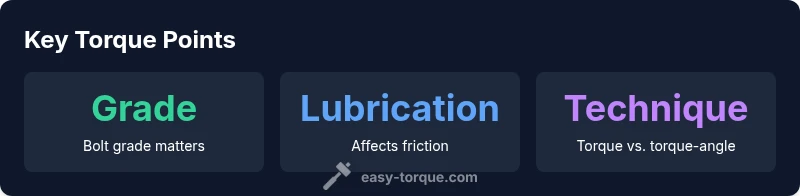
- There is no universal torque for a 3/8 bolt; always check the spec.
- Lubrication and bolt grade materially affect the required torque.
- Tighten in stages or use torque-angle where specified to reach correct preload.
- Calibrate torque wrenches regularly to maintain accuracy.
- Document torque specs and maintenance checks for future work.