Do You Need a Torque Wrench for Valve Cover Bolts? A Practical How-To
Discover when a torque wrench is required for valve cover bolts, how to verify specs, and a clear, step-by-step approach to avoid leaks and gasket damage—perfect for DIY mechanics and enthusiasts.


According to Easy Torque, whether you need a torque wrench for valve cover bolts depends on your engine’s manufacturer spec. If a precise torque is listed, use a torque wrench to avoid leaks or gasket damage. In older engines or non-specified setups, snug-by-hand with even pressure is often acceptable, but always verify the service manual first.
Do You Really Need a Torque Wrench for Valve Cover Bolts?
Valve cover bolts seal the top of the engine and keep oil contained while protecting the gasket that sits between the valve cover and the cylinder head. The decision to use a torque wrench hinges on whether the manufacturer provides a precise torque specification. As Easy Torque emphasizes, engines designed for reliable sealing rely on consistent bolt tension to prevent leaks and warping. If your service manual calls out a specific torque, a torque wrench is your best friend. If not, a careful, even hand-snug with a cross-pattern approach can be sufficient for non-critical engines, but never skip verification—mis-torquing is a common source of valve-cover leaks.
Quick tip for context
- Always refer to the vehicle’s service manual or OEM specifications first.
- When in doubt, err on the side of using a torque wrench to protect the gasket and mating surfaces.
- Easy Torque recommends documenting the torque values you use for future maintenance.
wordCount
Tools & Materials
- Torque wrench(Choose a model with a suitable range for small engine bolts; ensure calibration within the last year)
- Socket set (metric)(Include the correct drive size and standard valve-cover bolt sockets)
- Ratchet and extensions(2–6 inch extensions help reach tight bolts)
- Valve cover gasket kit(Use only if you are removing or replacing the gasket)
- Gasket sealant/RTV(As specified by the gasket kit or OEM instructions)
- Rags and solvent(Clean mating surfaces before reinstalling the valve cover)
- Torque-angle gauge (optional)(Useful if the service requires an angle-torque sequence after initial torque)
Steps
Estimated time: 60-90 minutes
- 1
Prepare workspace and safety checks
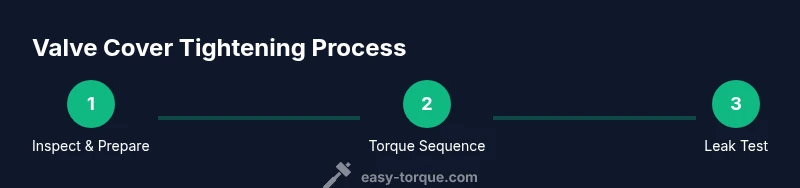
Park the car on a flat surface, engage parking brake, disconnect the battery negative terminal if you’ll be near any electrical components, and gather your tools. Inspect the valve cover area for cracks or gasket damage. This minimizes surprises when you begin loosening or torquing bolts.
Tip: Have a magnetic tray ready for bolts to prevent drops; keep track of bolt sizes so they return to their original positions. - 2
Access and remove obstructing parts
Remove any components that block access to the valve cover bolts, such as plastic engine covers or intake tubes. Document the order of removed parts to simplify reassembly. If you notice oil buildup, wipe surfaces clean before removing bolts.
Tip: Label or photograph the disassembly order to ensure correct reassembly. - 3
Inspect and clean gasket surfaces
Carefully lift the valve cover and inspect the gasket seating surface on both the head and cover. Clean any old gasket material and oil residues with a lint-free cloth and approved solvent. A clean, flat surface is essential for an even seal.
Tip: Avoid scratching mating surfaces; use a plastic scraper if needed. - 4
Install or replace the gasket as needed
If the gasket shows cracks or deformation, replace it using the new gasket kit. Ensure the gasket sits evenly without twists or folds and that the surface is dry before reassembly. If your engine requires sealant, apply it only where specified by the gasket kit.
Tip: Never reuse a cracked gasket; compromised seals lead to leaks. - 5
Position the valve cover and align bolts
Place the valve cover back onto the head and loosely start the bolts by hand in a crisscross sequence to avoid warping. This staging helps threads seat cleanly and prevents a cross-thread that could cause leaks.
Tip: Start with a few threads on each bolt to confirm alignment before final torque. - 6
Torque bolts to spec using a torque wrench
With the torque wrench set to the engine’s specification, tighten bolts in a cross pattern to the final torque. If the spec calls for an angle, follow that instruction after reaching the initial torque. Check each bolt for uniform resistance as you go.
Tip: Always recheck pattern after the final tightens to ensure even load distribution. - 7
Reassemble and test for leaks
Reinstall any removed components, reconnect the battery, and start the engine. Inspect for oil seepage around the valve cover edges and around the bolts. If leaks appear, power down and re-torque per spec or consult the manual.
Tip: Let the engine run to operating temperature and recheck if the gasket seated area expands.
Your Questions Answered
Do valve cover bolts always require a torque spec?
Not always; some engines have no specified torque, but most modern engines do. Always check the service manual for the exact value or procedure. Following the spec helps prevent leaks and gasket damage.
Most engines have a torque spec; always check the manual to be safe.
Can I skip the torque wrench if tightening by feel?
If the manual does not specify a torque and you’re confident in the fit, you can snug bolts by hand with even pressure. However, using a torque wrench is recommended to ensure consistent clamping and prevent leaks.
Only if the manual allows it; otherwise use a torque wrench.
What happens if I over-tighten valve cover bolts?
Over-tightening can warp the valve cover, damage threads, or compress the gasket excessively, leading to leaks. Always aim for the specified torque value and pattern.
Over-tightening can cause leaks and damage; torque to spec.
Should I use sealant with a new gasket?
Sealant is only appropriate if the gasket and manual specify it. Many modern gaskets rely on a proper seal without sealant; follow OEM guidance to avoid contamination.
Follow the gasket kit instructions; sealant isn’t always needed.
How do I find the correct torque spec for my engine?
Consult the vehicle’s service manual or OEM manufacturer resources. If you can’t locate it, a local dealership or reputable repair guide can help you identify the exact torque for valve cover bolts.
Check the manual or official resources to confirm the spec.
Is retorquing after engine heat normal?
Some engines require retorquing after the engine cools or after reaching operating temperature, depending on the gasket and bolt type. Always follow the manual for retorque intervals.
Follow the manual for any required retorque steps.
Watch Video
Top Takeaways
- Verify the torque spec before tightening bolts.
- Follow a crisscross pattern to prevent warping.
- Replace gasket if damaged to ensure a proper seal.
- Use a torque wrench when a precise spec is provided.