Flywheel Torque Spec: Correct Bolt Torque for Cars
Master the flywheel torque spec with practical steps and safety tips. Learn how to locate the exact value and apply the correct tightening sequence for clutch reliability.


Flywheel torque spec is the manufacturer-recommended bolt torque value and tightening sequence used to secure the flywheel to the crankshaft. It ensures clutch engagement is smooth, bearing life is preserved, and engine balance is maintained. Because specs vary by engine, always reference the service manual or OEM database for your exact model.
Understanding the flywheel torque spec
The flywheel torque spec is the officially recommended bolt tightening value and pattern used when fastening the flywheel to the crankshaft. It integrates bolt grade, thread pitch, lubrication status, and the specific seating surface geometry of the crank flange. Getting this right matters: proper torque ensures even clamping force, minimizes bolt stretch, and supports clutch engagement accuracy, engine balance, and starter clearance. In the field, DIY mechanics often hear about 'torque specs' but may overlook the details that matter most in real life: sequence, looseness, and re-torquing after run-in. When you set bolts to the correct torque and follow the prescribed sequence, you reduce the risk of clutch chatter, uneven flywheel wear, and vibration transferring into the crank. The value isn't universal; it depends on engine family, bolt diameter, bolt grade (for example grade 8.8 vs 10.9), and whether any locking features or threadlock are used. Always treat the spec as final for your exact application and verify via official manuals or OEM databases. In practice, the specification also guides the number of passes and whether an angle-tightening step is required after the initial torque—details that have a direct impact on long-term reliability.
Why torque specs vary and how to interpret them
Torque specs do not exist in a vacuum; they are a product of the engineering design and service philosophy for a given engine. Variation arises from bolt material, thread engagement length, lubrication (dry vs. lubricated threads), and the presence of any sealing surfaces. Some manufacturers enforce a two-stage tightening approach: an initial torque to seat the surfaces, followed by a final torque or an angular tighten to lock the bolt in place. Others require a simple final torque only. When interpreting specs, look for three elements: the numeric torque value, the tightening sequence or star pattern, and any angular tightening requirements (for example, 90 degrees after an initial pass). If your manual mentions "angle" after the final torque, follow it exactly. Also check whether the instruction applies to a re-torque after engine run-in or after installation of the clutch assembly. Lubrication status can swing the effective torque by a few percent, so adhere strictly to the manual's guidance on whether to treat the bolt threads as dry or lubricated. In all cases, use the exact spec for your engine family rather than guessing from a similar vehicle.
How to find the correct spec for your engine
Locating the precise flywheel torque spec for your engine requires turning to official sources rather than memory or forum posts. Start with the service manual for your vehicle or the OEM repair database. If a manual is not readily available, use the VIN to pull up the correct engine code in an OEM portal or a trusted automotive database. Record the exact numerical torque, the tightening sequence, and any angular tightening steps. Note whether the bolt type is a standard grade 8.8, 10.9, or a specialized locking bolt. If the service manual lists multiple scenarios (new install vs. re-use after maintenance), follow the scenario that matches your work. When you board a job, keep a copy of the relevant page or page numbers for quick reference. For performance or heavy-duty variants, you may see a higher allowable range, but do not exceed the engine-specific cap. If in doubt, contact the manufacturer’s technical support or a certified service center.
Step-by-step: Checking and Torquing Flywheel Bolts
- Safety and prep: Ensure the vehicle is securely supported, battery disconnected, and workspace is clean. 2) Inspect bolts and threads for wear or damage; replace any suspect bolts. 3) Clean mating surfaces and threads; apply lubricant only if specified. 4) Install the flywheel and align timing marks. 5) Hand-tighten bolts in star pattern to seated contact. 6) Apply initial torque as specified (often a fraction of final value). 7) Apply final torque in the prescribed sequence. 8) If required, perform angular tighten (e.g., 90 degrees) after final torque. 9) Re-check torque after run-in or after first engine start, if manual requires. 10) Verify no run-out or clutch interference. 11) Document the torque values for future maintenance.
Common pitfalls and mistakes
- Reusing old bolts, which can have reduced clamping capability and unpredictable stretch. - Installing bolts that are too long or too short, risking interference with the crank or flywheel seating surface. - Failing to clean threads or applying incorrect lubrication; both can skew torque readings. - Ignoring the prescribed tightening sequence or not performing any angular tightening when required. - Not rechecking torque after run-in or after the first heat cycle when specified. - Using damaged or corroded components, which can lead to uneven torque transfer and bolt failure.
Practical examples by engine type
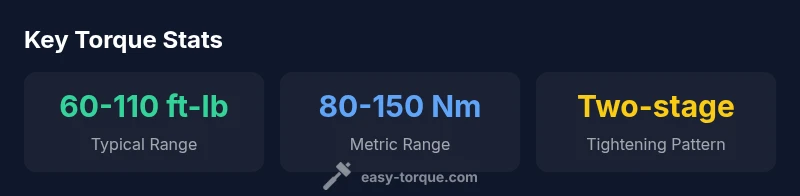
- Small petrol car (2.0L inline-4 with aluminum flywheel): typical bolt torque range is 60-110 ft-lb (80-150 Nm). Always confirm the exact value in the service manual. - Diesel pickup (3.0L): higher end of the range is common, around 90-140 ft-lb (120-190 Nm), due to heavier flywheel and crank interface. - V8 performance engine: often 100-150 ft-lb (135-205 Nm) with careful sequencing and occasional angle-tightening as required by the manual.
Tools and safety considerations
Use a calibrated torque wrench appropriate for the engine’s torque range (3/8" drive for lighter bolt sizes, 1/2" drive for larger bolts). Have an angle gauge or torque-angle adapter if the manual calls for angular tightening. Always work with the engine off, disconnect the battery, and use wheel chocks and jack stands as needed. Calibrate your torque tools per the manufacturer’s recommendation, and replace any bolts if you notice signs of wear or damage. Keep a clean, organized workspace to prevent cross-threading and ensure accurate torque application.
Flywheel bolt torque ranges by engine type
| Engine Type | Common Flywheel Bolt Torque (ft-lb) | Notes |
|---|---|---|
| Petrol compact car | 60-110 | Verify with service manual |
| Mid-size petrol car | 70-110 | Refer to engine code |
| Diesel truck | 90-140 | Higher due to heavier flywheel |
Your Questions Answered
What is the flywheel torque spec, and why does it vary by engine?
The flywheel torque spec is the manufacturer’s exact bolt torque value and tightening pattern used to secure the flywheel to the crank. It varies by engine due to differences in bolt size, grade, and crank design. Always consult the service manual.
The torque spec is the factory value and sequence; check the manual.
Can I reuse flywheel bolts?
Usually not. OEMs often require new bolts when reattaching the flywheel. Check the manual and torque sequence again after installation.
Usually you should replace bolts.
What tools do I need to torque a flywheel bolt correctly?
A calibrated torque wrench covering the engine's specified range, plus a possible angle gauge or torque-angle adapter. Follow the torque sequence exactly.
You'll need a proper torque wrench.
What happens if bolts are under- or over-torqued?
Under-torque can cause loosening and clutch chatter; over-torque risks bolt stretch or thread damage. Always stay at the manufacturer’s spec.
If you're off, you risk failure.
Is threadlocker allowed on flywheel bolts?
Some manufacturers permit light threadlocker or require dry threads; others forbid it. Always follow the manual to avoid torque-reading changes.
Check the manual; some cases require dry threads.
Should I re-torque after first start?
Many manuals specify rechecking torque after initial run-in or after the first start. Follow the exact guidance for your engine.
Check the torque again after run-in if required.
“Accurate flywheel torque specs are non-negotiable for clutch life and engine balance. Following the exact value and tightening pattern protects bearings, avoids vibration transfer, and extends component life.”
Top Takeaways
- Always verify the exact flywheel torque spec in the service manual.
- Follow the prescribed tightening sequence to prevent bolt failure.
- Clean threads and apply lubricant only as specified by the manual.
- Use the correct torque wrench range for accuracy.
- Recheck torque after installation if the manual requires it.