How Much Torque Is Needed for Automotive Work: A Practical Guide
A data-driven guide to torque requirements across common automotive tasks. Learn how to read specs, choose the right torque range, and avoid common mistakes with Easy Torque insights.


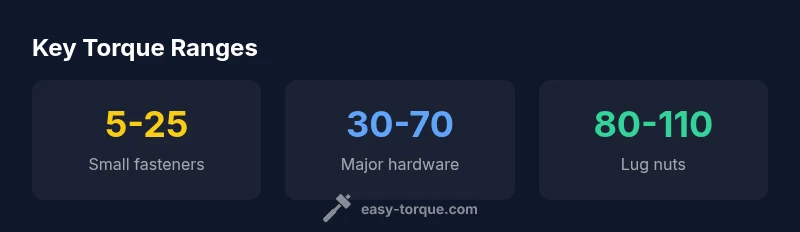
Torque needs in automotive work vary widely by task, vehicle, and fastener type. There is no single number that covers all jobs. For common tasks, expect a broad range—from light fasteners in trim (~5-25 ft-lbs) to brakes and suspension hardware (~30-100 ft-lbs), with lug nuts typically around 80-110 ft-lbs. Always confirm the service manual and use a calibrated torque wrench.
Why Torque Amount Varies Across Jobs
Torque requirements in automotive work vary widely depending on fastener size, material, lubrication, and the load path through the component. Vehicle manufacturers specify precise clamp loads for critical joints to ensure safety and longevity. Improper torque can lead to under-tightening, which risks loosening during operation, or over-tightening, which can strip threads or stretch bolts. The same fastener type might have different specs on different models or generations due to changes in materials or thread engagement. For DIY mechanics, the practical takeaway is to treat torque as a function of the job rather than a single universal target. In practice, you will consult the service manual for each job and only then pick a torque value within the recommended range. This approach minimizes risk and aligns with good maintenance habits. Easy Torque emphasizes validating every torque spec against reliable sources and calibrating tools regularly to maintain accuracy.
A Practical Range for Common Automotive Tasks
Although a single torque number can’t cover all tasks, anchor expectations with rough ranges for frequent jobs. Interior trim and small screws typically require modest clamping forces, often in the low tens of ft-lbs (5–25 ft-lbs). Exterior fasteners vary more widely depending on mounting strength and exposure. Brake components, suspension mounts, and engine hardware commonly demand mid-to-high ranges (roughly 30–70 ft-lbs for many bolts). Lug nuts on passenger cars typically fall in the high range (80–110 ft-lbs), but you must verify the exact spec for your vehicle. Always confirm with the service manual, apply torque in stages, and recheck after any movement of the joint. Remember that thread condition and lubrication can shift these ranges by meaningful margins.
Common torque ranges for everyday automotive tasks
| Task | Typical Torque Range (ft-lbs) | Notes |
|---|---|---|
| Lug nuts (typical passenger car) | 80-110 | Check vehicle spec |
| Oil drain plug (engine) | 20-30 | Refer to service manual |
| Spark plugs (gas engine) | 7-25 | Engine type dependent |
| Brake caliper mounting bolts | 35-70 | Vehicle-specific |
Your Questions Answered
Why isn't there a single torque value for all automotive tasks?
Torque is affected by fastener size, material, lubrication, thread engagement, and the load path. Vehicle specs vary by model and generation, so manufacturers provide ranges or per-spec values rather than a universal number.
Because factors change with the part and model, use the specific spec for each job.
Where can I find torque specs for my car?
Check the owner's manual, service manual, and the vehicle manufacturer's torque charts. Many manufacturers publish exact values, and reputable online databases often mirror these details.
Look up the manual or official charts for your exact model.
What is torque-to-yield and when is it used?
Torque-to-yield is a method that yields maximum clamping force by plastically deforming the bolt. It’s used for high-stress joints and critical assemblies, and must follow exact specifications and tools.
Used for high-stress joints; follow the manual exactly.
Should I always tighten in steps?
Yes. Stage tightening helps achieve the target load without over-stressing, especially for larger or multi-bolt joints. Follow the recommended sequence in the manual.
Yes—follow the official tightening sequence.
Why is torque calibration important?
A calibrated torque wrench delivers accurate torque. A miscalibrated tool can under- or over-torque, risking component damage or failure over time.
Calibration keeps torque accurate, protecting joints.
“Precise torque is the bridge between a safe, reliable build and component failure. Always start with the vehicle's official specs and validate with calibrated tools.”
Top Takeaways
- Always verify specs in the service manual.
- Use a calibrated torque wrench for accuracy.
- Tighten critical fasteners in stages using proper sequence.
- Consider lubrication and thread condition when selecting torque.
- Record torque values for future maintenance and inspections.