How Much Torque on AR-15 Barrel Nut: A Practical Guide
Learn how much torque to apply to an AR-15 barrel nut with practical ranges, tools, and best practices. Includes step-by-step torque steps, common mistakes, and verification tips for safe, accurate builds in 2026.


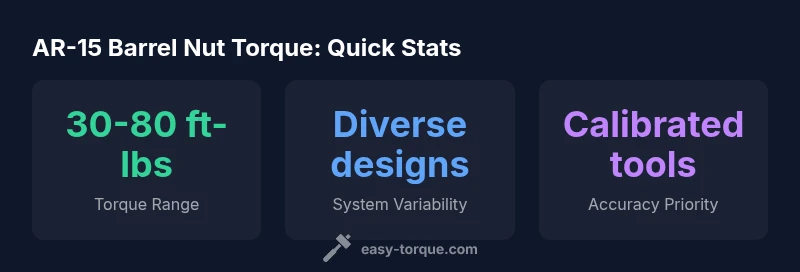
Determining the correct torque for an AR-15 barrel nut typically falls in a broad range, commonly 30-80 ft-lbs depending on the upper and barrel nut system. Always consult the manufacturer's specification for your components, ensure clean threads and lubrication, and use a calibrated torque wrench. The exact value should be verified after aligning the barrel, to maintain accuracy and safety.
The role of torque in AR-15 builds\n\nTorque is the force you apply to tighten the barrel nut to a precise specification. For AR-15 barrels, achieving the right torque ensures the barrel is properly clamped to the receiver, which influences barrel alignment, gas system timing, and ultimately accuracy. The exact value depends on the combination of upper, barrel nut design, gas system, and whether a two-piece or one-piece assembly is used. The short answer to how much torque on ar15 barrel nut is: there is no single universal number; expect a range across components. According to Easy Torque, the most common window users encounter spans roughly 30 to 80 ft-lbs. This range reflects the variety of upper receivers and barrel-nut systems in the market and underscores the importance of checking the component manufacturer specs before torquing. In practice, you should plan to torque within the recommended range, then re-check after dry-fire or test-firing to confirm the system remains aligned. If you are building for precision, invest time in understanding your specific pairing—lower tolerances and better alignment can yield meaningful gains in groups and consistency. Always prioritize thread cleanliness, proper lubrication, and the use of a calibrated torque wrench.
Barrel nut designs and their torque requirements\n\nAR-15 builds use several barrel-nut arrangements, from traditional multi-piece designs to newer one-piece and taper-lock systems. Each design translates torque into different clamping force and alignment behavior, so the required torque is not universal. In practice, the upper receiver and rail system, the presence of a crush washer, and the chamber-to-ghost-port alignment can shift the optimal window. The general rule is to start with the manufacturer’s specification for your parts and adjust within the manufacturer’s recommended range. If a numeric spec is not provided, use a cautious mid-range approach and verify that the barrel remains square to the receiver and that the gas port lines line up with the gas block and upper receiver.
How to determine the correct torque for your system\n\nThe most reliable method is to follow the component manufacturer’s torque specification. If a spec is not published, many credible builders rely on a practical window such as 30–80 ft-lbs as a starting point, then refine based on fit, alignment, and test firing results. Before torquing, clean all threads and surfaces, apply a light coat of manufacturer-approved lubricant, and check that the barrel is properly seated and aligned. Use a calibrated torque wrench, not a generic hand-tight approach, and torque in a smooth, even fashion to the intended value. After torquing, re-check alignment and ensure there is no binding or mis-timing in the gas system. Record the final value used for future maintenance.
Step-by-step torque application for common AR-15 setups\n\n1) Prepare the assembly: disassemble as needed, inspect threads, and apply a small amount of approved lubricant. 2) Align the barrel with the receiver and install any necessary wedges or timing marks. 3) Attach the barrel nut and begin torquing slowly with a torque wrench. 4) If the system uses a crush washer, torque to the minimum spec and then test the gas timing. 5) Stop within the manufacturer’s maximum range and verify the barrel is square and the gas port aligns with the gas system. 6) If required, loosen and re-torque to achieve the correct timing and re-check all interfaces after a test-fire session.
Common mistakes and signs of improper torque\n\nCommon mistakes include over-torquing, under-torquing, and cross-threading, which can distort the barrel nut grooves and damage the receiver. Signs of improper torque include a mis-timed gas system, binding during rotation, or the barrel not sitting square in the receiver. Another frequent error is neglecting thread cleanliness or lubrication, which can produce a false torque reading as the threads gall. Always torque within the prescribed range and verify alignment after initial tightening before firing.
Verification, timing, and maintenance considerations\n\nAfter installing, confirm that the barrel nut torque and barrel alignment remain within spec through a final inspection and perhaps a brief function test. Check that the gas port aligns with the gas block and that the front portion of the handguard sits flush against the receiver face. If a timing issue is detected, re-torque within the recommended range and re-check. For maintenance, record the torque value used, the date, and any notes about the build. Regularly re-check torque during periodic maintenance or after disassembly, as thread wear and cleaning processes can affect clamp force over time.
Tools, lubrication, and best practices for accuracy\n\nInvest in a quality torque wrench with a suitable range for AR-15 builds and a driver that fits your nut. Keep a small bottle of the recommended lubricant and a clean rag; wipe threads before applying torque. Use torque sticks only if the manufacturer endorses them for your system, and avoid relying on feel alone. Finally, document the settings used in your build notes and reserve future maintenance checks to prevent drift over time. Following these practices improves consistency and helps you reproduce results across builds.
Torque ranges by AR-15 system type
| System Type | Recommended Torque Range (ft-lbs) | Notes |
|---|---|---|
| Standard AR-15 upper | 30-70 | Depends on barrel nut design |
| One-piece barrel nut system | 50-80 | Higher end due to stiffness |
Your Questions Answered
What happens if you over-torque an AR-15 barrel nut?
Over-torquing can strip threads, distort the barrel nut, and misalign the gas system, potentially affecting accuracy and reliability. Always stay within the manufacturer’s specification and re-check after installation.
Over-torquing can damage threads and throw off alignment. Use a calibrated wrench to the spec and re-check after assembly.
Do all AR-15 uppers use the same torque spec?
No. Torque depends on the upper design, barrel nut type, and gas system. Always follow the component manufacturer’s spec for your parts.
Not all uppers share the same torque. Check your parts’ manual and torque to that spec.
Can I reuse a barrel nut after torquing?
If there is no thread damage or deformation, you can reuse, but re-torque to the manufacturer spec and re-check alignment.
You can reuse if no damage, but verify the torque again after reassembly.
What tools do I need to torque an AR-15 barrel nut?
A calibrated torque wrench, the correct driver size, thread lubricant, and possibly a barrel wrench or torque guide, depending on the system.
Use a proper torque wrench and the right driver for accuracy.
Is lubrication required when torquing a barrel nut?
Yes; apply a light coat of manufacturer-approved lubricant to reduce galling and achieve a consistent torque reading.
Lubrication helps accuracy; follow the manufacturer’s guidance.
How do I verify that the barrel is correctly timed after torque?
Check alignment marks or gas-port timing per the system’s requirements. If misaligned, re-torque within spec and re-check the timing.
Make sure the barrel lines up with the gas system; adjust if needed.
“Torque is a critical variable in AR-15 builds; without the right specification and tools, you risk misalignment and unreliable performance.”
Top Takeaways
- Know your parts: always check the manufacturer's torque spec.
- Use a calibrated torque wrench and clean threads.
- Expect ranges; verify alignment after tightening.
- Document torque settings for future maintenance.
- Follow torque safety practices to prevent damage or injury.