What Torque Wrench for AR-15: How to Choose the Right Tool
Learn how to choose the right torque wrench for AR-15 assembly and maintenance. This practical guide covers wrench types, calibration, reading specs, and safe usage to protect your firearm and maintain reliability.


By the end of this guide you will know what torque wrench for ar15 you need, how to read manufacturer specs, and how to use the wrench safely during assembly and maintenance. You will learn the differences between wrench types, how to verify accuracy, and practical steps to document torque settings for repeatable results.
Why AR-15 torque accuracy matters
Achieving accurate torque when installing AR-15 components is essential for reliability and safety. The bolt carrier group, barrel nut, handguard, and upper receiver all rely on precise clamping force to maintain headspace, gas system timing, and corrosion resistance. If you under-torque, fasteners may loosen; if you over-torque, threads may strip or stretch. According to Easy Torque, the most repeatable assemblies come from a calibrated torque wrench used with a documented sequence. Your AR-15 build benefits from documenting the torque values you use for each fastener and sticking to them across disassemblies. In practice, you should always start with the manufacturer recommended torque, verify using a test jig or bench setup, and recheck after firing to ensure the fit remains correct. Remember that different receivers and barrels may have different specs, so always consult the specific guide for your parts.
Understanding Torque Basics
Torque is the turning force applied to a fastener. It is commonly measured in inch-pounds or foot-pounds, and the actual reading depends on thread engagement, lubricant, and tool accuracy. For AR-15 assemblies, small changes in torque can affect headspace, gas system timing, and locking strength. The goal is to apply the specified clamping force without exceeding the fastener’s material limits. Practice with a test fastener or a spare barrel nut on a bench to feel how the wrench behaves as you approach the target. Regular calibration and documentation help you reproduce the exact settings on subsequent disassemblies.
Types of Torque Wrenches for AR-15
There are several wrench types suitable for AR-15 work. Click-type torque wrenches provide a tactile reset and a distinct click when the target torque is reached, which helps preserve consistent results. Digital torque wrenches offer easy-to-read displays and memory of recent settings, useful for quick checks in low-light environments. Beam-type torque wrenches are simple and inexpensive but require you to read a moving scale, which can be harder in bright or reflective conditions. For most DIY builders, a calibrated click-type or digital wrench offers the best mix of accuracy and usability. Always choose a wrench with a stated accuracy of 1% or better and ensure it is calibrated before use.
How to Read Specs and Manufacturer Guidance
AR-15 manufacturers publish torque specs for each fastener, but these vary by part and model. Start by locating the official instruction sheet for your specific upper, barrel, gas block, and rail system. Read the sequence and order of tightening, any required lubrication, and whether a torque angle or dwell is specified. If a spec calls for a torque range rather than a fixed value, use the middle of the range as a starting point and verify with a test setup. When in doubt, contact the manufacturer or consult a trusted gunsmith. Documenting these values is essential for repeatable builds and safe field maintenance.
Calibration and Maintenance
Calibration keeps torque readings accurate. Most hobbyists calibrate annually or after heavy use, such as frequent disassembly. Store your torque wrench with the handle unlocked or in a neutral position per the manufacturer’s guidance, and keep it away from temperature extremes. If you drop or shock the wrench, have it recalibrated before reuse. Use a torque tester periodically to verify that the wrench reads within spec. Keeping a simple maintenance log for each wrench helps you track calibration dates and accuracy over time.
Practical Workflow for AR-15 Assembly
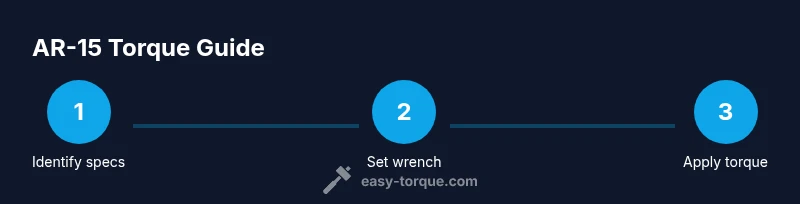
A practical workflow minimizes mistakes and ensures consistent results. First, gather the correct torque specs from your manufacturer documentation. Clean all threads and apply any specified lubrication. Set your wrench to the target torque, then tighten each fastener in the prescribed sequence with steady, even pressure until the wrench completes its click or display confirms the setting. Finally, re-check all fasteners after assembly and perform a light function test to confirm proper fit and operation.
Common Mistakes and Safety Considerations
Common mistakes include using an incorrect torque value, skipping calibration, using worn or damaged tools, and failing to clean or lubricate threads. Safety matters: a mis-torqued barrel nut orrail fastener can affect accuracy, reliability, and safety. Always wear eye protection when working with firearms, and never exceed the manufacturer’s torque specification. If you are unsure about a fastener, consult the manufacturer or a qualified gunsmith before proceeding.
Everyday Scenarios: Home Workshop vs Field Maintenance
In a home workshop you can verify torque values on a bench with a test fastener, which helps ensure repeatable results. In field maintenance, rely on a compact, calibrated wrench and carry the manufacturer specification sheet or a digital device with the correct values. Keep spare batteries for digital wrenches and a small toolkit for on-the-go adjustments. Document the settings used in field service to preserve consistency across tasks.
Tools & Materials
- Torque wrench (calibrated)(1% or better accuracy; choose click-type or digital)
- AR-15 torque spec sheet(From manufacturer for barrel nut, upper, and other fasteners)
- Lubricant or anti-seize as recommended(Only if specified by part manufacturer)
- Clean rags and thread brush(Keep threads clean for accurate readings)
- Torque angle gauge (optional)(Useful when angle-torque is specified)
- Calibration log(Record dates and results for traceability)
Steps
Estimated time: 30-60 minutes
- 1
Identify the correct torque requirements
Locate the official torque specs for each AR-15 fastener from the manufacturer guide. Note any required tightening sequence and whether a torque angle is included. This step sets the foundation for all following actions.
Tip: Double-check part numbers to ensure you are reading the correct spec set. - 2
Inspect hardware and prepare the work area
Inspect fasteners for wear or damage. Clean threads and apply lubrication only if specified. A clean substrate reduces friction variability and improves accuracy.
Tip: Use a clean bench mat and good lighting to avoid misreading the wrench. - 3
Set the wrench to the target torque and verify calibration
Zero the wrench and set it to the manufacturer-recommended value. If you suspect accuracy issues, verify with a calibration check or an inexpensive test fastener.
Tip: Calibrate after any drop, impact, or long storage period. - 4
Apply torque in the prescribed sequence
Tighten each fastener in the order specified, approaching the target torque with steady, even pressure. Stop precisely at the torque before moving to the next fastener.
Tip: Avoid using body weight; use controlled wrist motion for consistency. - 5
Re-check and test the assembly
Re-torque as required, and perform a basic function test of the upper and rail assembly. Document the final torque values for future reference.
Tip: If any fastener resists or seems loose, stop and re-evaluate before testing further.
Your Questions Answered
Do I need a specialized AR-15 torque wrench or can I use a generic one?
Any torque wrench that is properly calibrated and capable of the required accuracy works, as long as you follow the part specific torque specs.
Any calibrated torque wrench works as long as you follow the AR-15 part specs.
Is a digital torque wrench better than a beam or click-type?
Digital wrenches offer easier reading and memory features, but a good quality click-type or beam wrench can be just as accurate if properly calibrated.
Digital tools are convenient, but a well-calibrated click-type or beam wrench is often enough.
How often should I calibrate my torque wrench?
Calibrate at least annually or after heavy use, and anytime the tool is dropped or exposed to unusual conditions.
Calibrate yearly or after heavy use, and after any drop.
What happens if I under-torque or over-torque a fastener?
Under-torque can lead to loosening while over-torque risks thread damage or bolt failure. Always adhere to the spec.
Too little torque loosens; too much can strip threads. Stick to the spec.
Can I use adapters or extensions with a torque wrench for AR-15 work?
Adapters or extensions can alter the effective torque reading. Check the wrench’s manual for guidance or avoid unless specified.
Only use adapters if the manual confirms accurate readings with them.
Watch Video
Top Takeaways
- Choose a calibrated wrench with suitable accuracy
- Always follow manufacturer specs and tightening sequence
- Calibrate and log torque settings for repeatable results
- Inspect hardware and clean threads before torquing
- Re-check all fasteners after assembly and firing