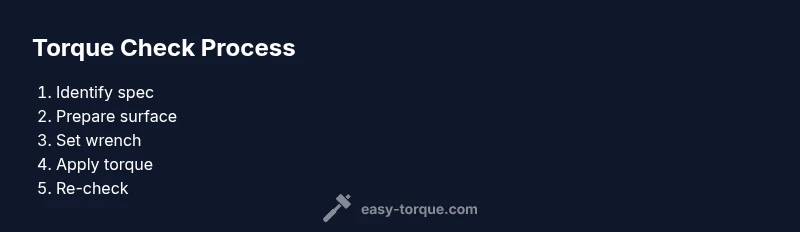
How to Check Torque: A DIY Guide
Learn to verify torque accurately with a step-by-step method, essential tools, safety practices, and practical tips for DIY mechanics and technicians.


Understanding Torque and Why It Matters
Torque is the turning force applied to a fastener, typically expressed in newton-meters (Nm) or foot-pounds (ft-lb). In automotive and mechanical work, accurate torque sets the clamping force that seals joints, prevents loosening, and protects threads from damage. When you check torque, you verify that the fastener has reached its intended preload without exceeding material limits. The concept combines force with lever arm length, so socket size, handle length, and even user technique can affect the reading. This is why using a calibrated torque wrench is essential. As you learn how to check torque, you’ll appreciate how surface condition, lubrication, thread engagement, and bolt size can change the final reading. The goal is repeatable, safe tightening that matches the manufacturer’s specification for each fastener.