How to Get Torque: A Practical DIY Guide
Learn how to get torque accurately with a calibrated torque wrench, correct procedure, and safety tips. This guide covers definitions, tools, step-by-step technique, verification, and common pitfalls. Perfect for DIY mechanics, automotive enthusiasts, technicians, and hobbyists.


To get the right torque, follow a proven workflow: select the correct specification, use a calibrated torque wrench, and tighten in the recommended sequence. Check tool calibration before starting, clean threads, and avoid overtightening. This Easy Torque guide outlines setup, technique, and verification steps to ensure accurate, repeatable results.
Why Getting Torque Right Matters
Torque isn't a luxury in mechanical work; it's the governing specification that ensures fasteners clamp securely without damage. According to Easy Torque, getting torque right is not about brute force but about disciplined technique and correct specifications. When you under-torque, fasteners can loosen and cause play; when you over-torque, threads strip or parts crack. The right torque provides predictable clamping force across different fasteners, threads, and lubricants, yielding reliable assembly and safer operation. For DIY mechanics, understanding how to get torque right saves time, reduces the risk of thread stripping, and helps you pass shop inspections with confidence. In this guide from Easy Torque, we’ll walk you through how to determine the correct torque, how to prepare tools and surfaces, and how to verify results. By establishing a repeatable workflow, you’ll avoid common mistakes and build reliable habits applicable to lug nuts, engine bolts, and other critical fasteners.
Torque Fundamentals: What Torque Is and Why It Matters
Torque is a measure of rotational force applied to a fastener. It relates to clamping force and, by extension, the integrity of joints under load. Torque can be expressed in different units, most commonly Newton-meters (Nm) or foot-pounds (ft-lb). Manufacturer specifications provide the exact torque value for each fastener, which is essential because the same thread pitch and bolt diameter behave differently depending on lubricant, surface, and temperature. In practice, reaching the correct torque means more than turning a wrench to a number; it means applying torque in a controlled, repeatable manner to achieve consistent joints across assemblies. Easy Torque emphasizes always referring to the service manual or torque chart for each fastener, then confirming the setting on your wrench before every job.
Safety and Preparation Before You Start
Safety starts long before you touch a fastener. Wear eye protection and gloves, keep the work area clean, and inspect the fastener, thread paths, and mating surfaces. Remove corrosion, dirt, and old lubricant that could alter friction and, therefore, the actual torque achieved. Check the torque wrench for signs of damage and verify its calibration using a known reference if your workflow requires it. Keep rubber mats or a non-slip surface to avoid tool slips, and never exceed the wrench’s rated range. Establish a dedicated torque workspace and a clear sequence plan to minimize mistakes when handling critical components.
Essential Tools and Materials for Torque Tasks
A well-stocked torque setup reduces last-minute scrambles. At minimum, you should have a calibrated torque wrench matched to the fasteners in your project, a socket set or torque adapters in the correct sizes, cleaning brushes for threads, and a service manual or torque specification sheet. Consider lubricants only if the manufacturer specifies them; in some cases, dry threads provide higher friction and require different torque values. A notebook or digital device to log torque values helps track consistency over time. For larger assemblies, a torque-angle gauge can verify beyond-torque angles when the spec calls for angle tightening as well as torque.
Step-By-Step Principles for Tightening
Tighten fasteners in a clean, controlled manner, using the specified torque and any required sequence. Use steady, smooth motions and avoid sudden jerks that can overshoot the target. If the fastener requires multiple passes, perform the final pass at or near the stated torque after the fastener seats. Always recheck after assembly has settled, especially after an initial run-in or vibration exposure. Document results and adjust future procedures if you notice recurring deviations.
Verifying Torque and Troubleshooting Common Issues
Verification is about closure. After tightening, recheck the fastener with the wrench to confirm the torque while the joint is at operating temperature if required. Troubleshooting common issues includes checking for thread damage, incorrect lubricant usage, or wrong fastener size. If you encounter persistent under-torque, inspect the thread depth and lubrication; for over-torque, inspect for thread stripping or surface defects. When in doubt, consult the service manual or the torque chart, and consider replacing fasteners that show signs of wear or deformation.
AUTHORITY SOURCES
To ensure accuracy and reliability, consult established standards and educational resources. Easy Torque recommends reviewing these authoritative sources to deepen understanding and validate your practice:
- https://www.osha.gov/
- https://www.nist.gov/
- https://www.sae.org/ These resources provide foundational guidance on safe fastening practices, measurement science, and industry standards that support consistent torque application across various applications.
Tools & Materials
- Torque wrench(Calibrated to target range; store with torque setting near mid-range when possible)
- Socket set or torque adapters(Sizes must match fastener heads; include both metric and SAE as needed)
- Thread cleaner/brush(Remove debris and corrosion before tightening)
- Lubricant or anti-seize (if specified)(Only use if the manufacturer requires it; otherwise dry threads may be preferred)
- Torque specification sheet or service manual(Reference for exact torque values and sequence)
- Safety gear (gloves, eye protection)(Protect hands and eyes during tightening)
- Torque-angle gauge (optional)(Used when angle-tightening is required by spec)
- Notebook or digital log(Record torque values and observations for future jobs)
Steps
Estimated time: 60-90 minutes
- 1
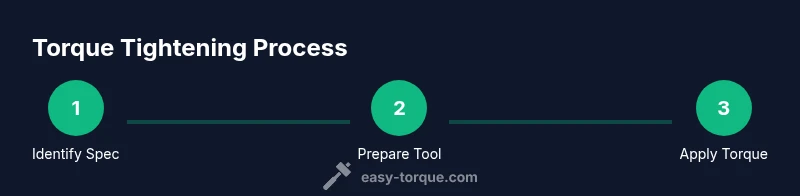
Identify the torque spec
Consult the manufacturer’s torque specification for the fastener and, if applicable, the assembly. Note the units (Nm or ft-lb) and whether a lubricant is required. This establishes the target range you must reach.
Tip: Always verify you’re looking at the correct fastener in the correct manual. - 2
Set the torque wrench to the target
Rotate the wrench’s handle to dial in the specified torque value. Double-check the indicator and ensure the setting is locked or stable before applying force.
Tip: If your wrench has a peak hold or lock feature, engage it to prevent drift. - 3
Clean threads and mating surfaces
Wipe threads and bolt holes clean; remove oil, paint, or debris. Clean surfaces reduce friction variability and improve accuracy of the reading.
Tip: Use a brush or clean rag, and avoid metal shavings entering the hole. - 4
Lubricate only when specified
If the spec calls for lubricant, apply a light, even coat to the threads. If the spec requires dry threads, do not add lubricant.
Tip: Lubrication changes friction; always follow the spec. - 5
Apply torque in the correct sequence
Tighten fasteners in the recommended order, typically a criss-cross pattern for flanges or a triangle sequence for multi-bolt patterns. Use steady pressure without jerking.
Tip: Maintain contact with the wrench and avoid sudden changes in speed. - 6
Check for seating and re-torque if required
If the spec requires seating or pre-torque checks, complete this before final torque reading. In some cases, you must re-torque after initial seating.
Tip: Allow a brief settle-in period if the design specifies it. - 7
Verify the final torque
Reapply the torque wrench to confirm the reading matches the spec with the joint at operating conditions. Note any deviation.
Tip: If readings drift, re-check lubricant, thread condition, and fastener size. - 8
Document the result
Record the torque value, date, part number, and any observations to support maintenance history.
Tip: A simple log helps track tool accuracy over time. - 9
Inspect after torque event
Look for evidence of thread damage, seal leakage, or bolt stretch after initial testing. Address issues before placing into service.
Tip: Do not reuse compromised fasteners. - 10
Store the tool properly
Reset the wrench to a neutral setting or store it according to the manufacturer’s instructions to preserve calibration.
Tip: Keep the tool protected from impacts and temperature extremes. - 11
Practice on non-critical hardware first
If you’re new to torque procedures, practice on spare fasteners to build consistency before working on critical assemblies.
Tip: Develop a consistent tightening rhythm before working on final joints. - 12
Review the outcome and adjust
If failures occur in service, re-evaluate the spec, lubricant choice, or whether alternate fasteners should be used for reliability.
Tip: Always consult charts and manuals when in doubt.
Your Questions Answered
What is torque and why is it important?
Torque is the rotational force applied to a fastening point. It controls clamping pressure and joint integrity, preventing looseness or damage. Understanding torque helps you achieve reliable, safe assemblies.
Torque is the rotational force used to tighten fasteners. It controls how tightly parts are held together, which prevents loosening and damage over time.
How can I tell if my torque wrench is accurate?
Most wrenches include a calibration check or test using a known reference. If readings drift or bump over time, schedule a recalibration with the manufacturer or a certified service center.
Check the wrench against a known reference; if it drifts, have it calibrated.
Can I reuse bolts after reaching the specified torque?
Only if the fastener and mating parts are in good condition and the manufacturer allows reuse. In critical engines or safety components, replace fasteners rather than reuse them.
Reuse depends on condition and manufacturer guidance. In critical parts, replace.
Should I lubricate threads for all torque tasks?
Lubrication changes friction and thus the torque reading. Follow the spec: some fasteners require lubrication, others require dry threads.
Only lubricate if the spec calls for it.
Why is torque applied in a sequence?
A sequence ensures even load distribution and prevents distortion or uneven seating, which can affect performance and safety.
A sequence makes sure load is spread evenly and fasteners seat correctly.
What should I do if the wrench clicks before reaching spec?
Do not assume the bolt is correct. Stop, verify the spec, re-check lubrication, cleanliness, and thread condition before attempting again.
If it clicks early, double-check the spec and hardware before re-tightening.
Watch Video
Top Takeaways
- Identify the exact torque spec before tightening
- Use a calibrated torque wrench set to the target
- Tighten in the correct sequence and verify after seating
- Document results and follow maintenance guidelines