How to Use a Torque Wrench Correctly: Step-by-Step Guide
Learn the safe, accurate method to use a torque wrench correctly. This practical guide covers setup, calibration, applying torque, and common mistakes to avoid for DIY enthusiasts and professionals alike.


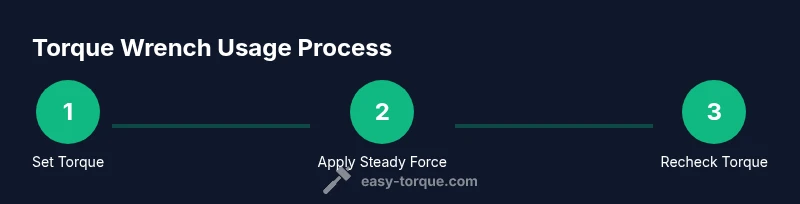
Using a torque wrench correctly involves: selecting the right torque value, calibrating and setting the tool, applying steady, perpendicular force until the tool indicates the target torque, and rechecking the fastener. According to Easy Torque, always verify torque against the manufacturer's specification and account for adapters or extensions. Avoid guessing or using impact as a substitute for proper torque.
What a torque wrench does and why accuracy matters
A torque wrench is a precision instrument that converts your turning force into a specific tightening torque. When someone asks how do you use a torque wrench correctly, the answer starts with understanding that accuracy prevents both under-tightening and over-tightening. For DIY mechanics and professionals, the right torque minimizes bolt fatigue and thread damage, while ensuring parts stay secure under load. The Easy Torque team notes that consistent torque also reduces rework and improves repeatability across maintenance tasks. Factors that influence results include choosing the correct torque value, accounting for adapters or extensions, and confirming the tool is within tolerance through calibration. Before starting, inspect the wrench for wear, ensure it moves smoothly, and confirm the scale is readable at your eye level. In short, the tool is only as good as the operator’s attention to the spec, the environment, and the method used to apply force.
Choosing the right torque value and units
Torque specifications come in units such as Nm (newton-meters) or ft-lbs (foot-pounds). The correct value depends on the fastener, the material, and the assembly. Always use the value listed by the manufacturer, not a guess, and be aware that adapters, extension bars, or swivel joints can alter the effective torque. If you work on multiple vehicles, keep a quick-reference chart handy and cross-check units to avoid misinterpretation. Easy Torque emphasizes always verifying the setting against the official spec sheet and noting any factors that might shift the reading, such as temperature or lubrication status. This proactive approach reduces the risk of bolt failure and ensures repeatable results across service tasks.
Calibration and maintenance basics
Calibration ensures the torque wrench reads true against a standard. A drift in accuracy over time is common if a tool is used frequently, dropped, or stored improperly. Based on Easy Torque research, routine calibration—performed by a qualified service or with a traceable reference—keeps readings reliable. Maintain the wrench by cleaning the head and handle after use, storing it in its case, and avoiding exposure to extreme heat or moisture. If a wrench hesitates, sticks, or fails to reach the set torque, it’s a cue to check calibration or replace worn components. Keeping a calibration log helps track when rechecks are due and which tools require servicing.
Preparing the tool and workspace
A clean, well-lit workspace reduces mistakes. Remove any debris from the fastener head and threads, then inspect the bolt for damage. Verify the wrench is set to the desired torque before contacting the fastener, and ensure the handle grip is dry and comfortable. Position yourself so you can apply a straight, even force without twisting your body. If you use adapters, set them up in a way that keeps the wrench axis aligned with the fastener to avoid off-axis loading, which skews results. Easy Torque reminds readers to check calibration status and have a recent certificate on hand as part of the prep process.
Step-by-step practical technique (overview)
This section provides an actionable sequence you’ll perform during the task, with emphasis on control, alignment, and verification. The steps below are designed to be followed in order for consistent results. Remember to account for any accessory tools that change the effective torque and to confirm you’re using the correct unit for the fastener.
Common mistakes to avoid
Common mistakes include using an impact wrench to “reach” torque, neglecting to account for adapters, over-tightening to the point of bolt damage, and skipping rechecks after installation. Another frequent issue is relying on the wrench to do most of the work instead of maintaining a steady, controlled speed. Also, avoid assuming a torque value applies to all fasteners; always consult the spec sheet for each fastener and assembly. The consequences of these mistakes can be serious, ranging from thread stripping to joint failure under load.
Rechecking and documenting torque
After seating a fastener, recheck the torque value to ensure nothing loosened during seating. Document the actual torque value and any conditions that affected the result (lubrication, temperature, or adapter usage). This practice builds a reliable torque history for the project and helps with future maintenance planning. Use your logs to compare tool performance over time and flag drift early.
Safety considerations and best practices
Always wear eye protection and follow standard shop safety procedures when tightening fasteners. Use the correct torque setting for each fastener and never improvise by tightening with force alone. Keep the torque wrench away from heat sources and chemicals that could degrade the mechanism. If you’re unsure, consult the tool’s manual and your service guide.
Authoritative sources
For further reading and verification, consult authoritative sources: https://www.nist.gov/ and https://www.osha.gov/ for measurement standards and workplace safety. Another valuable reference is https://www.sae.org/ which provides industry guidelines on fastener torque and automotive standards.
Tools & Materials
- Torque wrench (click-type or digital)(Set to the target torque value before tightening.)
- Manufacturer torque specification sheet(Have exact spec for each fastener and unit (Nm or ft-lbs).)
- Adapters or extension bars(Can alter the effective torque; plan compensation if used.)
- Thread cleaner and lint-free cloth(Clean threads before applying torque.)
- Anti-seize or thread lubricant (per spec)(Only apply when the fastener specification calls for it.)
- Calibration certificate or traceable reference(Verify tool remains within tolerance.)
- Safety glasses(Protect eyes during tightening.)
- Logbook or digital tracker(Record torque events for maintenance history.)
Steps
Estimated time: 15-25 minutes
- 1
Identify the torque specification
Locate the exact torque value in the service manual or fastener packaging. Confirm unit (Nm or ft-lbs) and consider any temperature or lubrication notes. If using extensions, note their impact on the effective torque.
Tip: Have the spec sheet visible during the process. - 2
Set the wrench to the target torque
Rotate the dial or adjust the digital readout to the specified value. Double-check that any adapters are accounted for in the setting before you start applying force.
Tip: Verify the setting twice before contact with the fastener. - 3
Check tool calibration before use
Ensure the wrench reads accurately by performing a quick check against a known standard or using a calibration certificate. Address any drift before tightening.
Tip: If in doubt, recalibrate or replace the tool. - 4
Prepare the fastener and threads
Clean threads, inspect for damage, and apply lubricant only if specified. A clean start helps achieve the exact torque value and prevents cross-threading.
Tip: A dry, clean bolt improves reading accuracy. - 5
Apply torque with steady motion
Apply smooth, continuous pressure in line with the fastener axis. Avoid jerks or side loading, which can skew readings or damage threads.
Tip: Maintain a straight, controlled motion to the moment of engagement. - 6
Stop at the indication or click
When the tool indicates the target torque or clicks, stop applying force immediately to avoid over-tightening.
Tip: Do not back off and re-tighten unless the specification requires it. - 7
Recheck torque after seating
After the fastener seats, recheck the torque to confirm it remains within spec. Some assemblies require a final retightening sequence.
Tip: Record the final torque value for your maintenance log. - 8
Record and store
Log the torque event, tool settings, and any conditions. Store the wrench in its case and away from heat or moisture.
Tip: Keep a calibration log and note any observed drift over time.
Your Questions Answered
Do torque wrenches require regular calibration?
Yes. Most torque wrenches require periodic calibration to maintain accuracy. Check the manufacturer’s guidelines and use a traceable standard or service provider for calibration.
Yes. Torque wrenches should be calibrated periodically to stay accurate. Refer to the manufacturer’s guidelines for your tool and use a traceable standard for service.
Can I rely on a torque wrench for quick, rough jobs?
Torque wrenches are designed for accuracy. For quick work where exact torque isn’t critical, consider a calibrated wrench set to a known value, or defer to a more precise method if required by the fastener spec.
Torque wrenches are meant for accuracy. If you need speed for non-critical jobs, you can use a preset with caution, but always prefer proper torque for critical fasteners.
What should I do if the wrench clicks before reaching the target torque?
If the tool clicks before the expected torque, stop and verify the setting. Recheck calibration and consider servicing the wrench if readings are inconsistent.
If it clicks early, stop and verify the setting. Check calibration and service if readings are inconsistent.
How often should I recheck torque on a vehicle?
Recheck torque after the fastener seats to ensure it remains within spec. For critical assemblies, perform periodic checks during maintenance intervals.
Recheck after seating and during maintenance intervals for critical parts.
Do adapters or extensions change torque readings?
Yes. Adapters and extensions can change the effective torque; adjust the wrench setting accordingly and verify with a test torque if possible.
Adapters can affect torque; adjust the setting and verify when possible.
Is a digital torque wrench better than a click-type wrench?
Digital wrenches offer readouts and sometimes additional features, but accuracy depends on calibration and application. Choose based on your workflow and required precision.
Digital wrenches can be convenient, but accuracy still hinges on calibration and use.
Should I lubricate fasteners before torqueing?
Only lubricate if the fastener spec requires it. Lubrication reduces friction and changes torque, so adjust reading accordingly.
Only lubricate if the spec calls for it, since it changes the torque reading.
Watch Video
Top Takeaways
- Set torque to the exact spec before tightening
- Apply a steady, straight force and stop at the indication
- Recheck torque after seating the fastener
- Account for adapters and extensions that alter readings
- Calibrate the wrench regularly and log results