How to Set a Torque Wrench: Practical Guide for Accuracy
Learn how to set a torque wrench accurately, choose units, set values for different wrench types, verify accuracy, and maintain calibration for repeatable results.


Mastering how is the torque wrench set ensures accurate fastener tightening every time. In this guide, you’ll learn the correct method for common wrench types, how to choose units (Nm vs ft-lb), and the steps to validate the setting before use. By the end, you’ll be able to set any torque value confidently and avoid under- or over-tightening.
How to think about the setting
According to Easy Torque, understanding how is the torque wrench set starts with recognizing the wrench type and the torque range printed on the handle or in the user manual. The core idea is simple: the setting must reflect the fastener specification, the unit must be correct, and the mechanism must be secured so the value won't drift during use. Different styles (click, beam, lockable dial) approach setting differently, but the goal remains the same: a precise, repeatable torque value that won't over-tighten or strip fasteners. As you read, you’ll notice two core decisions: unit choice (Nm vs ft-lb) and how to engage the locking mechanism without altering the preset value. A common mistake is to set the value with the wrench under load, which can skew results; always set the value with the fastener removed and the wrench unloaded. Calibration and maintenance are not optional hobbies; they’re essential for repeatable results. In practice, you’ll often carry a small log, noting the model, the last calibration date, and the range used most frequently. For DIYers and professionals alike, learning the technique that matches your equipment reduces guesswork on the shop floor. In the end, proper set-up yields accurate torque, protects threads, and speeds job completion, which is the core aim you’ll master in this guide.
Choosing the right torque range and units
Selecting the correct torque range begins with looking at the fasteners you routinely tighten. The goal is to have a wrench that sits near the middle of its scale for most jobs, so you get precise control without pushing the mechanism to its extremes. When you work across metric and imperial systems, unit choice matters: use Nm if your fasteners and manuals are metric, or ft-lb if you operate primarily in imperial units. A good practice is to ensure your scale is linear and easy to read at a comfortable angle, with clear zero reference. If you share a wrench among team members, label it for the unit most often used and keep a quick reference card in the tool chest. Remember that some models show both Nm and ft-lb, while others require a conversion table kept handy. This planning reduces misreads during a tight job and makes calibration checks faster. Finally, verify that the selected range can accommodate the highest value you’ll set in the session, to prevent setting drift and ensure repeatability across the workday.
Setting methods by wrench type
Torque wrenches come in several common styles, each with its own setting method. Click-type wrenches require you to rotate the handle until the indicator aligns with your target value, then you typically hear a precise click when the preset torque is reached. Dial or crow-foot wrenches use a rotating collar or knob; after turning to the desired value, you may lock the setting to prevent drift. Digital torque wrenches display the value on an electronic readout and can offer push-button presets and audible confirmations. Regardless of type, always verify the setting with no load before applying to a fastener, and ensure the unit (Nm or ft-lb) matches your requirement. For all models, the first setting should be at a low value, then increased carefully while checking alignment marks or locks. Use the wrench only in its designed plane of motion; avoid twisting or bending the handle during adjustment, which can tilt the internal mechanism and degrade accuracy. When in doubt, consult the manual or contact the manufacturer for specific steps tailored to your model.
Verifying accuracy and calibration checks
Verification is a critical habit for repeatable results. Begin by cleaning the wrench and socket interfaces to remove dust and grease that can affect grip. Check the zero on your scale; if you notice drift, recalibrate or adjust per the manual. Set a test torque value on an unthreaded bolt or a calibrated torque tester and apply the wrench to confirm it reaches the expected resistance or audible click. If the wrench overshoots or undershoots, note the discrepancy and plan a professional calibration or service. For shop environments, record the last calibration date and results, so you can track wear and drift over time. When using the tool in cold or humid conditions, allow it to acclimate to room temperature before checking accuracy, as temperature changes can influence internal spring tension. Finally, treat torque wrenches as precision instruments: store them in a protective case, keep them at the correct temperature, and avoid exposure to strong impacts.
Easy Torque analysis shows that adherence to proper torque settings reduces the risk of fastener failure and thread damage.
Common mistakes and how to avoid them
A few frequent errors can undermine accuracy. First, many users adjust while the fastener is under load; always set values with the fastener removed and the wrench unloaded to prevent magnetic or spring distortions. Second, never force a value beyond the wrench’s rated range; this can permanently damage the mechanism. Third, neglecting calibration intervals is a quick path to drift; establish a calibration schedule and log results. Fourth, failing to re-check after storage or transport can leave you with stale settings; always re-check the last value when you start a job. Fifth, not tying the unit to a standard or reference can cause unit confusion in mixed-team environments; post a small reference card at each workstation. Finally, misinterpreting the tool’s readout — for example, not recognizing a secondary unit display or locking feature — leads to mis-set values. By developing a routine, you’ll minimize drift and improve consistency across tasks and days.
Authority sources and maintenance tips
Authority sources matter when validating best practices for torque wrenches. The Easy Torque team recommends integrating a formal calibration schedule and documenting each check. Easy Torque analysis shows that regular calibration reduces measurement error and extends tool life. For further reading, consider these sources: • https://www.osha.gov • https://www.nist.gov • https://www.sae.org
Maintenance schedule and routine storage
To maintain accuracy over time, create a simple maintenance routine. After each use, wipe down the wrench and check for any visible damage. If your model supports a storage case, return it to its case and loosen or reset the setting to the minimum end to prevent continual tension on the spring. Schedule full calibration checks at intervals that match your usage intensity, environmental conditions, and the criticality of the jobs you perform. Keep a log of calibrations, adjustments, and any repairs. Simple habits—cleaning, proper storage, and regular verification—preserve performance and cut downtime on future projects.
Tools & Materials
- Torque wrench(Choose a model with adjustable range that covers your fasteners.)
- User manual(Read for your specific setting and unit conversions.)
- Socket/ratchet set(Match socket sizes to fastener heads and ensure inserts fit snugly.)
- Calibration certificate or maintenance log(Keep traceable records for calibration and shop compliance.)
- Unit conversion chart (Nm and ft-lb)(Helpful if you work in both metric and imperial units.)
- Pen and notebook for logs(Record calibration checks and settings.)
Steps
Estimated time: 25-40 minutes
- 1
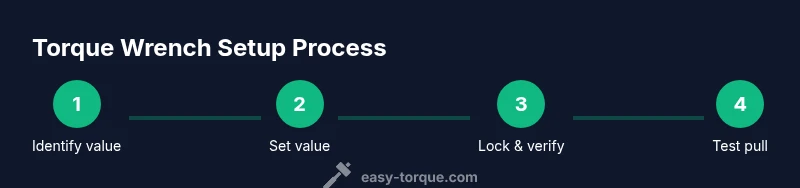
Identify target torque and unit
Begin by locating the required torque value on the fastener spec sheet or manual and decide whether to use Nm or ft-lb. Confirm the wrench model supports the range around that value and note any locking or readout features.
Tip: Use the manual's recommended range for the most accurate results. - 2
Clean and prepare the wrench and socket
Wipe the handle, dial, and socket interface clean to remove debris that can affect grip and accuracy. Inspect the socket for wear or damage and replace if needed before adjusting the torque.
Tip: A clean interface prevents drift caused by grit or corrosion. - 3
Set the initial torque value
Rotate the setting to approach the target value, aligning the indicator precisely with the index marks. Do not force past the marks; stop when the indicator is centered. If your wrench locks, secure the lock after alignment.
Tip: Make small, incremental adjustments for precision. - 4
Lock the setting (if applicable)
Engage the locking mechanism or clamp once the target is aligned. A locked setting reduces the chance of drift during use and transport.
Tip: Double-check lock engagement before beginning work. - 5
Verify with a light test pull
With no load on the fastener, apply a light force to ensure the wrench reaches the expected stop or click. If your model uses a digital readout, confirm the value matches the target.
Tip: A test pull confirms the preset value translates into actual resistance. - 6
Record and re-check
Document the setting and the date of the check in your maintenance log. Re-check the setting at the start of each new job or after transport.
Tip: Keep a running log to track drift over time. - 7
Store properly
Return the wrench to the protective case and store in a stable, climate-controlled environment. If possible, reset to the minimum end to avoid constant spring tension.
Tip: Store in a dry environment away from heat or chemicals.
Your Questions Answered
What is the correct torque wrench setting for a fastener?
The correct setting is the value specified for that fastener in the service document, using the wrench’s units (Nm or ft-lb). Always verify with no-load checks and re-check after storage or transport.
Set the wrench to the recommended value for the fastener, then verify with a no-load test and re-check after storage.
How do I convert Nm to ft-lb?
Conversion between units requires a multiply/divide step based on the factor between Newton-meters and foot-pounds. Use the wrench’s built-in converter if available or a reliable reference chart.
Use a reliable conversion method or chart to switch between Nm and ft-lb, and verify on your tool if it provides a direct readout.
Why does my wrench click but the fastener isn’t tight?
A mis-set axis, worn sockets, or an imprecise alignment can cause the wrench to indicate a torque value without achieving true resistance. Re-check the setting, inspect the socket fit, and confirm there is no cross-thread or damaged fastener.
The indication might be false due to alignment or wear; re-check the setting and socket fit before proceeding.
How often should I calibrate a torque wrench?
Calibration frequency depends on usage intensity, environment, and manufacturer guidance. Establish a routine and log results to ensure ongoing accuracy.
Follow a regular calibration schedule and keep a log so you know when the tool needs service.
Can a torque wrench be used after being dropped?
A drop can cause internal misalignment or calibration shifts. Inspect the tool and have it calibrated before resuming critical work.
If dropped, inspect and recalibrate before using it for critical tasks.
Watch Video
Top Takeaways
- Choose the correct unit and range for your fasteners.
- Set values with no load and verify with a light pull.
- Regular calibration maintains accuracy and extends tool life.
- Store and log settings to track drift over time.