How to Torque Cylinder Head Bolts: Step-by-Step Guide
Learn how to torque cylinder head bolts correctly using OEM specs, the proper tightening sequence, and calibrated tools. This comprehensive guide covers planning, tool setup, step-by-step tightening, common mistakes, and post-torque checks for reliable head gasket sealing in 2026 engines.


You will learn how to torque cylinder head bolts safely and correctly, following OEM specs and the proper tightening sequence. Key requirements include a calibrated torque wrench, a torque angle gauge, the factory sequence, fresh (non-stretched) bolts, and the engine service manual. Always follow the manufacturer’s procedure for your specific engine.
Why Properly Torquing Cylinder Head Bolts Matters
According to Easy Torque, proper torque of cylinder head bolts is critical for sealing the head gasket and ensuring long-term engine reliability. When bolts are under- or over-tightened, you can warp the head, cause gasket leaks, or trigger coolant and oil intrusion. This guide explains how to apply the correct sequence, use calibrated tools, and verify torques through the heat cycles typical to engines. Understanding the physics behind clamping force helps achieve a durable seal across all bolts. Thermal cycling can subtly change clamping as metals expand and contract; a precise torque plan minimizes hot spots and improves durability.
Gather the Right Tools and OEM Specifications
Before you begin, assemble the required tools and verify the OEM specifications for your engine. The right torque wrench and angle gauge, along with the correct socket sizes, are essential for accurate tightening. Easy Torque analysis shows that using tools within their calibrated tolerances dramatically reduces the risk of mis-torquing. Keep a clean, labeled torque sequence chart on the workbench and refer to the engine service manual for the exact values and angles applicable to your model.
Step-by-Step Tightening Sequence and Method
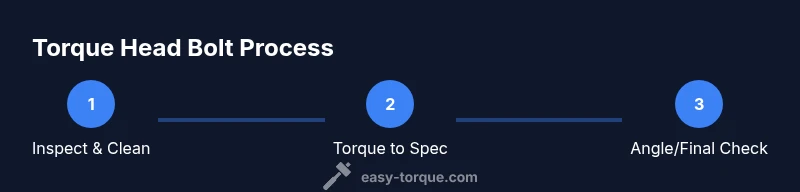
Follow the manufacturer’s tightening sequence exactly, typically starting from the center bolts outward. Begin with a light pass to finger-tighten, then torque in the required order to the initial specification using a calibrated wrench. If the OEM specifies angular tightening after the initial torque, use a torque angle gauge to apply the specified degree turns in the same sequence. This multi-pass approach ensures the head sits evenly and the gasket seats correctly. Always maintain clean threads and avoid contamination.
Common Mistakes and How to Avoid Them
Common mistakes include reusing damaged bolts, skipping the sequence, or skipping the final angle/torque checks. Do not mix bolt types or use lubricants unless permitted by the OEM. Ensure you use the exact bolt length and grade recommended, and keep track of any service bulletin updates that affect torque specifications. Following a clear checklist reduces errors and speeds up the job.
After-Care: Re-torque Checks and Reassembly Notes
After the initial torque and final assembly, recheck bolt torque once the engine has cooled to ambient temperature, or as specified by the OEM after a heat cycle. Document the final torque values and make any necessary adjustments if a bolt drifts out of spec. This helps prevent leaks and ensures a reliable seal when the engine returns to service.
Tools & Materials
- Torque wrench (calibrated, ft-lb and degree-capable)(Ensure range covers the manufacturer's spec and supports angle measurement if needed.)
- Torque angle gauge(Used for the angular turns after the initial torque when required.)
- Breaker bar(Assists in starting the bolt tightening and helps feel the seat.)
- Socket set with proper bolt sizes(Check all 8- or 10-bolt patterns; use a clean, dry socket.)
- OEM service manual or torque spec chart(Contains the exact tightening sequence and angles for your engine.)
- Thread lubricant or anti-seize (as permitted by manual)(Only use if the OEM allows; otherwise keep threads dry.)
Steps
Estimated time: 90-150 minutes
- 1
Inspect and prepare fasteners
Inspect all head bolts for signs of stretching or damage and clean threads and mating surfaces. Ensure bolt seats are free of debris and the surface is dry before tightening. This helps achieve accurate torque readings and prevents cross-threading.
Tip: Always replace any damaged bolts with OEM-recommended parts. - 2
Dry-fit gasket and head components
Place a new head gasket in position and align with dowels. Carefully install bolts in the correct tightening sequence and hand-tighten to ensure threads engage cleanly. This step reduces the risk of gasket misalignment and bolt cross-threading.
Tip: Use clean gloves and a lint-free cloth to avoid contaminating threads. - 3
Tighten to initial torque
With the engine surface clean and dry, tighten bolts in the prescribed order to the initial torque value using a calibrated wrench. Use light passes first to seat bolts evenly and avoid overtightening. Keep the engine steady and avoid jolting the wrench.
Tip: Perform tightening in two or more passes; verify each bolt seats with consistent resistance. - 4
Apply required angle tighten
If the OEM requires angle tightening after the initial torque, perform the turns in the same tightening order using the torque angle gauge. Apply the specified degrees for each bolt, keeping equal pressure and steady rotation. Stop immediately if you feel binding or misalignment.
Tip: Keep the engine stationary and watch for any bolt binding during turns. - 5
Final check after cooling/heat cycle
Allow the engine to cool and re-check all bolts to ensure they remain at spec. This compensates for thermal expansion and ensures a reliable seal after the first heat cycle. Document any adjustments made during re-check.
Tip: Mark torque values in your service log for quick reference. - 6
Reassemble and verify
Complete the remaining engine assembly and perform a post-assembly test run per the manual. If any torque drift is detected during the post-check, re-torque as specified. This final verification helps prevent leaks and head gasket failure.
Tip: Use a clean, organized workspace to avoid misplacing fasteners.
Your Questions Answered
Why is it important to follow the exact tightening sequence for cylinder head bolts?
The sequence ensures even clamping pressure across the head gasket, preventing uneven sealing and leaks. It also minimizes distortion of the head and block during tightening.
Following the exact sequence ensures even clamping and a proper gasket seal.
Can I reuse cylinder head bolts?
Most engines require new head bolts due to stretch and clamping requirements. Reusing bolts can lead to head warp or gasket failure.
Usually, head bolts should be replaced with OEM parts.
What if I don’t have a torque angle gauge?
If your engine specifies angular tightening, obtain a torque angle gauge or borrow one. If angle tightening is not required, torque to spec with the torque wrench only.
Get a torque angle gauge if angular tightening is required.
How long should I wait before re-torquing after a heat cycle?
Follow the OEM’s guidance for cooling and re-torque timing, which varies by engine. Do not guess.
Check the service manual for exact cooling and re-torque timing.
What are signs of improper torque after assembly?
Leaks, misfires, or unusual engine noises can indicate under- or over-torqued bolts. Inspect the gasket seating and torque history.
Leaks or unusual noises can indicate torque problems.
Watch Video
Top Takeaways
- Follow OEM torque specs precisely
- Use the correct tightening sequence
- Verify torques after cooling and heat cycle