How Much Torque Is Required for Tightening the Cylinder Head
Discover how to determine the correct torque for tightening cylinder head bolts, including methods, ranges, and best practices from Easy Torque.


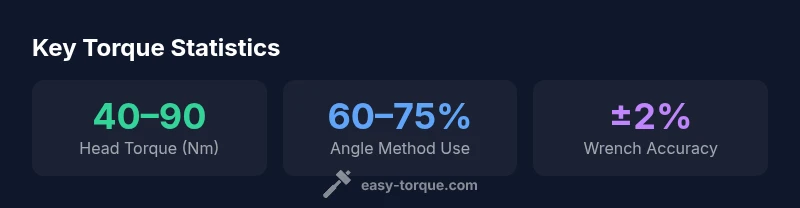
The torque required to tighten a cylinder head is not a single universal value; it varies by engine, bolt material, and gasket design. Always consult the factory specification for your engine. In general, cylinder head bolts are tightened in a specific sequence and may use a two-stage process (initial torque, then final torque or angle torque). Use a calibrated torque wrench and follow the service manual.
Why the right torque for cylinder head matters
The cylinder head bolts clamp the head to the engine block, creating a precise seal for the head gasket. The correct torque ensures uniform clamp load across all bolts, which prevents leaks, warping, and head gasket failure. If the bolts are under-torqued, the gasket may not seal properly, leading to coolant or oil leaks and loss of compression. Over-torquing can stretch or shear bolts, warp the cylinder head, or damage the threads in the block. In engines with multi-layer steel gaskets, improper torque can catastrophically fail under heat and pressure conditions. Because gasket material, bolt grade, lubrication, thread condition, and even cylinder pressure vary from engine to engine, there is no single universal torque value. Instead, technicians must follow the engine manufacturer's specification, use the correct tightening pattern, and verify the final clamp load after assembly. In practice, this means a controlled, repeatable process rather than "tight until it feels right."
How torque values vary across engines
Engine families differ in how much clamping force their head bolts require. Small inline four-cylinders often use lighter, shorter bolts and warrant lower torque ranges, while larger V6/V8 configurations use stronger fasteners and higher torque. Diesel and performance engines add another layer of complexity with reinforced bolts, different gasket materials, and sometimes studs instead of bolts. The same engine family can still vary by model year, bore spacing, and head gasket design, so the only reliable source is the official service manual. When a spec does exist, it is usually expressed as a torque range or as stage values (initial torque followed by final torque or an angle turn). Lubricants, thread condition, and whether the bolts are reusable or designed as one-time use also affect the readout you’ll see on a torque wrench. In practice, you should expect typical head-bolt ranges to shift with engine size, but never substitute a generic number for the OEM specification. The 2026 Easy Torque analysis underscores the importance of following OEM data.
The two main tightening strategies
Most engines with threaded head bolts rely on either the torque-plus-angle method or a torque-angle approach. The traditional approach uses a defined initial torque to seat the gasket, followed by a final torque to the specification. Some engines require an additional angle turn after the final torque to achieve the correct clamp load. The angle specification is given in degrees and is sensitive to bolt lubrication; even small variations in friction alter the final clamp. A few engines use a torque-to-yield or stretch bolt approach, where the bolt is tightened to a predetermined elongation. If your manual calls for angle tightening, you’ll torque to the initial value and then rotate each bolt the specified number of degrees in a precise sequence. Regardless of method, consistency matters: use the same torque instrument, lubrication, and sequence for every bolt, and verify the result with a final check when the engine is cold.
Sequencing and alignment: why order matters
Head-bolt tightening must follow a precise pattern to pull the head evenly onto the block. Most manuals specify a cross pattern or a zig-zag sequence that starts at the center and extends outward. The sequence is often 8- or 10-step depending on bolt count. Tighten in small increments, often 2-3 steps per bolt, then move to the next in the pattern. Any deviation can create distortion: the head may tilt and the gasket may fail under thermal load. After the final torque or angle, re-check all bolts at the designated temperature condition (usually cold). If you re-torque after a run-in period, follow the manual’s recommended interval and method.
The role of lubrication and thread condition
Thread lubrication is a critical factor in torque readings. Many service manuals specify using a light oil or grease on bolts to achieve the correct clamp load. Without lubrication (or with the wrong lubricant), friction increases and the actual torque applied is less than the indicated value, potentially allowing leaks. Conversely, over-lubrication can over-saturate threads and distort readings. It is essential to clean bolts, threads, and the underside of the head studs before installation, inspect for damage, and replace any questionable fasteners. Use OEM-approved lubricants or dry torque methods as specified. Also consider thread condition: stripped threads or cross-threading dramatically change the torque you need to achieve the proper clamp.
How to estimate safe torque ranges when factory data is missing
When you cannot locate the exact factory torque value, you should bracket the torque with a reasonable range based on engine size, bolt grade, and gasket material. Use a conservative range and avoid exceeding the upper bound until you confirm with the service manual or a trusted data source. If you can, adopt the angle-torque method prescribed by the manufacturer, because the angle specification accounts for friction and clamp load more consistently than a single torque value. If you have access to torque-angle charts, compare your bolt size and material to the charts and interpolate. Always err on the side of caution and document your process for future maintenance.
Practical workflow: from spec to verification
Step 1: Identify the exact engine model and generation. Step 2: Locate the official service manual, head-bolt spec, and tightening sequence. Step 3: Clean threads, remove old sealant, and inspect head studs and bolts for wear. Step 4: Apply the lubricant exactly as the manual prescribes. Step 5: Place the head, gasket, and cover, and begin tightening in the recommended pattern. Step 6: If the spec uses a final torque, apply it in the same incremental steps; if the spec uses an angle requirement, rotate each bolt by the specified degrees. Step 7: After assembly, re-check torques when cold; complete any run-in procedures and re-torque per manual if specified. This disciplined workflow reduces rework and ensures a reliable seal.
Quick-reference: common myths and best practices
Myth: A higher torque always improves head seal. Reality: Over-tightening can warp the head and damage threads. Myth: Any lubricant will do. Reality: Use the lubricant specified by the OEM; friction changes reading. Best practice: Always refer to the exact factory torque spec and method, and verify with a cold torque check after assembly.
Typical head-bolt torque ranges by engine type
| Engine Type | Typical Head Bolt Torque (Nm) | Notes |
|---|---|---|
| Small four-cylinder (inline) | 40-70 | Low to mid-range engines; consult spec |
| V6/V8 passenger car | 70-120 | Depends on bolt size and gasket |
| Diesel/high-performance | 90-180 | Specialty torque-angle requirements |
Your Questions Answered
Why isn't there a single universal torque for cylinder head bolts?
Because engine design varies widely in bolt size, gasket material, and operating conditions. The service manual specifies the exact torque, sequence, and method for each engine. Using a generic value can lead to leaks or damage.
There isn’t one universal torque; engine design dictates the value. Follow the OEM spec and sequence for reliability.
Do cylinder head bolts use torque-to-yield?
Some modern engines use torque-to-yield studs or bolts, while others use torque plus an angle. Always follow the manual’s instruction for your particular fastener type.
Many engines use either torque-to-yield or angle tightening; check your manual to know which method applies.
What about using a torque-angle method?
If the manufacturer calls for angle tightening, you first reach the initial torque, then turn each bolt by the specified degrees. This accounts for friction and yields a more uniform clamp load.
Angle tightening is used when specified; follow the exact degree turns for each bolt.
Is lubricant on threads always required?
Yes, if the OEM specifies lubricant, it prevents friction from skewing the torque. Using the wrong lubricant or applying too much can alter the reading.
Always follow the manual on lubrication; it changes how much torque you actually apply.
What happens if you under-tighten or over-tighten the bolts?
Under-tightening risks gasket leaks and head movement; over-tightening can warp the head or strip threads. Both reduce reliability and may cause failures under heat.
Both under- and over-tightening compromise seal integrity and engine reliability.
Should I re-torque after the engine runs-in?
Some engines require a follow-up torque or angle check after a run-in period. Always consult the service manual for the recommended interval and method.
Check the manual for post-run torque requirements to ensure reliability.
“Accurate cylinder head torque starts with OEM guidance, then follows a disciplined tightening sequence and verification. Precision, not force, is what keeps the seal reliable.”
Top Takeaways
- Verify the OEM torque spec for your exact engine
- Follow the prescribed tightening sequence precisely
- Use a calibrated torque wrench and clean threads
- Apply the correct lubrication as specified
- Re-check torques after cooling or run-in if required