Impact Gun Torque Wrench: Safe and Precise Fastening
Learn how to safely pair an impact gun with a torque wrench. This guide explains when to use each tool, how to set torque values, and steps to prevent over- or under-tightening for reliable maintenance and wheel work.


Use an impact gun for quick removal and initial loosening, then finish with a torque wrench to dial in exact torque. This guide covers when to use each tool, how to set torque values, and safety steps to prevent overtightening and fastener damage.
Why the combination matters: impact gun vs torque wrench
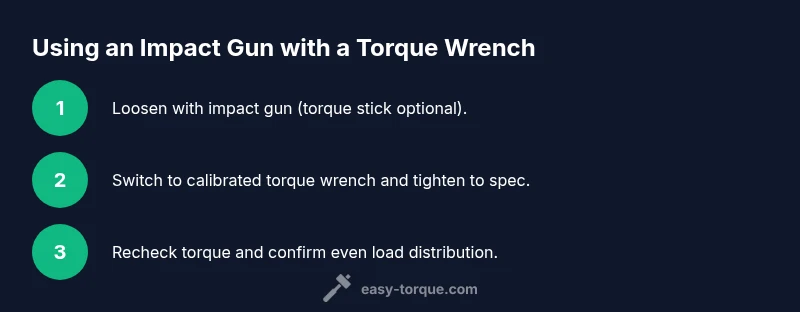
An impact gun (also called an impact wrench) and a torque wrench serve different purposes. An impact gun is designed to deliver high rotational impulse to break loose tight fasteners quickly. A torque wrench, by contrast, applies a precise, repeatable torque to a fastener, ensuring the correct clamping force. When used properly together, they offer speed without sacrificing accuracy. A common workflow is to loosen with the impact gun (often safely with a torque stick in line) and then finish with a calibrated torque wrench to spec. For critical applications—such as wheel lug nuts, control arm bolts, or head studs—it's essential to verify final torque with a torque wrench, even if the fastener loosened easily with the impact tool. Always follow the vehicle's service manual and the fastener manufacturer's torque specification. And remember: power tools can over-tighten if misused, so use the right adapter (torque stick) or step-down to a lower range of torque if needed. Safety gear, a stable workspace, and clean fasteners will reduce cross-threading and damage. This block highlights the rationale for using both tools rather than relying on a single device.
Key concepts: torque, units, and accuracy
Torque is the turning force applied to a fastener. It is expressed in units such as Newton-meters (Nm) and foot-pounds (ft-lb). The conversion between units varies by system, so always refer to the manual for your tool and project. A torque wrench provides a calibrated, repeatable setting that directly corresponds to the fastener’s required clamping force. When you use an impact gun in combination with a torque stick, the stick provides a rough limit, but it is not a substitute for a calibrated torque wrench. Always verify final torque with the wrench to honor the specification and ensure even load distribution. For critical assemblies, consult the vehicle manufacturer’s torque table and double-check after installation.
When to use an impact gun vs a torque wrench
Use the impact gun for tasks that require speed, such as breaking loose stubborn fasteners or performing initial assembly where extreme precision is not yet critical. Reserve final tightening for the torque wrench to reach the exact spec. Wheel lug nuts are a common case where you loosen with the impact gun (optionally using a torque stick) and then torque to spec with the wrench. For engine and suspension fasteners, start with the recommended method from the manual: light initial pass with the impact gun only if the manual allows, then finish with the torque wrench. Remember that torque wrenches measure and regulate, while impact tools provide force quickly; together they reduce time and improve consistency when used correctly.
How to calibrate and verify torque
Begin with a calibrated torque wrench that has been recently checked against a standard. Read the vehicle’s torque specification in Nm or ft-lb and set the wrench accordingly. After loosening with the impact gun, recheck every fastener with the torque wrench to confirm the final torque. If you must use a torque stick with an impact gun, ensure the stick is in good condition and within its stated range. Always test a practice fastener on a similar material to verify your method before applying it to critical joints. Consider scheduling regular calibration checks per the manufacturer’s recommendations and when you notice inconsistent tightening results.
Using torque sticks with an impact gun
Torque sticks are designed to limit the maximum torque delivered by an impact gun. They should be selected to be close to the vehicle’s specified torque range, but they are not a substitute for a torque wrench. Use them for quick wheel work and check with a torque wrench afterward. Ensure correct stick length and avoid forcing a stick beyond its tolerance. If a torque stick shows wear, replace it promptly, as wear can alter the delivered torque and mislead the final tightening process.
Safety and best practices
Always wear eye protection and gloves when using impact tools. Clear the workspace of obstacles, and secure the vehicle with stands on a level surface. Do not use impact tools on fasteners that require exceeding the tool’s maximum torque without a controlled approach. Keep wrenches clean and calibrated, and store them in a protected case to prevent gradual drift. Avoid cross-threading by keeping fasteners aligned during initial engagement, and re-torque after replacing a critical component. Following a disciplined workflow minimizes damage and ensures consistent results.
Maintenance and calibration
Regular maintenance of both tools extends their life and accuracy. Clean the drive anvil and replace worn impacts on the anvil splines. For torque wrenches, store them at the correct low torque setting and periodically verify against a known standard. If the wrench is subjected to a drop or hit, schedule a calibration check. Keep a log of calibration dates and tool usage to identify when to service. These practices support long-term accuracy and reliable performance in professional and DIY settings.
Real-world workflow example: wheel lug nuts (general guidance)
Start by checking the vehicle’s manual for the torque specification. Loosen lug nuts with the impact gun to break free corrosion and ease removal, using a torque stick if available. Move to the torque wrench; tighten each lug in a star pattern to the spec, pausing if the wrench indicates an audible click or reaches the stop. Check all lug nuts again after a short drive or after a safety check to ensure even seating. This practical approach shows how the two tools complement each other while reducing the risk of over-tightening.
Authority sources and recommended reading
To deepen your understanding, consult credible sources on torque measurement and tool safety. See guidelines from safety and standards organizations and automotive engineering publications. These references help verify best practices and keep you current with evolving standards.
Authority sources (for further reading):
- https://www.osha.gov/
- https://www.nist.gov/
- https://www.sae.org/
Tools & Materials
- Impact gun (air or cordless)(Ensure battery or air supply is ready; use appropriate socket adapters and, if possible, a torque stick for rough control.)
- Calibrated torque wrench(Set to device’s torque specification in Nm or ft-lb; verify periodically.)
- Torque sticks (optional but recommended)(Use to limit initial tightening when using an impact gun.)
- Lug nut sockets and adapters(Choose the right size for the fasteners you’re working with.)
- Safety glasses and gloves(Protect eyes and hands from debris and tool slip.)
- Vehicle service manual or torque spec sheet(Always follow the specified torque values for each fastener.)
- Torque calibration log(Optional but helpful to track calibration dates.)
Steps
Estimated time: 20-40 minutes
- 1
Identify torque specs
Consult the vehicle manual or torque table to determine the exact torque specification for each fastener. Confirm whether any fastener requires a specific tightening pattern (e.g., star pattern for lug nuts). This step ensures you know the target before you begin.
Tip: Always write down the spec or save it in your digital notes for quick reference. - 2
Prepare tools and workspace
Organize your tools, inspect the impact gun and torque wrench for wear, and clear the workspace. Check air supply or battery charge, socket sizes, and adapters. A clean work area reduces misalignment and dropped fasteners.
Tip: Do a quick visual check of the torque wrench calibration before starting. - 3
Loosen fasteners with impact gun
Use the impact gun to break free tight fasteners. If available, use a torque stick to limit the initial torque. Stop if you hear irregular sounds or notice tool slippage. This step speeds up the process without committing to the final torque.
Tip: Keep the wheel on the ground and avoid overtightening by not forcing beyond the torque stick’s limit. - 4
Apply final torque with wrench
Switch to the calibrated torque wrench and tighten in the recommended sequence. Apply steady force until you reach the specified torque and hear the indicator signal. Do not exceed the value. If the tool doesn’t click, recheck and reattempt on a known fastener.
Tip: Maintain consistent speed and avoid sudden jerks which could skew readings. - 5
Verify and recheck
After tightening, recheck each fastener to ensure uniform torque distribution. If needed, retorque after a short drive or assembly, following the specified pattern. This helps catch any drift that occurred during installation.
Tip: A quick torque recheck prevents callbacks due to loose fasteners.
Your Questions Answered
Can I rely on an impact gun to torque fasteners to spec?
No. An impact gun is for loosening and rough tightening; always finish with a torque wrench to the exact specification. If you must use an impact gun, pair it with a torque stick and recheck with the torque wrench.
No. Use the impact gun for loosening, then torque to spec with a torque wrench and recheck for accuracy.
How do I choose the right torque wrench range?
Refer to the vehicle manual for the required torque range and choose a wrench that comfortably covers that value with a little headroom. If your fasteners span a wide range, consider a wrench with a larger range and confirm with a calibration check.
Check the manual for the needed range, and pick a wrench that covers it with some headroom.
What is a torque stick and when should I use it?
A torque stick is a limiter fitted to an impact gun to prevent over-tightening by capping the maximum torque delivered. Use it for wheel work, then verify with a torque wrench for accuracy.
A torque stick caps the torque from the impact gun; use it for wheels and always verify with a torque wrench.
How often should torque wrenches be calibrated?
Calibrate per the manufacturer’s recommendations and after heavy use or if you notice inconsistent readings. Do not rely on memory for calibration timing; keep a simple maintenance log.
Calibrate according to the manufacturer and after heavy use, keeping a maintenance log.
Is it safe to reuse damaged fasteners after loosening with an impact gun?
No. Inspect for thread damage or bolt head deformation; replace damaged fasteners instead of reusing them. Re-torque only after confirming the fastener type and condition.
No—inspect and replace any damaged fasteners before reassembly.
What routine checks prevent cross-threading?
Clean and inspect threads before installation, maintain straight engagement, and use proper alignment. Slow, steady turns reduce the chance of cross-threading.
Keep threads clean and aligned; use smooth, steady turns to avoid cross-threading.
Watch Video
Top Takeaways
- Pair impact guns with torque wrenches for speed and accuracy
- Always verify final torque with a calibrated wrench
- Follow the manufacturer’s torque specs and tightening sequence
- Use torque sticks only as a rough guide, then confirm with precise torque
- Maintain tools and document calibration in a log