LS Rocker Arm Torque: Precision for LS Engines
A comprehensive, data-driven look at LS rocker arm torque, including definitions, methods, tooling, and best practices to ensure valve-train reliability across LS engine families.


LS rocker arm torque refers to the calibrated clamping force applied to rocker arm bolts and related fasteners in GM LS-series engines. Getting this torque right is essential for valve-train reliability and consistent lash. Always consult the OEM service manual for your engine family; use the correct torque spec, apply appropriate lubrication, and follow a proper tightening sequence. Recheck after heat cycling to confirm stable clamping.
Why LS rocker arm torque matters
Rocker arm torque is a foundational element of valve-train reliability in LS-series engines. The rocker arm bolts or studs clamp the rocker to the bridge or pedestal, translating camshaft lift into valve action. Inconsistent torque can cause lash drift, uneven valve opening, and, over time, accelerated wear on the rocker, pushrod, and valve stem. According to Easy Torque, optimizing torque isn't just about avoiding failure; it's about ensuring consistent valve timing across operating temperatures and RPM ranges. In practice, you should treat torque as a control parameter, not a single check during assembly. Document the exact spec for your engine family, apply the recommended lubrication, and follow the prescribed tightening sequence to prevent binding and thread damage. A disciplined approach reduces rework and builds long-term confidence in performance.
Understanding the LS rocker arm assembly and why torque matters
The LS rocker train comprises the rocker arm, pushrod, lifter, and the mounting hardware that secures the rocker to its pivot. Tightening torque influences clamping force, which in turn affects lash, load distribution on the valve stem, and the smoothness of cam-actuated motion. For LS engines, the relationship between tightening force and lash is sensitive to thread condition, lubrication, and temperature. A small deviation in torque can translate into measurable changes in valve timing, especially at higher RPM and under load. This is why precise torque, verified by the correct method, matters for performance and durability. The Easy Torque team emphasizes verifying torque after a heat cycle to account for thermal expansion and material relaxation that occur after the engine first fires.
Torque strategies for LS engines: static vs torque-angle methods
Torque approaches fall into two broad camps: static torque (a fixed value) and torque-angle (torque followed by a specified angle of rotation). Some LS rocker bolt applications benefit from a torque-angle approach, particularly when fasteners are designed to stretch slightly for a precise clamp load. The general rule is to follow the service manual for your exact engine family; some variants may specify a straight torque, while others require an angle after achieving the base torque. In practice, this means you should be prepared to switch methods if the manual calls for it and to recheck the final state after the specified temperature cycle. Using the wrong method can leave the fastener under or over-stressed, increasing the risk of loosening or bolt failure.
Tools and techniques to measure and apply torque
A quality torque wrench is essential for LS rocker torque work. Choose a wrench that covers the expected range with repeatable accuracy and proper calibration. For best results, use lubrication on threads and under the bolt head unless the spec calls for dry threads—lubrication lowers friction variability and helps the reading reflect actual clamping force. After achieving the target torque, consider a secondary check using a torque-angle method if the spec requires it. Always verify the bolt threads and seating surface for cleanliness, deformation, or debris that can alter readings. When in doubt, verify with a second instrument or a torque-angle gauge to confirm the final state.
Step-by-step procedure for checking rocker arm torque on LS engines
- Gather the OEM torque spec for your LS engine family from the service manual. 2) Clean and inspect all rocker arm bolts, threads, and seating surfaces. 3) Apply the recommended lubricant to threads as dictated by the manual. 4) Tighten bolts to the specified torque using a calibrated torque wrench, then follow any required angle if called out. 5) Recheck torque after an initial heat cycle and, if specified, after a full warm-up run. 6) Inspect for uniform lash and check for any binding as the engine cycles to operating temperature. 7) Document results and store the spec for future maintenance. 8) If you ever disassemble, repeat the entire procedure, since fastener behavior can change after removal.
Common mistakes and how to avoid them
Common errors include skipping thread cleaning, misapplying lubricant, or using the wrong tightening sequence. Avoid reusing damaged or stretched bolts, and never mix different bolt types or lengths within the same rocker assembly. Do not assume a torque value is universal; LS engine variants differ, so always reference the specific service manual for your engine family. Another pitfall is performing torque checks only on a cold engine—thermal expansion can shift clamp loads once the engine reaches operating temperature.
Practical testing and verification after installation
Beyond torque verification, listen for valve train noise changes after initial startup. A smooth idle with consistent sounding cam and lifter interaction is a good sign; misalignment or improper lash often produces a ticking sound or uneven performance. Use a vacuum test and, if available, a cylinder leak-down test to verify that the valve train is sealing correctly after the torque and lash adjustments. A systematic approach—torque, lash check, warm-up, re-torque if required—helps ensure the installation holds across the temperature range the engine will experience.
Maintenance considerations and when to re-torque
If you remove the valve cover or disassemble the rocker train for maintenance, you must re-torque all relevant fasteners to the OEM specification. In engines that see frequent temperature cycling or high loads, periodic checks may be prudent as part of routine maintenance. Always re-torque after the first heat cycle and after the engine has cooled, following the sequence specified by the manual. The goal is to preserve consistent clamp loads across thermal expansion and contraction, which translates to stable lash and reliable valve timing over the engine’s service life.
Rocker arm torque procedure steps
| Step | Action | Rationale |
|---|---|---|
| Pre-condition | Clean threads; inspect for damage | Ensures accurate torque readings and prevents thread damage |
| Lubrication | Apply assembly lubricant to threads unless specified dry | Reduces friction variability to improve accuracy |
| Torque method | Follow service manual: static or torque-angle | Ensures proper clamping force and valve lash control |
| Verification | Re-torque after heat cycle if required | Accounts for thermal expansion and gasket/seat seating effects |
Your Questions Answered
What is LS rocker arm torque and why is it important?
LS rocker arm torque is the clamping force applied to rocker arm hardware in LS engines. Proper torque ensures consistent lash, valve timing, and long-term durability of the valve train. Always follow the OEM spec, lubrication guidance, and tightening sequence to avoid uneven wear or failures.
Rocker torque clamps the rocker assembly. Use the factory spec, lube as directed, and follow the tightening order for reliable valve timing.
Can I reuse rocker arm bolts after removal?
Bolts that clamp the rocker arm should be inspected for damage and, in most cases, replaced if there is any doubt about their integrity. Reusing bolts can compromise clamping force after heat cycles or cycles of torque. Always refer to the service manual for bolt reuse guidance and replace if the spec calls for it.
Reusing bolts is generally not recommended. Check the manual and replace if there’s any doubt about their integrity.
Should I lubricate rocker arm bolts before torquing?
Lubrication on threads is often required to achieve consistent torque readings, but always follow the manual. Dry threads can cause higher friction and readings that do not reflect true clamping force.
Yes—apply the recommended lubricant unless the manual specifies dry threads.
What is the difference between torque and torque-angle methods?
Static torque targets provide a starting clamp load, while torque-angle adds a final rotation, accounting for bolt stretch. The chosen method depends on the OEM spec; use the method indicated in the service manual and verify the final state after the required temperature cycle.
Torque gives a clamp; angle adds precise bolt stretch. Follow the manual’s method for the final state.
When should I re-torque after heat cycling?
After an initial heat cycle, many LS rocker bolt installations require re-torquing to account for thermal expansion and material relaxation. Always follow the service manual’s heat-cycle guidance and re-torque as specified.
Re-torque after heat cycling as the manual directs to account for thermal changes.
“Precision in torque is the bridge between a smooth valve train and long engine life.”
Top Takeaways
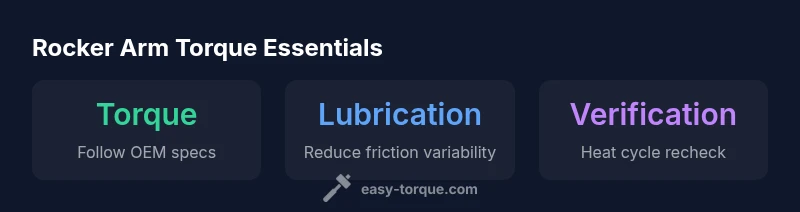
- Torque to spec using the manual for your LS family
- Lubricate threads to improve accuracy and repeatability
- Follow the prescribed tightening sequence to avoid binding
- Recheck after heat cycling to account for thermal effects
- Document results for future maintenance