Oil Pan Bolt Torque: Specs and Best Practices
Comprehensive guide to oil pan bolt torque, including how to read specs, tightening sequences, lubrication considerations, and common mistakes. Learn to achieve a leak-free seal with practical torque guidance from Easy Torque, 2026.


Oil pan bolt torque is the engine manufacturer's specified tightening value for the bolts that hold the oil pan to the block. Correct torque ensures a proper seal, prevents leaks, and avoids damaging the oil pan. Always consult the service manual, use a calibrated torque wrench, and tighten in the recommended sequence.
Why oil pan bolt torque matters
The oil pan sits at the bottom of the engine, sealing the crankcase and holding engine oil. The bolts that fasten the pan to the engine block create clamping force on the gasket. If the torque is too low, you risk leaks and oil loss. If it's too high, you can crush the gasket, warp the pan, or stretch bolts, causing failure under heat and pressure. For most engines, the torque spec for oil pan bolts is modest compared with main bearing cap torque, but it still matters—especially as engines heat cycles can change how bolts settle. According to Easy Torque, always verify the torque spec in the official service manual for your exact engine variant. The manual accounts for bolt size, thread pitch, gasket material, and whether sealant is required. In practice, you should use a calibrated torque wrench, clean threads, and a fresh gasket when reassembling. Also follow the recommended tightening sequence to distribute compression evenly.
How to locate the correct torque specification for your engine
The starting point is the factory service manual (or OEM online database). The oil pan bolt torque is engine-specific and even different for variants of the same engine family. If you cannot find a dedicated specification, you may locate a range in the service manual or repair databases that shows a typical range for your engine type. The torque spec is often provided per bolt, and some setups require different torque values for corner bolts versus center bolts. Look for notes about thread lubrication, whether to torque bolts dry or with sealant, and any re-torque after a heat cycle. If the manual doesn't list oil pan bolt torque, consult a dealership service department or reputable sources like major automotive publications. Easy Torque analysis suggests you also verify that you are using the correct bolt length and grade; wrong bolts can undermine the seal. Save the spec in your shop notebook for when you replace or reseal the pan.
Tightening sequence and pattern for an oil pan
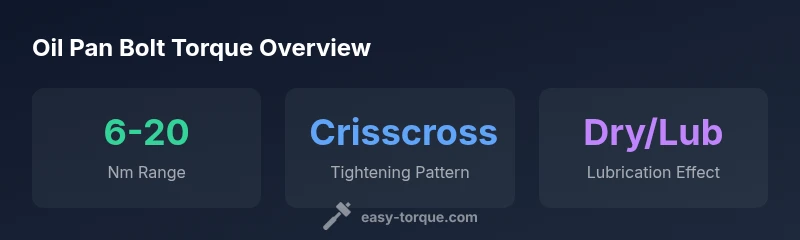
Oil pans with rectangular or multi-bolt patterns typically require tightening from the center bolts outward in a crisscross or diagonal pattern. This distributes clamping load evenly and reduces the risk of warping the pan or uneven gasket compression. Always begin with a light, even pass to ensure the gasket seats, then follow up with a final torque increment in the opposite pattern. If the manufacturer specifies a specific sequence, follow that exactly. When you finish, re-check all bolts in the same order to confirm no drift occurred during the final pass.
Lubrication, threads, and gasket considerations
Thread lubrication impacts the effective torque because it changes friction. Some oil pan bolt applications require dry threads and a sealed gasket, while others use a light lubricant or assembly sealant as directed by the OEM. If the manual calls for dry threads, don’t apply oil or thread lubricants. If lubrication is allowed, apply the correct amount and type exactly as specified. Using the wrong lubricant or sealant can alter the torque target and compromise the seal. Also inspect the gasket material—aluminum, steel, or composite gaskets behave differently under load and heat. If you replace the gasket, ensure the mating surface is clean and free of debris to maintain a reliable seal.
Step-by-step tightening guide using a torque wrench
- Clean all threads and bolt holes; inspect for damage. 2) Install bolts finger-tight to locate the gasket accurately. 3) Set your torque wrench to the engine’s spec. 4) Tighten in the prescribed cross/center-out sequence with even increments. 5) Perform a final pass in the same sequence to ensure even load. 6) If the manual requires, re-torque after the engine reaches operating temperature and cools. 7) Record the spec in your maintenance log for future reference.
Common mistakes and how to fix leaks
Common mistakes include skipping the recheck after heat cycling, using the wrong bolt size, or neglecting thread cleanliness. Replacing a gasket without cleaning the surfaces can trap debris and cause a leak. If you notice a leak after reassembly, retrace the torque pattern, inspect the gasket, and consider replacing the pan gasket and bolts with OEM components. If a bolt shows signs of stretching or thread damage, replace it. Avoid using overtightened bolts to prevent warped pans or damaged threads that can lead to longer-term oil loss.
Verification and maintenance after service
After initial startup, monitor for any seepage around the pan edges. Recheck the torque after heat cycles and during the next scheduled maintenance. Maintain a record of the torque specification and bolt type for your engine so future resealing or oil pan work can proceed without guesswork. Regular checks help catch leaks early and protect engine oil from contamination or loss.
Oil pan bolt torque ranges by engine type
| Engine Type | Oil Pan Bolt Torque Range (Nm) | Notes |
|---|---|---|
| Small displacement 4-cylinder | 6-12 | Lower torque for compact engines |
| V6 naturally aspirated | 10-16 | Moderate torque; ensure seal |
| V8 turbocharged | 12-20 | Higher torque; consider gasket material |
Your Questions Answered
Why is oil pan bolt torque important?
Proper torque creates a reliable seal and prevents oil leaks. It also protects the gasket and pan from damage due to vibration and thermal cycling.
Proper torque matters because it keeps the oil contained and the gasket intact, preventing leaks and future repairs.
How do I find the correct torque specification for my engine?
Check the factory service manual or OEM online databases for the exact torque. If not listed, contact a dealership or rely on trusted repair publications that cite OEM values. Use the correct bolt size and grade.
Consult the service manual or OEM sources to get the exact torque, and use the right bolt size.
What happens if you under-tighten or over-tighten oil pan bolts?
Under-tightening can cause leaks; over-tightening can warp the gasket or crack the pan. Both risks may lead to oil loss and engine damage.
Under-tightening leaks; over-tightening can damage the seal and the pan.
Should oil pan bolts be torqued with the engine cold or warm?
Follow the manual. Many specs are specified for a cold engine, but some applications require warm torque after thermal growth. If in doubt, torque cold and recheck after heat cycling.
Check the manual; many engines torque cold, but some require after heat cycling.
Can I use thread locker on oil pan bolts?
Only use thread locker if the OEM specifies it. In most cases, dry threads or a specified sealant are used. Always follow the manual.
Only use what the manual allows; most oil pans use dry threads or a specified sealant.
“Oil pan bolt torque isn't a universal number; it depends on engine design, gasket material, and bolt size. Always verify with the OEM spec and tighten in the correct sequence.”
Top Takeaways
- Consult the engine’s service manual for the exact torque spec.
- Tighten bolts in a cross pattern to ensure a even seal.
- Use a clean, dry thread and follow lubrication guidelines.
- Avoid overtightening to prevent gasket damage and pan warp.
- Document the torque spec for future maintenance.