Steering Torque: A Practical How-To Guide
A practical, step-by-step guide to understanding steering torque, measuring it safely with common tools, and interpreting readings for reliable vehicle maintenance.


Steering torque is the rotational force you feel when turning the wheel. In this guide, you’ll learn how to safely measure steering torque with a torque sensor or force gauge, compare readings with and without power assist, and interpret results to diagnose binding, wear, or misalignment in the steering system. This quick primer covers safety, essential tools, and the step-by-step workflow.
What is Steering Torque?
Steering torque is the rotational force applied to the steering wheel to turn the vehicle’s front wheels. It results from the combination of your input and the steering system geometry, including the steering column, rack-and-pinion, linkage, and the power-assist mechanism. In manual steering, the wheel feels heavier; in electric or hydraulic power steering, assist reduces the required torque. Understanding steering torque helps you diagnose binding, misalignment, or worn components and preserve safe handling. Torque is normally expressed in Newton-meters (N·m) or foot-pounds (ft‑lb). For DIY testing, compare feel and torque across different conditions (engine off vs on, center vs full lock) to spot anomalies.
Why It Matters for DIY Mechanics
Steering torque directly impacts how easy or hard it is to steer, and it can reveal trouble in the steering system before it becomes dangerous. Excessive torque may indicate binding in the rack, worn tie rods, a stiff power‑steering pump, or low/old power‑assist fluid. Conversely, unusually low torque (especially with manual steering) can signal a loose linkage or a failing assist system in electric power steering. By measuring steering torque you create objective data to guide maintenance decisions, component replacement, and alignment checks, which is especially valuable for DIY enthusiasts and professional technicians alike. Easy Torque emphasizes that consistent torque readings correlate with predictable handling across a range of speeds and road conditions.
Planning Your Measurement: Safety First
Before you touch steering components, set up a safe, controlled workspace. Engage the parking brake, chock the wheels, and disconnect the battery if you will detach panels near airbags or wiring. Work in a well‑lit area with a stable support surface. Establish a baseline by noting the vehicle’s make, model, steering assist type, tire pressure, and known service history. Decide whether you will measure with the steering assist engaged (typical in road conditions) or with assist disabled to see the inherent steering effort. Record your goals clearly: are you diagnosing a sticky spot, validating a repair, or tracking changes after maintenance? Clear planning reduces risk and yields meaningful data.
Measuring Approaches: Sensor-based and Mechanical Tests
There are two practical paths for measuring steering torque in a DIY setting. The first uses a torque sensor or load cell mounted to a suitable point on the steering shaft or a custom bracket at the wheel hub. The second relies on a force gauge or a calibrated lever attached to the steering wheel rim to estimate the moment. In each method you will collect torque values at several steering angles (neutral, quarter‑turns, and near full lock). Either approach should be performed with the vehicle secured and the ignition off to avoid unintended steering movement. Record the angle, applied force, and calculated torque to build a dataset you can compare over time.
Step-by-Step Measurement Workflow (High-Level Overview)
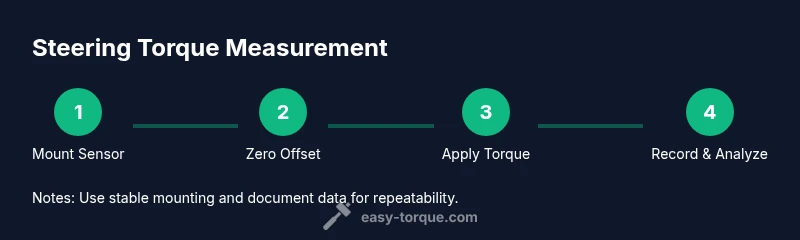
- Identify a safe mounting point for your sensor and verify there is no interference with airbag cables or steering column movement.
- Zero or calibrate the sensor before applying any load.
- Apply steady, controlled steering input across a range of angles, avoiding rapid or jerky motions.
- Record torque readings at each angle, along with ambient conditions and any assist state.
- Repeat the measurements a second time to confirm repeatability and reduce measurement noise.
- Calculate torque values using established equations and compare against service data or historical readings.
Note: This block provides a workflow overview; your STEP-BY-STEP section contains the concrete actions. The goal is to produce repeatable data you can trust for maintenance decisions.
Interpreting Readings and Influencing Factors
Torque readings are influenced by several variables beyond component wear. Vehicle speed alters power–assist demand, with stall torque typically higher at low speed. Temperature changes affect hydraulic fluid viscosity or electrical motor performance, shifting the measured torque. Tire condition, alignment, and worn bushings alter the mechanical leverage of the steering rack. For accurate interpretation, compare readings under consistent conditions: same wheel position, same fluid state, and same assist setting.
Common Pitfalls and How to Avoid Them
- Using a makeshift lever that introduces extra flex can distort readings. Ensure mounts are rigid and do not flex under load.
- Failing to zero the sensor before each set of readings will produce biased results. Always calibrate at the starting position.
- Logging data without documenting conditions (temperature, speed, assist state) makes comparisons unreliable. Create a simple data sheet for every test run.
- Neglecting safety gear or attempting tests with the vehicle in gear or the wheels free-rolling can lead to injury. Always secure the vehicle and wear PPE.
Documentation and Record-Keeping
Create a standardized data sheet for steering torque tests that captures: date and vehicle, testing method, assist state, steering angle, recorded torque, tools used, sensor model, and operator notes. Graphs that plot torque versus angle help visualize trends. Compare current results to prior data or service bulletin guidelines whenever possible. Keeping a clear audit trail makes troubleshooting repeatable and supports maintenance planning.
Adapting the Method for Different Vehicle Configurations
Different steering systems—manual, hydraulic power steering, or electronic power steering—change the baseline torque you will observe. Electric systems may have a wide range of assist behavior depending on the drive mode or fault codes. For trucks or SUVs with heavier steering, the torque you measure will be higher than in compact cars; for modern electric systems with variable assist, readings may vary with speed. Use the same measurement approach across configurations but annotate the context. This ensures your data remains comparable and actionable for service decisions.
Authoritative Sources
- National Institute of Standards and Technology (NIST) — metrology and measurement best practices: https://www.nist.gov
- SAE International — engineering standards and torque fundamentals: https://www.sae.org
- National Highway Traffic Safety Administration (NHTSA) — vehicle safety and handling considerations: https://www.nhtsa.gov
- For general torque concepts and maintenance guidelines, consult your vehicle's service manual and manufacturer data sheets.
Tools & Materials
- Torque wrench(Adjustable range that covers typical steering components (e.g., 2–50 N·m))
- Torque sensor or load cell(Mounts to steering shaft or a custom bracket; compatible with data logger)
- Force gauge or calibrated lever(Used for alternative measurement if sensor isn’t feasible)
- Mounting brackets/adapters(Rigid, non-flexing, compatible with vehicle model)
- Data logger or smartphone with app(To record torque, angle, and conditions )
- Safety gear (gloves, eye protection)(Protects against unexpected movement or pinch points)
- Vehicle service manual(Reference ranges, system specifics, and safety notes)
- Chocks, wheel blocks(Stabilizes the vehicle during testing)
- Marking tools (tape, marker)(For noting steering angle and reference points)
Steps
Estimated time: 90-120 minutes
- 1
Prepare and safety checks
Set the vehicle in a safe, level area. Engage parking brake, chock wheels, and disconnect the battery if you’ll access airbags. Verify space for mounting hardware and ensure no hoses or cables will be pinched.
Tip: Wear PPE and never work under a supported or unsecured vehicle. - 2
Attach sensor hardware
Mount the torque sensor or force gauge to the chosen point on the steering shaft or a sturdy bracket. Confirm rigid attachment and verify there is no interference with steering movement.
Tip: Use a temporary, non-permanent mounting method first to test clearance. - 3
Calibrate or zero the sensor
With no load, calibrate the sensor to zero. This standardizes readings and reduces bias when you apply torque.
Tip: Document zero-offset values for traceability. - 4
Establish testing angles
Define a set of steering angles (neutral, quarter turns, near lock) to cover the typical range of operation. Use a consistent motion and avoid abrupt changes.
Tip: Mark reference angles on the wheel or column for repeatability. - 5
Apply controlled steering input
Move the wheel smoothly through each angle while recording torque and angle data. Maintain steady, moderate pace to minimize dynamic artifacts.
Tip: Keep your body and hands stable to prevent introduction of extra forces. - 6
Record readings at each angle
Capture torque values, wheel angle, ambient temperature, and assist state if applicable. Take multiple samples per angle to improve accuracy.
Tip: Label data files clearly for each test run. - 7
Compute and compare
Calculate torque values and compare with service data or previous measurements. Look for trends, sharp deviations, or drift over time.
Tip: Plot torque vs angle to visualize consistency. - 8
Disassemble and document
Remove test setup, store sensors properly, and log findings in your maintenance journal. Note any follow-up actions or part replacements.
Tip: Keep a clean record for future diagnostics.
Your Questions Answered
What is steering torque and why measure it?
Steering torque is the rotational force required to turn the steering wheel. Measuring it helps diagnose binding, worn components, or misalignment, and ensures safe, predictable handling. Readings should be compared under consistent conditions to detect meaningful changes.
Steering torque is the turning force you feel when you steer. Measuring it helps identify problems and keep handling predictable.
Can I measure steering torque with the engine off?
Yes. Measuring with the engine off gives a baseline of inherent steering effort without power assist. Also test with the engine running to see how assist changes torque needs. Compare both results for a complete picture.
You can measure with the engine off for a baseline, and with the engine running to see how assist changes torque.
What tools do I need to measure steering torque?
A torque sensor or load cell, a compatible mounting bracket, a force gauge as an alternative, a data logger, and safety gear. Refer to your vehicle’s service manual for installation notes and safety precautions.
You’ll need a torque sensor, mounting brackets, a data logger, and safety gear.
How many readings should I take?
Take multiple readings at each defined angle to improve accuracy and reduce noise. At least 3 samples per angle is a good practice, then compute average values.
Take several samples per angle and average them for reliability.
Can steering torque tests fail safety requirements?
If done improperly, testing can pose risks. Always secure the vehicle, use PPE, and avoid bypassing safety systems or airbags. Follow manufacturer safety guidelines and local regulations.
Be mindful of safety; secure the vehicle and follow guidelines.
Where can I find target torque values for my vehicle?
Target torque values vary by vehicle and assist type. Use the service manual or manufacturer data sheets as your primary reference, and supplement with your own baseline measurements over time.
Check the service manual for your vehicle’s target torque values and baseline measurements.
Watch Video
Top Takeaways
- Measure torque under controlled conditions
- Use a sensor or force gauge with rigid mounting
- Record, analyze, and compare data consistently
- Document conditions to enable reliable trend analysis
- Refer to service manuals for target ranges