Torque Auto: Practical Guide to Automotive Fastening
Learn how to torque automotive fasteners correctly with a step-by-step approach, the right tools, and best practices for safe, reliable performance today.


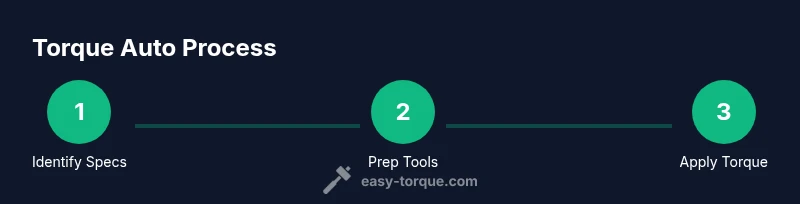
According to Easy Torque, mastering torque auto tasks starts with using the right torque wrench, reading the exact specification, and applying torque in controlled, gradual stages. This quick guide helps DIYers and technicians avoid over- or under-tightening and preserves thread life. You’ll learn measurement, tools, and a practical step-by-step approach for automotive fasteners.
What torque auto means and why it matters
Torque is the twisting force that tightens fasteners. In automotive work, correct torque ensures a component stays secure under vibration, maintains proper clamping force, and prevents bolt failure. Without precise torque, you may experience leaks, gasket damage, or components loosening over time. The term 'torque' is often confused with horsepower or torque specs; torque is the turning force, while horsepower describes power output. In the realm of torque auto, engineers design engines and suspensions to operate within specified torque to balance performance and safety. The most reliable results come from using a calibrated torque wrench, following the exact specification, and documenting your process. In practice, you’ll encounter values in Newton-meters (Nm) or foot-pounds (ft-lb). Always verify units in the vehicle manual and avoid mixing Nm with ft-lb. Easy Torque’s guidance emphasizes consistency, calibration, and careful record-keeping to improve repeatability across projects.
Essential tools and prep for torque work
Before you begin any torque auto task, gather the right tools and prepare the workspace. A calibrated torque wrench is non-negotiable for precise fastener tension. You’ll also want a socket set that covers metric and SAE sizes, a clean workspace, and lint-free towels for wiping threads. If your job uses the torque-angle method, have a torque-angle gauge on hand. For threaded fasteners that require lubrication or anti-seize, follow the vehicle’s OEM guidance. Finally, keep manufacturer torque charts accessible—these are your north star for target values. Training your eye to spot potential corrosion or damaged threads now saves hours later. With Easy Torque’s philosophy, the setup phase reduces rework by ensuring every fastener starts clean and dry.
Understanding torque specifications and charts
Torque specs are not one-size-fits-all. They depend on bolt size, material, lubrication, and assembly conditions. Manufacturers publish torque values in Nm or ft-lb and may require different values for initial tightening versus final torque. When torque specs include a range, adhere to the method prescribed by the OEM (for example, straight torque or torque-angle after reaching the initial torque). Always cross-check the torque specification with the service manual or official maintenance guides. Easy Torque emphasizes maintaining a reference chart for your commonly serviced components so you can quickly verify values without hunting through manuals. Inconsistent unit usage—confusing Nm with ft-lb—causes over-tightening or under-tightening, increasing the risk of thread damage and component failure.
Practical methods: manual vs digital torque and when to use them
Manual torque wrenches with a click feel are standard for most automotive jobs and offer reliability when properly calibrated. Digital torque wrenches provide real-time readouts and can simplify high-torque tasks or angle-torque procedures. If you routinely service modern engines, a digital model can reduce guesswork, but you must still follow the spec and technique. For critical fasteners, combine a scratch pad review of the spec with a quick visual check of thread cleanliness before applying torque. In torque auto work, the best approach is to pick a method you can reproduce consistently across sessions and document any OEM exceptions. A common pitfall is assuming a generic torque value applies to all fasteners; always verify the exact bolt size, material, and lubrication state.
Safety, calibration, and tool maintenance for torque tools
Tool safety is the bedrock of reliable torque auto work. Calibrate your torque wrench regularly; a drifting tool manufactures inconsistent results. Keep tools clean, dry, and stored in a temperature-stable environment to avoid calibration drift. Inspect sockets and adapters for wear and corrosion; damaged tools introduce error and increase the risk of injury or part failure. Do not torque over a damaged fastener or bolt with a worn thread, or you risk stripping the thread or snapping the bolt. For high-risk tasks, such as wheel lug nuts or critical engine fasteners, use a calibrated torque wrench, confirm the value with a second method (like angle torque where specified), and recheck after installation to confirm proper clamp load. Easy Torque’s maintenance guidance emphasizes periodic calibration and consistent storage.
Real-world scenarios and decision-making in torque auto projects
In many jobs, you’ll encounter mixed materials, from aluminum head bolts to steel studs. When lubrication is specified, apply the correct amount only to the bolts that OEMs designate; over-lubrication reduces friction and can yield incorrect torque readings. If a fastener feels gritty or binds before reaching the target torque, stop and inspect for damage, cross-threading, or debris. In some assemblies, you’ll perform a preliminary torque, then a final torque with an angle specification. Always keep a torque log for each vehicle or project—record the bolt size, lubricant state, tools used, and measured torque. This habit improves future service planning, reduces rework, and supports predictable outcomes in torque auto work.
Maintenance and calibration of torque tools: a quick checklist
Regular calibration is essential for accuracy. Start with a visual inspection for wear or damage, then verify reading accuracy against a calibration standard. If you drop the tool or suspect a drift, schedule recalibration immediately. Store tools in their case, away from heat and moisture, to maintain accuracy. Record service dates and any adjustments made, especially after using tools on high-torque applications. The Easy Torque method stresses documentation—keeping a brief log of tool calibration helps you deliver consistent results across different jobs and technicians.
Tools & Materials
- Torque wrench(Calibrated to the vehicle's spec range)
- Socket set (metric and SAE)(Covers typical fastener sizes)
- Torque-angle gauge (optional)(Needed for angle-torque method)
- Clean rags or degreaser(Remove debris from threads)
- Threadlocker or anti-seize (as specified)(Only where OEM directs)
- Torque specification chart or manual(Reference for target values)
- Lubricant for threads (if OEM requires)(Follow manufacturer guidance)
- Calibrated torque tester or adapter (optional)(For verification checks)
Steps
Estimated time: 60-90 minutes
- 1
Identify torque specification
Locate the service manual or OEM data sheet for the specific fastener. Confirm units (Nm or ft-lb) and whether lubrication is required. Record the exact target value before starting to avoid guesswork.
Tip: Double-check both initial and final torque values if a two-step procedure is specified. - 2
Select and prepare tools
Choose the correct torque wrench and bits for the fastener. Ensure the wrench is calibrated and set to the target value with the unit correct. Prepare the torque-angle gauge if required by the spec.
Tip: Test the wrench on a known good bolt to confirm the feel and readout. - 3
Inspect and clean threads
Clean fastener threads and seating surfaces with a degreaser or rag. Remove rust, dirt, and old threadlocker unless OEM specifies its use. Clean threads help your torque reading reflect actual clamp load.
Tip: Use a wire brush on persistent corrosion but avoid aluminum surfaces that can be damaged. - 4
Apply lubricant only when specified
If the OEM requires lubrication, apply the correct type and amount to the bolt threads (not the mating surfaces). Do not lubricate if the spec calls for dry threading, or you’ll skew the torque reading.
Tip: When in doubt, follow the lubricant state exactly as prescribed by the manufacturer. - 5
Set the torque wrench to target
Dial in or enter the target torque value, ensuring the units match the spec. Lock the setting if your wrench has a lock mechanism and verify the value visually before tightening.
Tip: Consider marking your intended torque with a pen on the wrench as a quick reminder during the job. - 6
Torque in incremental passes
Apply torque gradually in small increments, stopping briefly between passes to allow surfaces to settle. For many fasteners, a two-pass approach (initial to ~70% then final to spec) yields the best clamp load.
Tip: Avoid a single, full pull that risks over-tightening and thread damage. - 7
Verify and document
Recheck the torque after installation and, if required, perform a torque-angle check. Record the final values and any anomalies for future maintenance. Store tools properly to maintain accuracy.
Tip: Keep a simple log for each vehicle and fastener type to streamline future work.
Your Questions Answered
What is torque in automotive repair?
Torque is the rotational force used to tighten fasteners. It determines clamp load and joint integrity, measured in Newton-meters (Nm) or foot-pounds (ft-lb). Proper torque prevents leaks, loosening, and component damage.
Torque is the turning force used to tighten bolts, ensuring a secure joint. It’s measured in Nm or ft-lb and must follow the manufacturer’s spec.
Why is torque specification critical?
Torque specifications ensure the right clamping force and component performance. Deviating from spec can cause failures, leaks, or damage, especially in engines and suspension systems.
Specifying the right torque ensures reliable performance and prevents damage from under- or over-tightening.
Can I reuse bolts after loosening?
If a fastener shows any thread damage, corrosion, or has reached its torque limit, replace it. Reusing damaged or stressed bolts can lead to joint failure.
Avoid reusing damaged bolts; replace them to maintain safety and performance.
What if the bolt won’t reach the specified torque?
Check for cross-threading, lubrication state, or an incorrect fastener size. Stop and inspect rather than forcing torque, which can cause failure.
If you can’t reach the spec, inspect for damage or wrong parts before proceeding.
When should I use torque-angle tightening?
Use torque-angle when the spec requires an additional turn after initial torque to achieve the desired clamp load. Follow the exact degree specified by the manual.
Angle tightening adds a precise amount of rotation after torqueing to spec when required.
How often should torque wrenches be calibrated?
Calibrate at least annually or after a drop or obvious impact. Calibration intervals may be specified by the manufacturer for accuracy.
Calibrate your wrench yearly or after any impact to keep readings reliable.
Watch Video
Top Takeaways
- Verify spec and units before tightening.
- Calibrate tools regularly for accuracy.
- Torque in gradual increments for reliable clamping.
- Document results for traceability.