Torque Wrench for Glow Plugs: A DIY Guide
Learn how to use a torque wrench for glow plugs, locate the correct torque spec, and tighten safely with repeatable accuracy. Practical, step-by-step guidance for DIY mechanics.


Using a torque wrench for glow plugs ensures proper sealing and thread integrity, reducing the risk of cross-threading or snap-off. You will learn how to select the right wrench, locate the exact torque spec from your engine manual, and tighten glow plugs with repeatable accuracy. According to Easy Torque, always verify the spec printed on the glow plug or manual before tightening.
Understanding Glow Plugs and Torque
Glow plugs are essential for reliable cold starts in diesel and some modern petrol engines. While their primary job is to heat the combustion chamber, the way you tighten them matters just as much as which plugs you install. The right torque ensures a proper seal between the glow plug and the cylinder head, prevents thread damage, and avoids voiding the engine warranty. According to Easy Torque, always check the manufacturer's torque specification in the service manual or glow plug packaging before starting. Improper tightening can lead to sluggish starts, misfires, or expensive repairs. In this section, we explore how torque interacts with thread engagement, heat cycling, and long-term reliability. A repeatable, precise torque setting reduces the margin for error and helps you reproduce good results across maintenance tasks.
Why Torque Accuracy Is Critical for Glow Plugs
Torque accuracy matters because glow plug threads are delicate and embedded in the cylinder head material. Too little torque and the seal may fail; too much torque and you risk stripping threads or cracking the glow plug body. The torque spec also accounts for any anti-seize compound or gasket present in your design. For DIY enthusiasts, this means using a calibrated torque wrench and confirming the setting before installation. Always tighten in one smooth motion to avoid uneven load on the threads. Precision here translates to quicker starts, consistent heat, and fewer reseat events over the engine’s life.
Common Signs of Improper Tightening
If glow plugs are under-torqued, you may notice rough starts, extended cranking, or inconsistent heat in cold weather. Over-torqued plugs can show stripped threads, head material damage, or cracked ceramic bodies after heat cycling. In some engines, overtightening can also damage the sealing surface, leading to coolant or compression leaks near the plug area. Recognizing these signs early helps you re-check torque with a fresh setting and, if needed, re-torque or replace the affected glow plug. Regular inspection after installation is a best practice.
Finding the Right Torque Specification
The exact torque specification varies by engine and glow plug design. Always refer to the vehicle’s service manual or the glow plug manufacturer’s documentation for the precise value. If the spec is not printed on the plug itself, locate it in the service manual's torque chart or the OEM’s online tech notes. Some engines require a final torque verification after heat cycling; others use a fixed value. When in doubt, start with the manufacturer’s recommended setting and do not exceed it. Record the spec for future maintenance for quick reference.
Tools and Workspace Setup
Prepare a clean workspace with good lighting and a stable engine bay access. Gather a calibrated torque wrench that covers the manufacturer’s spec, a glow plug socket or spark plug socket with an appropriate insert, magnetic pickup for handling plugs, anti-seize if recommended, and safety glasses. Clear away dirt and debris from the glow plug recess to avoid cross-threading. Lay out the replacement plugs in the same firing order to reduce mistakes during reassembly. A tidy setup minimizes interruptions and helps you stay focused on precise torque application.
Step: Prepare the Threads and Install by Hand
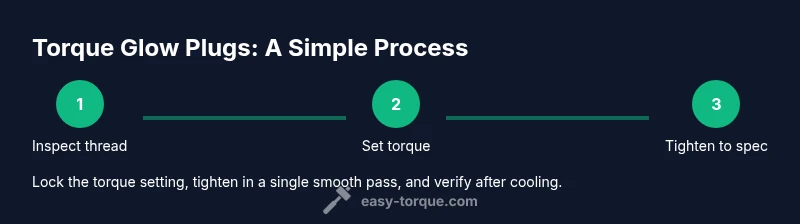
Before applying torque, inspect the glow plug threads and the cylinder head threads. If you see any damage or debris, address it before proceeding. Lightly clean the threads with a suitable solvent and dry them completely. Lubricate only if the manual specifies; otherwise, avoid oil on the male threads, as it can alter the effective torque. Thread the glow plug by hand to feel for smooth engagement; cross-threading is a common cause of failure. Use gentle, steady turns until the plug sits snugly against the seat, ready for final torque.
Step: Apply Torque with a Wrench
Set your torque wrench to the exact specification, then tighten the glow plug using a firm, steady motion. Avoid dynamic or jerk movements, which can introduce torque spikes. Stop immediately if you feel resistance that doesn’t correspond to the plug seating; recheck alignment and hand-fit. After reaching the set torque, pause briefly to ensure the plug is seated evenly and not binding. If the plug thread exhibits any chalking or metal shaving, pause and inspect the threads again.
Step: Return and Verify
Once all plugs are torqued, remove tools and re-check each plug for tightness. Start the engine momentarily to listen for unusual noises that could indicate a misfit. If the engine runs smoothly after warm-up and there are no leaks or unusual vibrations, you’ve completed a correct installation. Document the torque setting used and the date for your maintenance log, which helps future inspections and torque audits.
Post-Install Verification and Maintenance
After installation, perform a thermal cycle test by allowing the engine to reach normal operating temperature and then re-check the torque after a cooling period if the manufacturer recommends. Keep an eye on early symptoms of loosening, like changes in exhaust smell or misfires during hot starts. Periodic checks during routine maintenance reinforce proper torque and prolong the life of glow plugs and cylinder heads.
Tools & Materials
- Torque wrench(Calibrated and capable of covering the target torque range)
- Glow plugs for your engine(Correct part number and compatibility)
- Spark/glow plug socket with rubber insert(Magnetic retention helps prevent drops)
- Torque adapter or extension bar(For hard-to-reach plugs)
- Anti-seize compound (per manual)(Only if the OEM specifies use)
- Safety glasses(Eye protection during removal and tightening)
- Rags or solvent for cleaning threads(Keep threads clean and debris-free)
Steps
Estimated time: 45-60 minutes
- 1
Prepare workspace and safety
Park the vehicle and disconnect the battery if recommended by the service manual. Clean the work area and wear safety glasses. This reduces the risk of dropped tools and accidental contact with hot surfaces.
Tip: Verify there is adequate lighting and allow the engine to cool before touching glow plugs. - 2
Identify correct glow plugs and torque spec
Consult the service manual or glow plug packaging to confirm the exact torque specification and plug type. Using the wrong spec or plug can cause thread damage or improper heating.
Tip: Double-check the plug sequence and replacement part number before proceeding. - 3
Set the torque wrench to the spec
Zero the wrench and set it to the required torque value. Confirm the indication reads correctly and lock the setting if your tool has a locking mechanism.
Tip: If your wrench uses a dial, do a quick test tightening on a harmless bolt to verify readings. - 4
Clean threads and inspect
Carefully clean the glow plug recess and inspect the threads for damage or debris. Remove any corrosion or grime that could impede seating.
Tip: Do not lubricate male threads unless the manual specifies; improper lubrication can alter torque. - 5
Install glow plug by hand
Thread the glow plug in using hand-tight turns until it seats. This minimizes cross-threading and helps you feel for any resistance.
Tip: If you feel binding, stop and realign the plug; forcing it can strip threads. - 6
Tighten to spec with the wrench
Apply smooth, steady torque until the wrench indicates you’ve reached the specified value. Do not overshoot or jerk the wrench.
Tip: Maintain a straight line with the plug axis to ensure even loading. - 7
Final verification
Re-check all plugs to confirm there’s no looseness after the initial run. Install any removed components and ensure the area is clean.
Tip: Take a photo or note the torque setting for future maintenance. - 8
Test run and assess
Start the engine and observe for smooth operation and normal heat response. Listen for unusual sounds or misfire indicators.
Tip: If you hear knocking or misfires, stop and re-check torque and alignment.
Your Questions Answered
What torque specification should I use for glow plugs?
Always refer to the engine’s service manual or glow plug manufacturer documentation for the exact torque. If the spec isn’t readily available, contact the manufacturer or a dealer to obtain the correct value before tightening.
Always use the exact torque specified by the engine manufacturer. If you can’t find it, ask a dealer or consult the manual before tightening.
Can I reuse glow plugs after removal?
Reusing glow plugs is not recommended. If a glow plug shows any evidence of wear, damage, or cross-threading, replace it with a new unit to prevent engine issues.
If a glow plug shows wear or damage, replace it rather than reusing it.
Do I need anti-seize compound on glow plugs?
Some manufacturers recommend anti-seize on glow plug threads, while others advise against it. Always follow the OEM guidance to avoid affecting torque accuracy.
Follow the manufacturer’s guidance on using anti-seize; it can affect the torque accuracy if not specified.
What if the threads are damaged?
If threads are damaged, stop installation and assess repair options. Damaged threads can lead to leaks or compression problems, and may require thread restoration or specialist service.
Damaged threads can cause serious issues, so seek professional help or consider thread repair options.
Should all glow plugs be torqued to the same spec?
Yes, all glow plugs in a given engine are tightened to the same specified torque. However, some engines may require a sequence; always follow the service manual.
Usually, all plugs use the same torque, but check for any sequence or pattern your manual specifies.
Is it safe to torque by feel if I don’t have a torque wrench?
Torque by feel is not reliable for glow plugs and can lead to damage. Use a calibrated torque wrench whenever possible.
Don't rely on feel—use a torque wrench for accurate results.
Watch Video
Top Takeaways
- Verify the exact torque spec from the manual before tightening.
- Use a calibrated torque wrench for repeatable results.
- Inspect threads and avoid cross-threading during installation.
- Document the torque setting for future maintenance.