U-Bolt Torque Specifications: A Practical DIY Guide for Mechanics
Learn how to select, verify, and apply correct U-bolt torque specifications across common sizes. This guide covers ranges, methods, and maintenance tips for reliable clamping.


Why U-Bolt Torque Specifications Matter
According to Easy Torque, applying the correct u bolt torque specifications is essential for achieving a uniform clamping load, maintaining joint integrity, and preventing clamp slip or premature fatigue. U-bolts secure critical components such as leaf springs, axles, and suspension brackets; if the torque is too low, fasteners can loosen under vibration and load cycles, while overtightening can yield bolt necks, strip threads, or crack mounting surfaces. In both cases, uneven clamp load can cause misalignment, accelerated wear, and unpredictable handling. For DIY enthusiasts, adopting a disciplined torque approach reduces risk, extends component life, and helps you diagnose issues before they become costly repairs.
How Torque Is Determined for U-Bolts
Torque values for U-bolts aren’t universal; they depend on several interacting factors. The bolt diameter and thread pitch determine the available clamping force, while the material grade (e.g., Grade 5 vs Grade 8) governs yield strength and elongation under load. Surface finish and lubrication influence friction between threads, which directly affects the effective clamping force produced by a given wrench turn. Washers, mounting surface flatness, and the presence of rust or corrosion also shift the necessary torque. When in doubt, start with the manufacturer’s published chart and re-check after initial loading.
Typical Ranges and Why They Vary
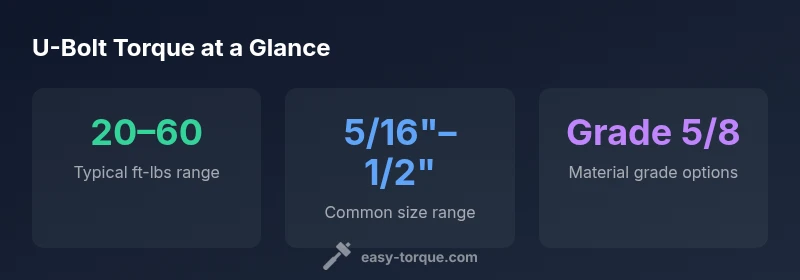
Ranges exist because every U-bolt application differs. For most standard automotive uses, you’ll see a practical range around 20–60 ft-lbs. Heavier-duty or larger diameter U-bolts for trucks or off-road suspensions often demand the upper end of that spectrum or slightly higher. For metric equivalents, this often translates to roughly 27–81 N·m, depending on size and alloy. Always cross-check with the specific part’s documentation and, if possible, use a calibrated torque wrench to confirm the actual clamping force. Temperature, surface condition, and whether you used locking nuts or standard nuts can shift the ideal torque by several ft-lbs.
How to Properly Torque U-Bolts: Steps and Best Practices
Follow a disciplined, repeatable process to ensure even clamping. First, clean all threads and contact surfaces; remove rust and dirt that can distort torque readings. Install with appropriate washers and ensure seating surfaces are flat. Apply torque in a star or cross pattern if multiple U-bolts are involved to promote uniform load distribution. Use a torque wrench to reach the specified value in a single, controlled sequence, then re-check after the assembly has loaded with the initial service use. Document torque values for future maintenance and plan re-torque intervals based on service conditions.
Common Mistakes and How to Avoid Them
Common errors include under-torquing, over-torquing, and skipping re-torque checks after initial loading. Avoid lubricants that significantly reduce thread friction unless the manufacturer specifies otherwise. Do not reuse damaged or corroded U-bolts, and avoid mixing nut types or washer materials unless the chart allows it. Always verify torque with a calibrated tool and keep a maintenance log for each chassis or axle. When in doubt, default to the manufacturer’s published torque specification rather than estimates.
Maintenance and Verification
Torque should be re-verified after installation and again at the first service interval or following any impact incident or heavy load test. Environmental exposure (salt, mud, water ingress) accelerates corrosion, which can change friction characteristics and tolerated torque. Keep an inspection schedule—ideally every 6–12 months for vehicles driven in harsh climates. If any fastener shows signs of loosening, corrosion, or fatigue, replace the U-bolt and re-torque to spec after installation.
Quick Reference: Torque Charts
Below is a summarized reference for common U-bolt ranges. Always confirm with the manufacturer chart for your exact part before tightening. If you don’t have access to a chart, use the 20–60 ft-lbs guideline as a safe starting point and adjust based on bolt size and load.