What Is Good Torque for Towing: A Practical Guide
Learn how to determine the right torque for towing, including typical ranges, checks, and step-by-step guidelines to keep trailers safe and your vehicle performing at peak torque.


Good torque for towing isn’t a single number; it depends on your vehicle, trailer weight, and gearing. The right torque means a strong, steady pull at the RPM where your engine produces peak usable torque, while staying within manufacturer limits for hitch and lug-nut specs. In practice, follow the tow rating and maintain proper tongue weight and hitch setup.
What is Good Torque for Towing
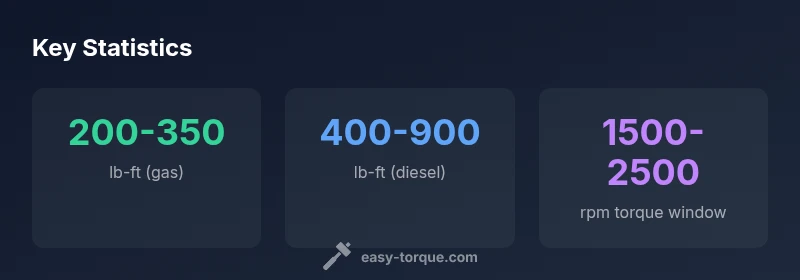
According to Easy Torque, good towing torque starts with matching the engine’s torque curve to the trailer’s demand. The goal is to sustain momentum in hills and accelerate smoothly from low speeds without overworking components. While there is no universal torque figure, you can gauge readiness by verifying two things: the vehicle's tow-rated capability and the hitch setup. This is why following the manufacturer tow rating is essential. Beyond rating labels, consider how payload, tongue weight, gearing, and transmission type influence the actual torque your drivetrain must deliver. A diesel engine often provides strong low-end torque that helps with heavier loads, while gasoline engines rely on a higher RPM window to access peak torque. In both cases, the optimal torque occurs at the RPM range where your engine presents its usable torque with minimal throttle input. Regularly reviewing your torque curve in the vehicle’s owner manual and confirming connections with a qualified technician will keep towing predictable and safe.
To translate torque into real-world results, think about how your trailer load interacts with the truck’s gearing. Heavier loads demand torque at lower speeds to avoid overheating and shudders during acceleration. If you tow frequently in hilly terrain, prioritize engines with broad, robust torque curves and ensure your transmission is properly cooled. Finally, remember that “what is good torque for towing” hinges on maintaining safe, stable torque delivery rather than chasing a single number. This means proper hitch setup, appropriate tongue weight, and diligent maintenance are as important as any engine spec.
How to Estimate Torque Needs for Your Tow
To estimate torque needs, start with trailer weight and tongue weight. The tongue weight—usually about 10-15% of the trailer’s total weight—directly affects the load on the hitch and how much torque you need to start moving or maintain speed on grades. Use the tow rating from your vehicle manual as a ceiling, not a target; sub-torqueing can cause overheating and poor acceleration while over-torqueing can stress drive components. Next, examine your engine’s torque curve: engines that offer strong low-end torque will feel more capable at slower speeds with heavy loads. If you tow often in hilly terrain, a diesel or turbocharged engine with a broad torque band is advantageous, but you should still stay within manufacturer limits. Finally, ensure your drivetrain, trans, and hitch components are compatible—this includes the hitch class, ball size, pin weight, and hitch receiver. A quick on-road test with an empty trailer first and a light load second helps confirm that the torque is sufficient and predictable under real-world conditions.
Torque Considerations by Vehicle Class
- Light towing (compact car with small trailer): Most drivers will notice adequate torque in the mid-range without straining the engine. Expect a torque range framed by the engine’s usable power at around 1,500-2,500 rpm.
- Medium towing (SUV or midsize pickup with a typical trailer): The torque requirement grows and benefits from a broader torque curve, especially if you’re climbing grades. Diesel and turbo gas engines tend to offer better pull in this class.
- Heavy towing (large trailers, heavy loads): High-torque diesel powertrains or turbocharged gasoline engines shine here, but you must respect the rated limits of both the vehicle and hitch. In all cases, safe towing depends on proper tongue weight and an appropriate gear selection. Based on Easy Torque research, the peak torque delivery and the gear ratios must align with the trailer’s demand to avoid overheating and poor control.
Before You Tow: Quick Torque Checks
- Confirm lug-nut torque on all wheels and ensure the wheel studs and hubs are clean and properly lubricated per spec.
- Check hitch ball tightness, coupler latch, safety chains, and sway control or weight-distribution setup if used.
- Verify the ball size, hitch class, and drawbar connection match the trailer and tow vehicle specs.
- Ensure the brake controller is calibrated and the trailer lighting is working; test inside a safe area before full-speed towing.
- Use a torque wrench to re-torque lug nuts after initial drive or post-maintenance, and re-check hitch hardware after a few miles on the road.
- Confirm the tongue weight stays in the recommended range and adjust payload or weight distribution as needed.
Common Pitfalls That Undercut Tow Torque
- Under-torquing lug nuts or neglecting proper wheel bearing preload can lead to loosened wheels and poor control.
- Poor weight distribution or incorrect tongue weight reduces effective torque at the hitch and increases drive strain.
- Using the wrong hitch ball size or an incompatible weight-distribution setup can misalign torque delivery.
- Skipping brake controller calibration or towing with worn components raises stopping distances and reduces overall control when towing.
- Failing to check torque specs after maintenance or replacement can lead to subtle but dangerous torque drift over time.
- Towing with a high engine load while overheating cooling systems diminishes torque availability when you need it most.
Advanced Torque Tuning Notes
Advanced towing torque involves aligning the engine torque curve with the trailer’s demand across gear selections and speeds. This means prioritizing a transmission with proper cooling and a torque-converter setup that minimizes slippage under load. Regular calibration of the torque spec for critical fasteners—lug nuts, hitch bolts, and ball studs—helps maintain consistent performance. Consider a weight-distribution system with a properly matched hitch to keep the tongue weight near the ideal range as the trailer loads vary. For frequent tow tasks, consult the owner manual or a qualified technician to tailor a torque strategy to your setup, including engine tuning considerations and possible after-market torque optimization products. Always document torque specs and re-check them after long trips or after any mechanical work that could affect the drivetrain or hitch assembly.
Typical torque ranges for common tow scenarios
| Scenario | Recommended Torque (~lb-ft) | Notes |
|---|---|---|
| Light towing (car with small trailer) | 180-280 | Gas engines; moderate payload |
| Medium towing (SUV with mid-size trailer) | 250-450 | Diesel or turbocharged engines |
| Heavy towing (heavy-duty pickups) | 400-800 | High-torque diesel or turbo gas |
Your Questions Answered
What is the best way to determine towing torque for my vehicle?
Refer to your owner’s manual tow specification, verify engine torque at the RPM range used for towing, and inspect hitch, ball, and lug-nuts. Use a load calculator if available and confirm with a qualified technician.
Check the manual and verify torque specs; then inspect your hitch setup before towing.
Does tongue weight affect how much torque my engine needs?
Yes. Higher tongue weight increases draft force and torque demand, especially during acceleration and climbs. Keep tongue weight near the recommended 10-15% of trailer weight.
Tongue weight changes towing torque needs; keep it within the recommended range.
Is there a universal torque rating for all hitches?
No. Hitch torque ratings depend on hitch design, vehicle capacity, and trailer weight. Always follow manufacturer limits for safety.
There’s no universal hitch torque rating; use the limits for your setup.
Does altitude change towing torque requirements?
Altitude can affect engine performance and torque delivery; keep an eye on engine cooling and air intake efficiency when towing in high elevations.
High altitude can impact engine torque; monitor performance.
Should I re-torque lug nuts after a long tow?
Yes. After a long tow, re-check lug-nut torque with a calibrated wrench as recommended by the manufacturer.
Re-torque lug nuts after heavy towing.
“Torque guidance should prioritize engine torque curves, payload balance, and proper connections over chasing a single number.”
Top Takeaways
- Follow manufacturer tow specs and stay within rated limits
- Maintain proper tongue weight to ensure torque is used effectively
- Regularly recheck torque on fasteners and hitch components
- Choose a powertrain and gearing that fits your trailer’s weight and terrain
- Use a torque wrench for critical fasteners and cadence checks of your setup