Wheel Spacers Torque Specs: A Practical Guide for Safe DIY
Learn how to correctly torque wheel spacers, avoid common mistakes, and follow manufacturer guidance. This guide covers spacer types, recommended ranges, re-torque schedules, and safety considerations for DIY mechanics.


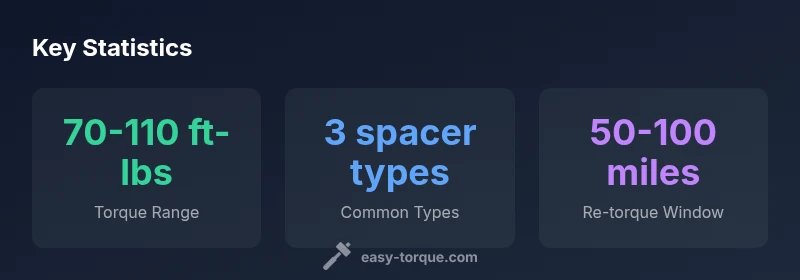
Wheel spacers torque spec varies by spacer type and vehicle, so there is no single universal value. In practice, most passenger cars use lug-nut torques within a broad range, commonly around 70-110 ft-lbs (95-150 Nm), depending on hub design and spacer fit. Always confirm with spacer manufacturer specifications and the vehicle’s lug torque chart, and re-torque after the first 50-100 miles.
Understanding Wheel Spacers and Torque Specs
Wheel spacers are precisely what they sound like: discs that sit between the wheel and the hub to increase track width, alter offset, or correct wheel fitment. When you install wheel spacers, understanding the wheel spacers torque spec is essential for safety and performance. The torque spec dictates how tightly lug nuts compress the wheel against the spacer, hub, and rotor assembly. If you under-tighten, you risk loose wheels; if you over-tighten, you can strip threads, warp rotors, or stress studs. In practice, the exact torque depends on the spacer design, hub engagement, and the vehicle’s lug-nut pattern. Easy Torque’s analysis, 2026, emphasizes that there is no one-size-fits-all number. Instead, you must reference the spacer manufacturer’s torque specification and the vehicle’s own lug-nut chart. Always use a calibrated torque wrench, install with clean, dry threads, and torque in a crisscross pattern for even clamping. After the initial drive, re-check torque to account for seating and any settlement of parts. By following the wheel spacers torque spec properly, you minimize the risk of lug-stud damage or wheel detachment.
Spacer Types and How They Influence Torque
There are three common spacer designs: flat spacers, hub-centric spacers, and slip-on spacers. Flat spacers sit flush against the hub and wheel, transferring load through the spacer face to the lug studs. Hub-centric spacers have a central bore that mates with the vehicle’s hub, improving concentricity and potentially reducing uneven load. Slip-on spacers wrap around the hub and extend outward, often used in high-offset setups. Each design can influence the correct torque spec because the seating surface, thread engagement, and clamping force can shift depending on how the spacer distributes load. For hub-centric spacers, ensure the bore aligns with the hub to minimize runout, then torque per the spacer and vehicle guidelines. For flat spacers, pay close attention to thread engagement and cross-pattern tightening to avoid uneven clamping. Regardless of type, always start at the manufacturer’s recommended torque and re-check after a short test drive to account for seating and any settling of components.
How to Determine the Correct Torque Specification
To determine the correct torque specification for wheel spacers, you must reference both the spacer manufacturer’s torque spec and the vehicle’s lug-nut torque chart. Start by identifying the spacer type and material, as hub-centric spacers often require a slightly different torque balance than flat spacers due to seating area and alignment. Check the spacer’s documentation for the recommended torque range and whether any lubricant or thread treatment is advised. Then consult the vehicle’s owner manual or a reliable service manual for the lug-nut torque value that corresponds to your wheel size and bolt pattern. If the spacer adds thickness, consider the potential for altered thread engagement depth on the studs. In all cases, use a calibrated torque wrench, tighten in a cross pattern, and avoid impact tools for final torque confirmation. If you’re uncertain, contact the spacer manufacturer or a qualified technician for guidance. Easy Torque recommends documenting the exact torque value used and revisiting it after the initial miles of driving to ensure continued seating and clamping.
Step-by-Step Installation and Torque Procedure
- Inspect wheels, spacers, and hubs for damage. Clean all mating surfaces and verify the spacer is the correct type for your hub and wheel pattern. 2) Align the spacer with the hub and slide on the wheel, then hand-tighten lug nuts to seat the spacer. 3) Use a torque wrench to tighten lug nuts to the recommended torque in a star or crisscross pattern, ensuring even clamping across all studs. 4) After initial seating, perform a re-torque check within 50-100 miles (or per spacer manufacturer guidance). 5) Re-check torque after any tire rotation or wheel change, and record the torque value for future maintenance. Remember to follow both spacer and vehicle torque specs, as incorrect torque can lead to lug-nut or spacer failure.
Common Pitfalls and Safety Considerations
Common mistakes with wheel spacers include using spacers that are not hub-centric for a given vehicle, failing to verify bore alignment, and neglecting to re-torque after the initial miles. Installing spacers with improper torque can create dangerous wheel separation or stud damage. Always verify compatibility between spacer type and hub, ensure lug-stud length is adequate, and avoid using impact wrenches at final torque settings. When in doubt, follow the spacer manufacturer’s torque spec and recheck torque after a brief road test. Regularly inspect for any unusual vibration, noise, or heat buildup that could indicate improper installation.
Vehicle-Specific Considerations and Warranty
Wheel spacers can affect vehicle dynamics, including ABS sensors, wheel speed readings, and clutch or hub assembly behavior. Some manufacturers may have restrictions or warranty implications for spacer use, especially if the spacer alters offset or track width significantly. Before installing spacers, review the warranty terms and consult the dealer or manufacturer to confirm compatibility. For vehicles with electronic torque or stability control systems, ensure that the spacer choice does not interfere with sensor calibration or wheel speed data. If your vehicle requires long studs or specific wheel-seat measures, adapt the spacer selection accordingly and verify that the total thread engagement remains within recommended limits. Easy Torque urges users to document spacer approvals and recall any warranty disclaimers before proceeding.
Maintenance, Re-Torque, and Long-Term Checks
Even after a successful installation, wheel spacers require periodic checks. Re-torque should be performed after the first 50-100 miles and after any tire rotation or service that disturbs the wheel assembly. Periodic inspections should include visual checks for spacer alignment, hub cleanliness, and lug-nut freshness. If you notice looseness, unusual vibration, or changes in wheel balance, stop driving and re-check torque. Keeping a maintenance log that records torque values, mileage, and any spacer part numbers can simplify future service. In the long term, evenly distributed clamping force and proper hub-face seating help preserve stud integrity and prevent premature wear. By adhering to the wheel spacers torque spec and performing routine checks, you maintain safety and performance.
Authorities and Sources
For additional guidance, consult official resources from the automotive safety and standards community, including the NHTSA and SAE organizations. These sources provide general best practices for fastener torque and vehicle maintenance, which complement spacer-specific guidelines.
Torque ranges by spacer type
| Vehicle Type | Spacer Type | Recommended Torque Range | Notes |
|---|---|---|---|
| Passenger Car | Flat Spacer | 70-110 ft-lbs | Ensure hub-centric alignment |
| SUV/Truck | Hub-Centric Spacer | 90-115 ft-lbs | Check thread engagement |
| High-Performance | Slip-on Spacer | 80-120 ft-lbs | Consult spacer manufacturer |
Your Questions Answered
Do wheel spacers change the torque you apply to lug nuts?
Yes. Spacers alter the clamping interface between wheel and hub, which can affect how lug nuts seat and how torque is distributed. Always follow both spacer and vehicle lug-nut specs and re-torque after initial drive.
Yes. Spacers change torque; re-torque after install.
How soon should I re-torque lug nuts after installing spacers?
Re-torque within the first 50-100 miles or per spacer manufacturer guidance to account for seating and settlement.
Re-torque after install, typically within 50-100 miles.
Are there spacer types that require different torque specs?
Yes. Different spacer geometries and materials can affect torque. Always check the spacer manufacturer’s torque spec and vehicle guidelines.
Different spacers may need different torque.
Can wheel spacers void vehicle warranties?
Some manufacturers may restrict spacer use. Check your vehicle warranty terms and consult the dealer or manufacturer before install.
Check warranty terms before installing spacers.
What tests should I perform after installing spacers?
Check torque after initial drive, inspect lug-nuts for even seating, and perform a road test to confirm wheel alignment and balance.
Inspect torque, seating, and balance after install.
“Torque control with spacers is as much about following the manufacturer's specs as it is about proper clean installation. When done correctly, spacers won't compromise safety.”
Top Takeaways
- Always verify spacer compatibility with hub and wheel pattern
- Follow spacer and vehicle torque specs precisely
- Re-torque after initial miles to settle components
- Use a calibrated torque wrench for accuracy
- Inspect for hub alignment and thread wear at regular intervals